
CIMA Care's Holistic Response to Methodological Gaps in VSC Monitoring & its Key Determinants in Sub-Saharan Africa |
April 23, 2025 . 5 Minutes read
Bridging the Gap: CIMA Care's Holistic Approach to Addressing Childhood Vaccination Challenges in Sub-Saharan Africa
Our recent study by an international consortium of public health researchers has revealed significant gaps in childhood vaccination coverage across Sub-Saharan Africa, threatening progress in reducing vaccine-preventable diseases. This comprehensive scoping review published in March 2025 identified critical methodological gaps in monitoring vaccine series completion (VSC) among children aged 12-23 months, highlighting the urgent need for innovative approaches to improve vaccination outcomes. Here, we discuss the key findings on methodological gaps in vaccination coverage research recently identified by Li et al.'s comprehensive scoping review. Further, we examine how CIMA Care's holistic ecosystem addresses these recognized challenges through integrated digital solutions, healthcare worker education, and evidence-based parent and community engagement.
The Vaccination Coverage Crisis: Evidence from the Recent Research
The scoping review by Li et al. (2025) analyzed 53 studies from 20 Sub-Saharan African countries published between 2000 and 2023. Their findings reveal a concerning picture of vaccination coverage across the region, with only Ghana achieving VSC rates exceeding 90% [1] far below the Global Vaccine Action Plan (GVAP) target of achieving 90% coverage for all scheduled vaccines. [2 & 3] Even more troubling, the research found that over half of Sub-Saharan African countries had no published studies meeting inclusion criteria (primary research on children aged 12-23 months that reported VSC rates and was published), creating a significant knowledge gap in vaccination coverage monitoring. [1]
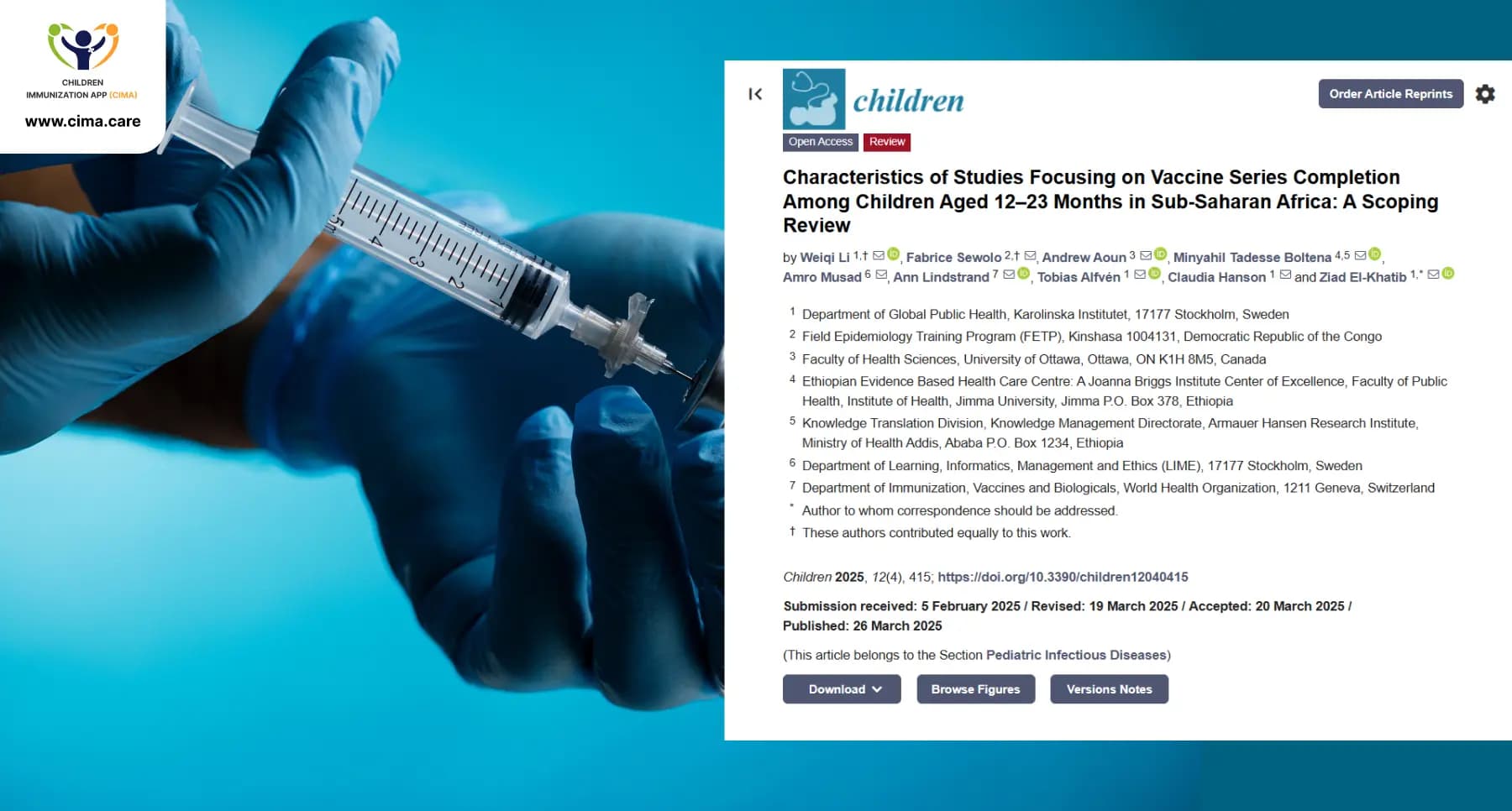
Groundbreaking research published in March 2025: International team reveals critical vaccination research and practice gaps
Key Research Findings of Our Study Highlighting Critical Gaps
The review identified several critical gaps in vaccination research and practice:

Research on inequality revealed Ethiopia dominates vaccine studies while 19 African nations remain understudied.
1- Geographic disparities in research:
Nearly half of all studies were conducted in Ethiopia, with fewer than five studies from each of the remaining 19 countries. Many Sub-Saharan African nations had no qualifying studies at all, creating blind spots in understanding vaccination challenges.
2- Limited research scope:
While 81.1% of studies examined factors associated with vaccination completion, only 7.5% investigated inequalities in coverage, and merely 5.7% explored trends over time, crucial information for developing targeted interventions.
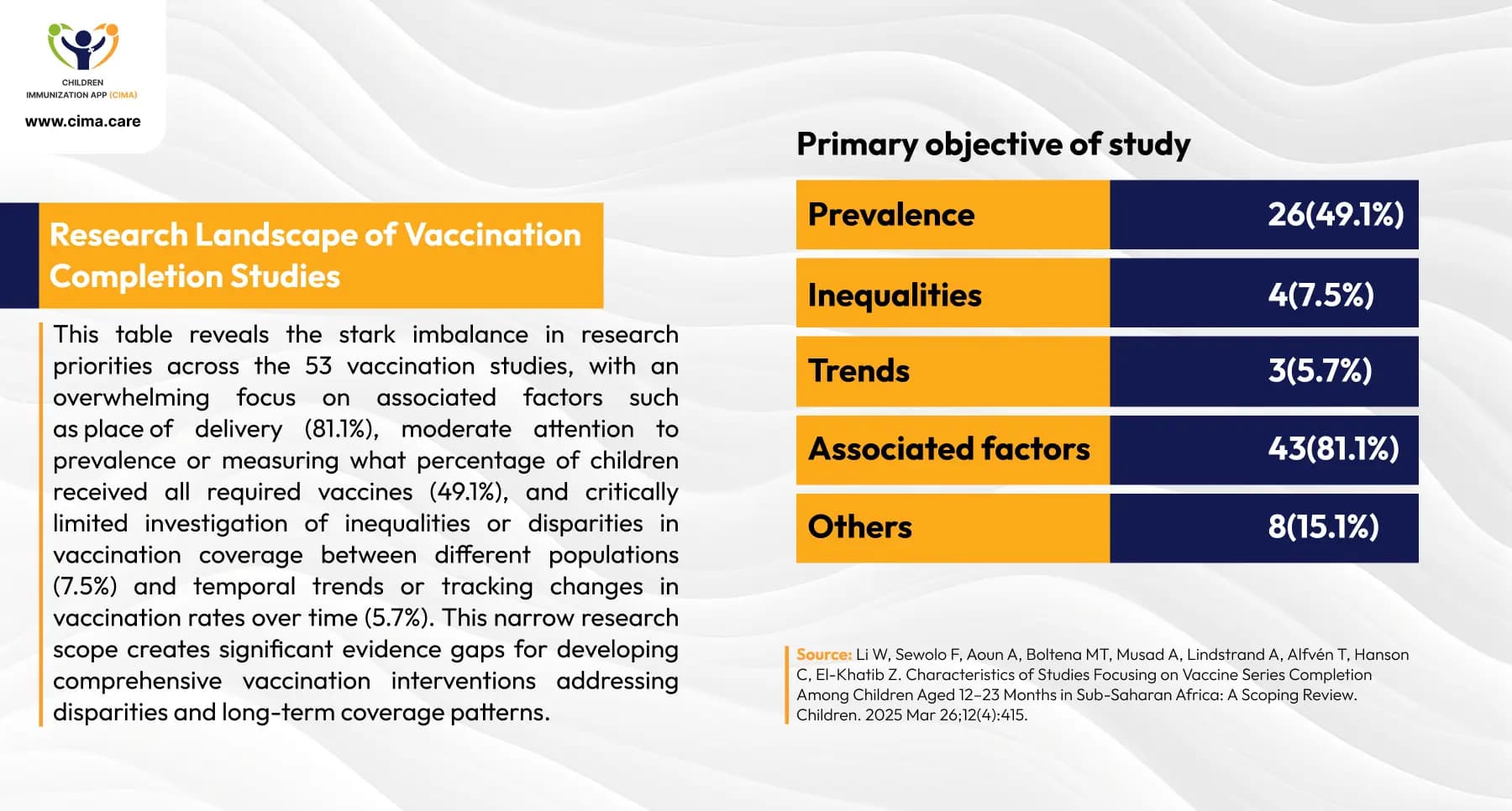
Research gap revealed: 81% focused on associated factors, while inequalities (7.5%) and trends (5.7%) remain understudied.
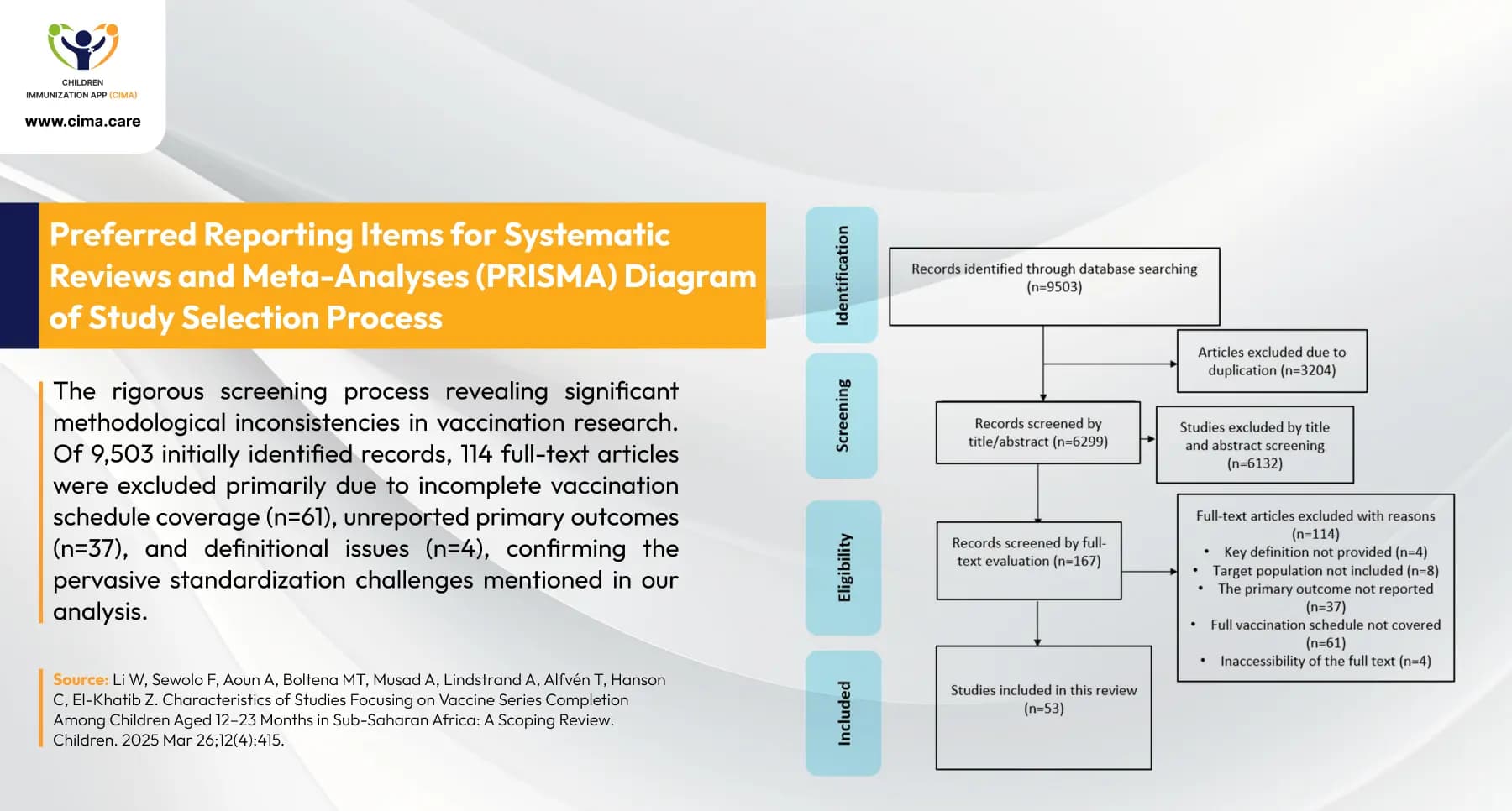
PRISMA flow reveals methodological crisis: 114 studies excluded due to inconsistent vaccination data.
3- Methodological inconsistencies:
Many studies were excluded from our scoping review due to inconsistent definitions, incomplete reporting of vaccination series completion rates, and lack of standardized approaches aligned with immunization schedules.
4- Neglected Vaccine Types:
According to the findings of this scoping review, certain vaccines received minimal research attention despite being recommended in national immunization programs. Only 17% of studies included the birth dose of OPV in their VSC measurement, despite all 20 countries recommending it.
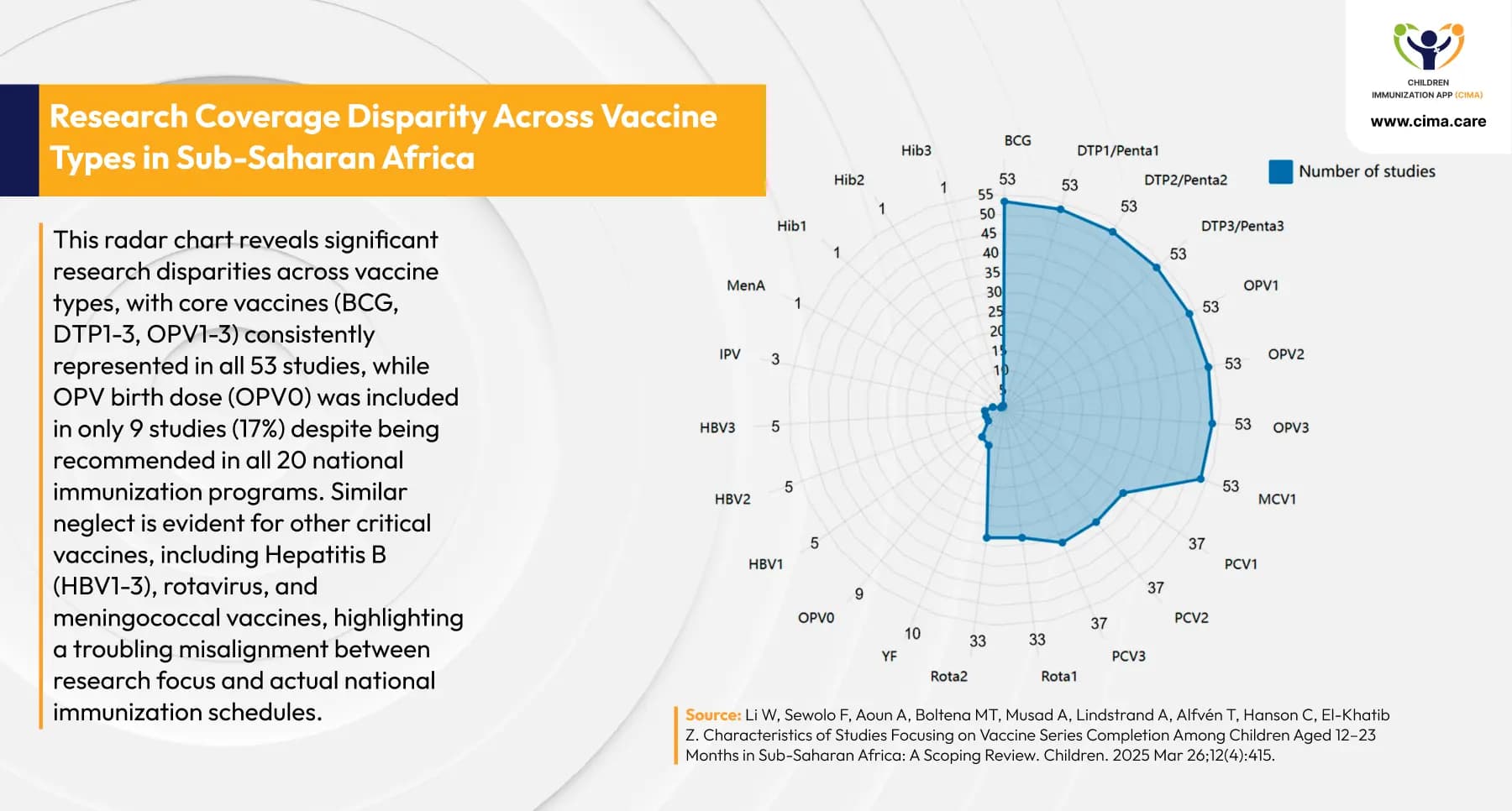
Core vaccines studied universally, while the critical OPV birth dose neglected in 83% of research.
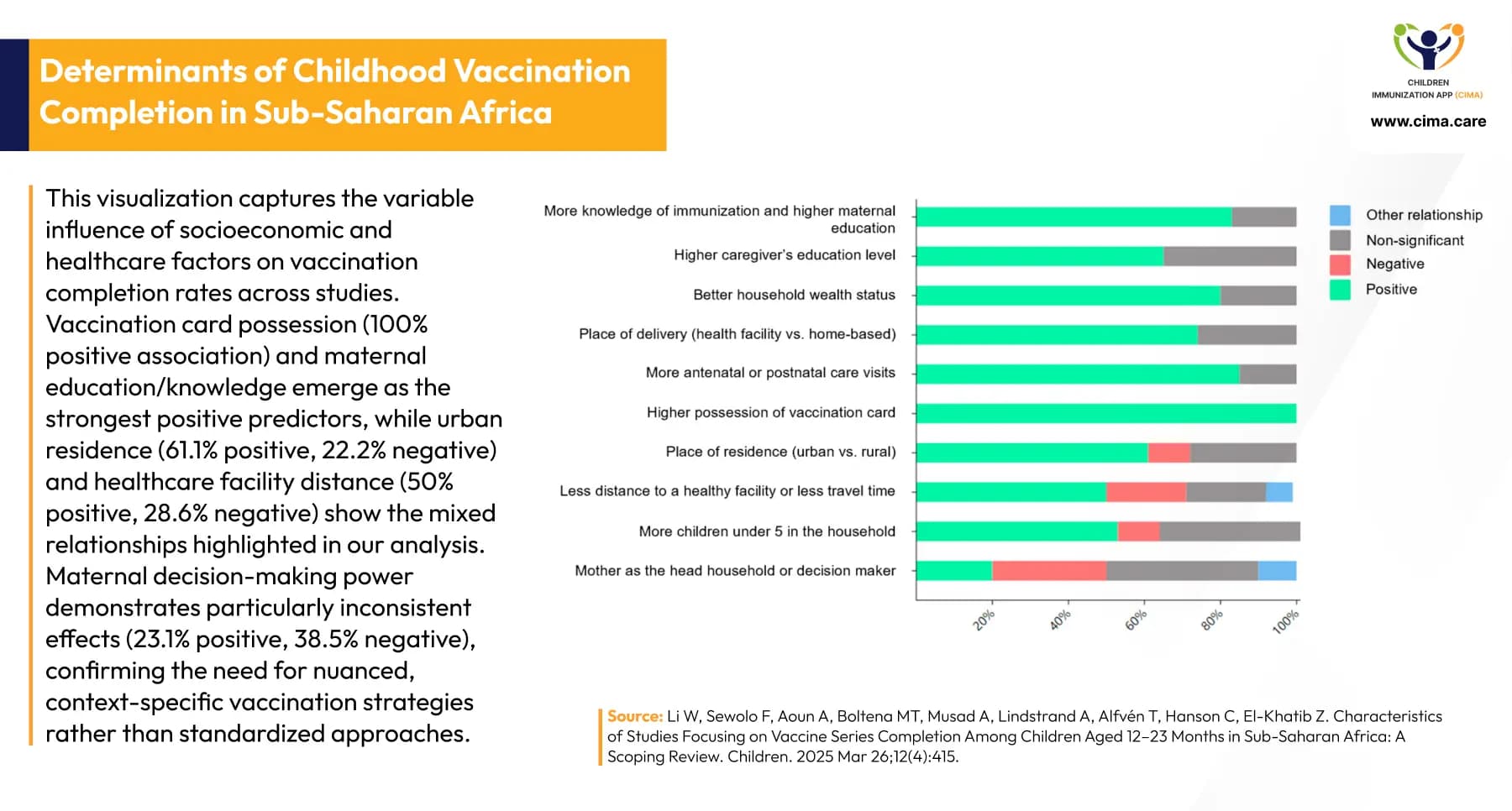
Vaccination card and education strongly predict completion, while maternal decision-making shows complex effects.
5- Socioeconomic and Healthcare Determinants of Vaccination Completion:
The scoping review presents compelling evidence on the factors that significantly influence vaccine series completion (VSC) among children aged 12-23 months in Sub-Saharan Africa. Analysis of 43 studies (81.1% of all included studies) revealed consistent patterns that provide crucial guidance for intervention development.
The findings also show that several factors are interconnected, emphasizing the need for tailored vaccination promotion strategies that consider healthcare access, parental education, and socioeconomic challenges instead of using a single approach for everyone. [1]
CIMA Care: A Holistic Response to Vaccination Challenges
By integrating digital tracking, educating healthcare workers, and engaging parents, CIMA Care provides an innovative, evidence-based ecosystem that directly addresses the gaps identified in the scoping review and enhances vaccination outcomes in resource-limited settings. [1]
1- Digital Innovation Addressing Methodological Gaps in Monitoring VSC and Enhancing Coverage
CIMA Care's digital platform tackles several key challenges identified in the scoping review:
- a. Enhanced tracking and monitoring: The CIMA app enables real-time vaccination tracking and sends automated SMS reminders, addressing gaps in timely vaccination monitoring. As demonstrated in CIMA implementation studies, this approach has achieved significant improvements in vaccination uptake—19% in Jordan's Zaatari Refugee Camp [4] and 23% in Cameroon's Bamenda Region. [5]
- b. Geographic coverage monitoring: CIMA's visualization tools generate heat maps that help identify areas with low vaccination coverage, which is particularly useful for addressing the complex determinants highlighted in the review. This helps monitor rural-urban disparities (which showed mixed outcomes with 61.1% positive associations) and measure healthcare accessibility barriers (where distance to facilities showed inconsistent effects). CIMA Care’s data-driven approach enables targeted, context-specific interventions that acknowledge the variable impact of these determinants across different settings.
- c. Comprehensive vaccine tracking: Unlike studies that focus on limited vaccine types, CIMA Care's platform tracks and records the complete vaccination schedule, including often-neglected vaccines like OPV0, ensuring no child misses critical doses.
- d. Defaulter identification: The review highlighted significant dropout rates between vaccine doses. CIMA Care's defaulter identification feature enables healthcare workers to identify and follow up with children who have missed scheduled vaccinations, addressing a critical gap in vaccination series completion.
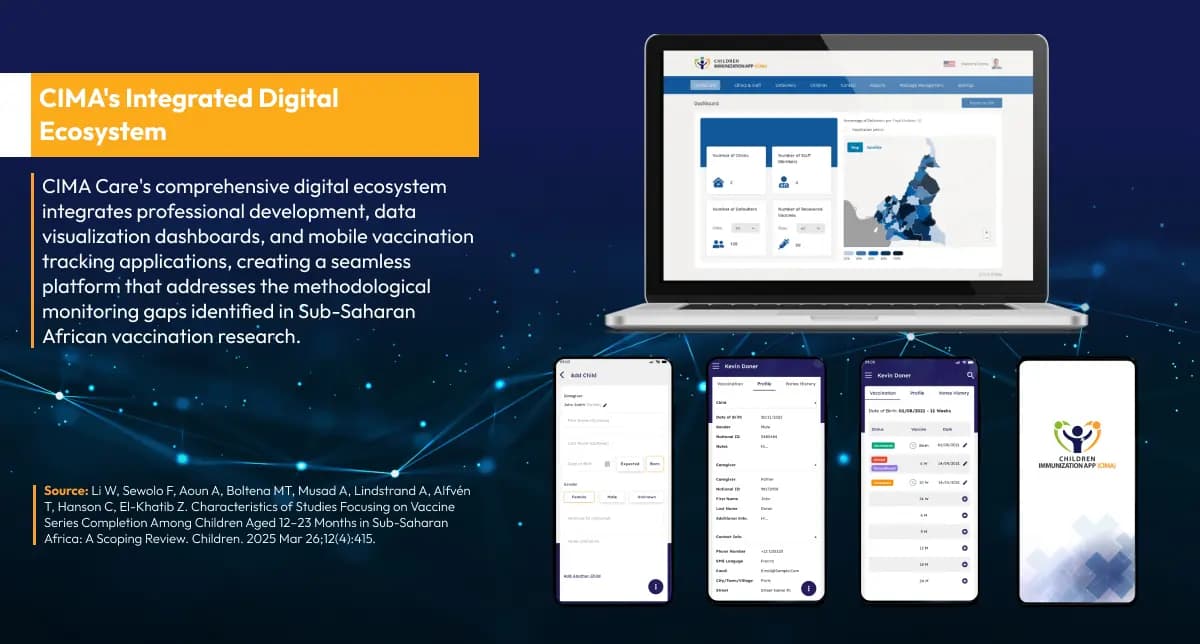
CIMA's integrated digital ecosystem bridges research gaps with real-time tracking and visualization tools.
2- Building Knowledge and Capacity Through Education
The scoping review identified caregiver education level, knowledge of immunization, and healthcare provider training as significant factors influencing vaccination coverage. CIMA Health Academy directly addresses these knowledge gaps:
- a. Healthcare provider education: CIMA Health Academy's CPD-certified courses enhance healthcare workers' understanding of vaccines, implementation strategies, and communication techniques—addressing the need for standardized approaches identified in the review.
- b. Evidence-based parent education: Targeted SMS messages deliver validated content from WHO, UNICEF, and UNODC to parents, addressing the knowledge gaps that contribute to vaccine hesitancy and improving informed decision-making.
- c. Combating misinformation: In an era where health misinformation spreads 70% faster than accurate information online, [6] CIMA Care implements WHO's comprehensive strategy by delivering scientifically validated content through multiple channels, helping to build vaccine confidence.

CIMA Care's educational platforms empower healthcare workers, parents, and communities with evidence-based knowledge.
3- Evidence of Impact: Measuring Progress
The scoping review highlighted limited evidence on vaccination trends and outcomes. CIMA Care addresses this gap through robust monitoring and evaluation:
- a. Data-driven decision-making: CIMA Care's analytics platform enables real-time tracking and generates detailed heat maps that guide resource allocation and intervention strategies.
- b. Measurable outcomes: CIMA’s implementation studies have demonstrated significant improvements in vaccination rates, with documented increases of 19-23% in diverse settings. [4 & 5] Moreover, field reports from healthcare workers further validate these statistics, with vaccination nurses observing that the defaulter tracking system ”revolutionizes their follow-up process,” while mothers express that “automated SMS reminders eliminate any reason to miss their children's vaccines.” [7 & 8]
- c. Global reach: The CIMA Health Academy has trained over 2000 healthcare professionals from more than 63 countries, creating a worldwide network of skilled practitioners equipped to implement evidence-based vaccination strategies. Healthcare providers across diverse specialties—from pediatricians and nurses to ophthalmologists and social workers—describe the Academy's training as “engaging and enriching,“ “indelible,“ and “instructive,“ with participants reporting enhanced ability to understand “vaccination's impact in communities“ and mobilize effective public health interventions within their unique practice environments. [9]
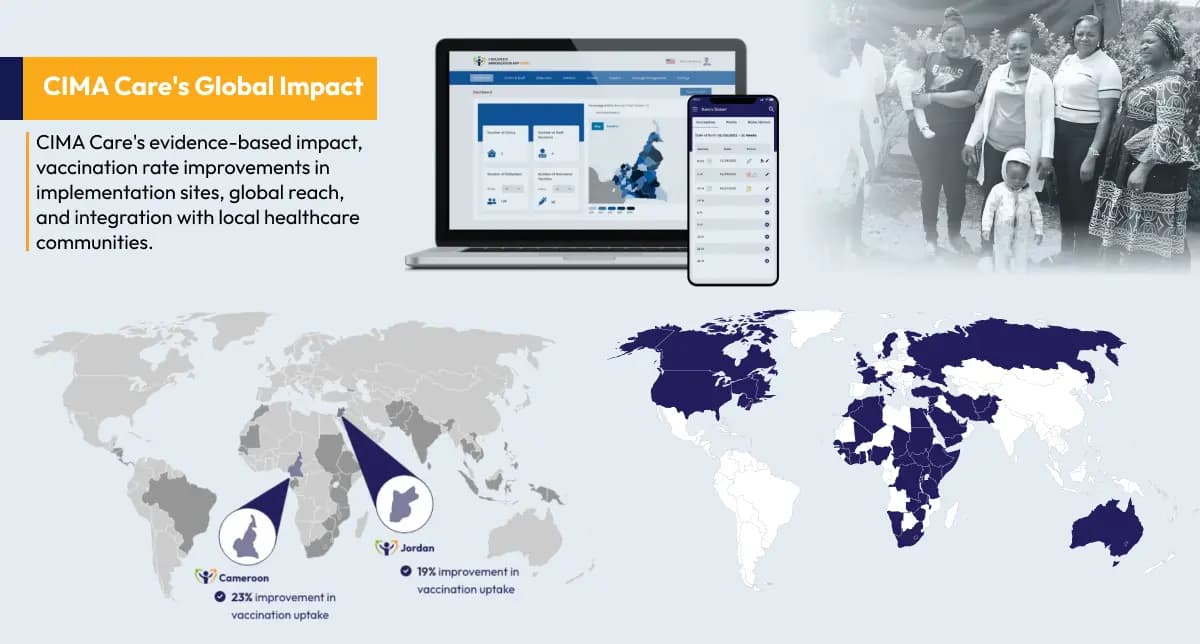
Measurable impact: 23% vaccination boost in Cameroon, 19% in Jordan, with worldwide educational reach.
Conclusion: A Path Forward
The scoping review by Li et al. (2025) provides valuable insights into the current state of vaccination research and practice in Sub-Saharan Africa, highlighting critical gaps that must be addressed to improve methodological gaps in monitoring vaccine series completion (VSC) and immunization outcomes. CIMA Care's holistic approach directly responds to these challenges by providing innovative digital tools, evidence-based education, and community-centred strategies that can transform vaccination recording, monitoring, management, timely immunization, defaulter tracking, resource allocation, and strategic planning while empowering healthcare professionals with advanced clinical skills and continuous professional development.
As we work towards achieving global immunization targets, integrated approaches like CIMA Care's ecosystem represent the future of vaccination efforts—combining technological innovation with human expertise to ensure every child receives the protection they deserve. By addressing the methodological, geographic, and social gaps identified in the research, CIMA Care is helping to build more resilient and effective immunization systems across Sub-Saharan Africa and beyond.
Visit www.cima.care to learn more about how our digital solutions and educational initiatives can support your efforts to improve vaccination coverage and protect children against preventable diseases.
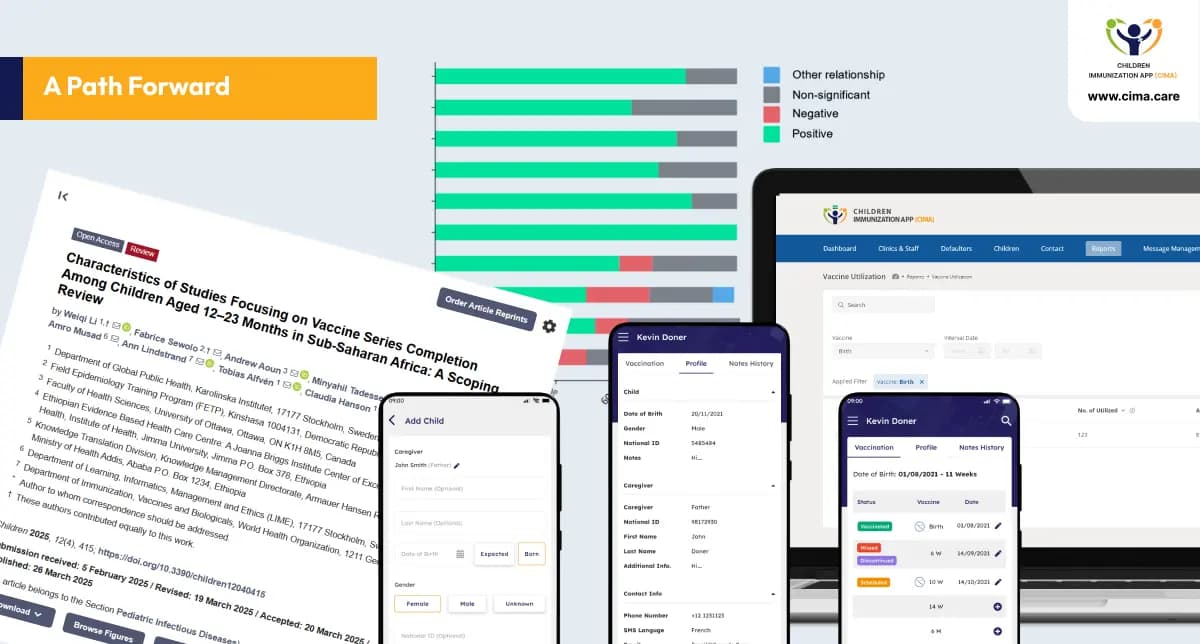
CIMA's holistic solution connects research to implementation through digital innovation and education.
Image References
- 1- Adobe Stock. Futuristic syringe on glowing lava-cracks background [Internet]. [cited 2025 Aug 19]. Available from: https://stock.adobe.com/nl/images/futuristic-syringe-on-glowing-lava-cracks-background/982420903
Blog Resources
- 1- Li, W., Sewolo, F., Aoun, A., Boltena, M.T., Musad, A., Lindstrand, A., Alfvén, T., Hanson, C., & El-Khatib, Z. (2025). Characteristics of Studies Focusing on Vaccine Series Completion Among Children Aged 12–23 Months in Sub-Saharan Africa: A Scoping Review. Children, 12(4), 415. Characteristics of Studies Focusing on Vaccine Series Completion Among Children Aged 12–23 Months in Sub-Saharan Africa: A Scoping Review
- 2- NCBI - WWW Error Blocked Diagnostic
- 3- The World of Immunization: Achievements, Challenges, and Strategic Vision for the Next Decade
- 4- El-Halabi S, Khader YS, Khdeir MA, Hanson C, Alfvén T, El-Khatib Z. Children immunization app (CIMA): A non-randomized controlled trial among Syrian refugees in Zaatari camp, Jordan. Journal of Prevention. 2023 Apr;44(2):239-52.
- 5- Yayah Emerencia Ngah , George Ikomey Mondinde , Rasa Nikooifard , Cornelius Chebo , Shalom Tchokfe Ndoula , Ujjwal Neogi , Claudia Hanson , Tobias Alfven , Eresso Aga , Wadih Mallouf , Ziad El-Khatib; Enhancing vaccination uptake and parenting education through automated SMS service: A non-RCT pilot study in Bamenda, Cameroon; Mediterranean Life Sciences Union Annual Meeting (MedLIFE-24), Istanbul, Türkiye, December 2024
- 6- Vosoughi S, Roy D, Aral S. The spread of true and false news online. science. 2018 Mar 9;359(6380):1146-51.
- 7- Cima Children Immunization app - Voices & Stories [Internet]. CIMA Care. 2025 [cited 2025 Apr 11]. Available from: Cima Children Immunization app - Voices & Stories
- 8- CIMA | Children Immunization App [Internet]. Cima.care. 2025. Available from: Cima Children Immunization app - Voices & Stories
- 9- Cima Children Immunization app - Voices & Stories [Internet]. CIMA Care. 2025 [cited 2025 Apr 11]. Available from: Cima Children Immunization app - Voices & Stories
Enjoyed this article?
Share it with your friends on LinkedIn: Bridging the Gap: CIMA Care's Holistic Approach to Addressing Childhood Vaccination Challenges in Sub-Saharan Africa 
Follow us on LinkedIn for more updates and insights: Cima Care GmbH