
Climate Change and Vaccines: Scientific Challenges Ahead |
September 04, 2024 . 6 Minutes read
Climate Change and Vaccine Efficacy: Scientific Challenges for Global Immunization
As our planet warms, the landscape of global immunization shifts dramatically. From vaccine stability to disease patterns, climate change poses unprecedented challenges to our fight against preventable diseases. This makes vaccines even more crucial as a public health tool.
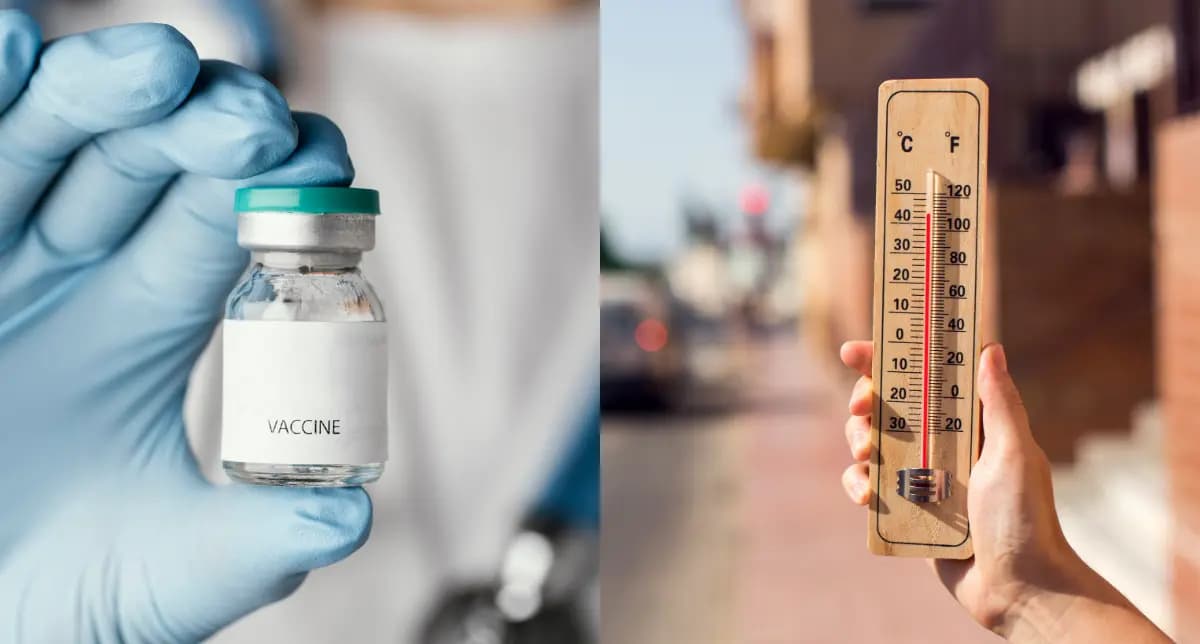
Rising Temperatures, Rising Risks: Safeguarding Vaccine Efficacy Amidst Climate Change Challenges.
The Heat is on: Climate Change's Impact on Vaccine Efficacy
Climate change is more than just melting ice caps; rising temperatures also threaten vaccine stability and efficacy. The World Health Organization (WHO) highlights how temperature fluctuations can compromise vaccine potency. Exposure to excessive heat can reduce vaccine effectiveness, making this issue increasingly relevant as global temperatures continue to rise. According to the WHO, improper handling or storage conditions that lead to temperature stress further exacerbate these risks [1], underscoring the critical importance of maintaining stable vaccine storage in our changing climate.
Shifting Disease Patterns: A Moving Target for Immunization Programs
As temperatures rise, water-related diseases like cholera disease, and vectors like mosquitoes expand into new regions, posing risks to previously unaffected areas. For example, North America now faces threats from diseases such as Lyme disease, dengue, West Nile virus, Rocky Mountain spotted fever, plague, and tularemia. Long-term studies are needed to understand the links between weather, vector ranges, pathogens, and human behavior. Enhanced vector surveillance and disease tracking are essential to address these challenges. [2] WHO provides practical guidance on implementing water, sanitation, and waste management to prevent mosquito-borne diseases, focusing on emergency contexts. [3] Recent advances in global vaccine development facilitate the use of vaccines and vaccination as a mitigation strategy against climate change consequences. [4]
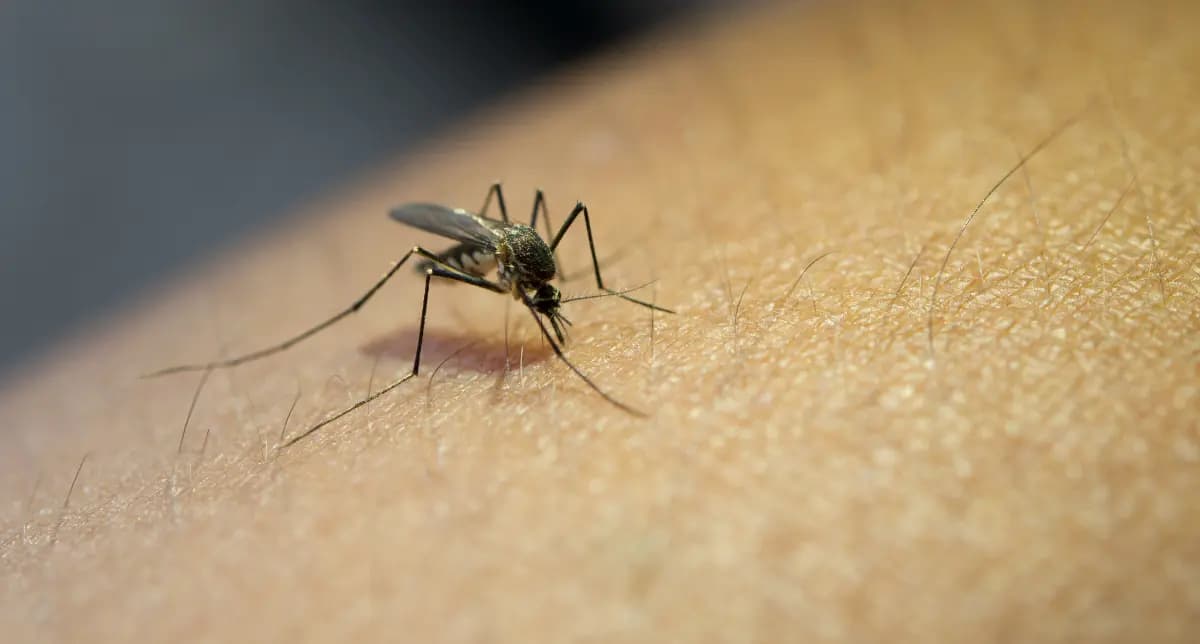
Climate Change Drives Mosquito-Borne and More Diseases: A Growing Challenge to Global Immunization Efforts.
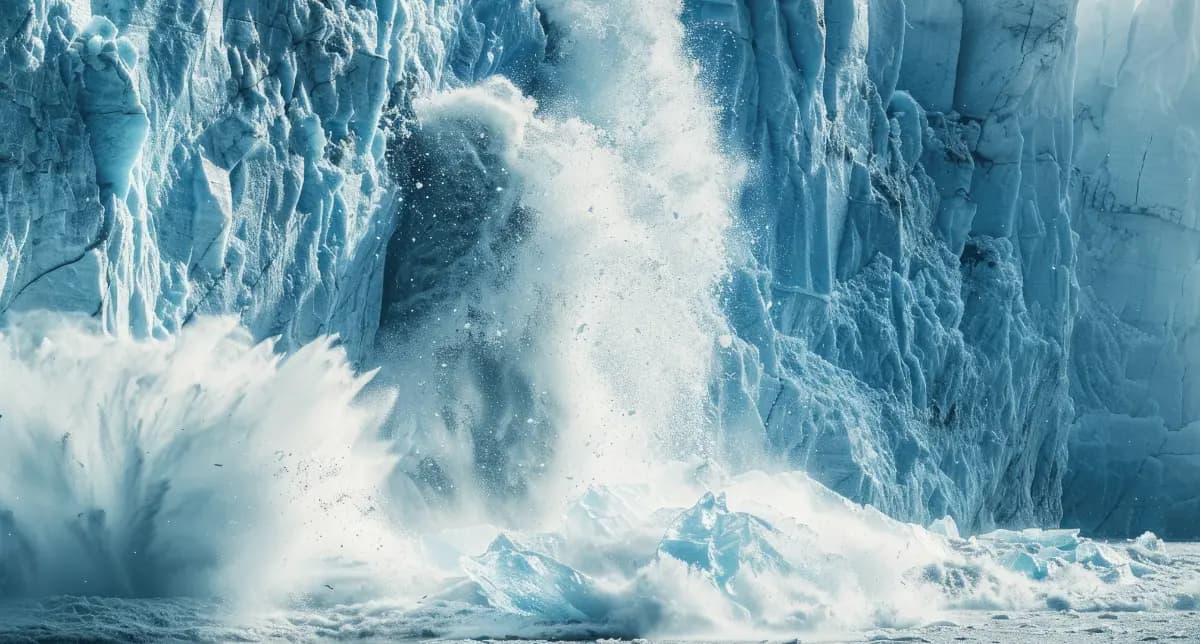
Unlocking Ancient Threats: Melting Ice Reveals Long-Dormant Pathogens, Asking for New and Modern Immunization.
Emerging Pathogens: The Melting Ice Box Effect
The thawing of permafrost due to global warming is unearthing ancient microbes, potentially exposing populations to long-dormant pathogens. A study in western China reported the discovery of 28 novel virus groups in Tibetan glacier ice, some dating back 15,000 years. [5] This phenomenon adds a new dimension to our understanding of emerging infectious diseases and vaccine development needs.
A Silver Lining: Climate Change as a Catalyst for Innovation in Vaccinology
Climate change is accelerating the emergence and spread of new pathogens, putting pressure on vaccine developers to work faster than ever. From thermostable vaccines to drone-delivered immunizations, climate change is pushing the boundaries of what's possible.
The COVID-19 pandemic demonstrated our capacity for rapid vaccine development, but can we maintain this pace? A 2023 review provides a very recent perspective on vaccine development acceleration and more rapid design and manufacturing of vaccines compared to traditional approaches with a focus on technologies aimed at pandemic preparedness. [6]
Vaccines to Watch in 2024 discusses emerging vaccine technologies and developments that could potentially revolutionize global health. [7] For the first time, climate change risk will be included among the criteria informing Gavi's Vaccine Investment Strategy (VIS).
This decision highlights the growing recognition of climate change's impact on global health and immunization. Gavi's inclusion of climate risk in decision-making indicates a focus on developing more resilient vaccines to climate challenges. [8]

Innovating for the Future: How Climate Change is Accelerating Advances in Vaccine Technology.
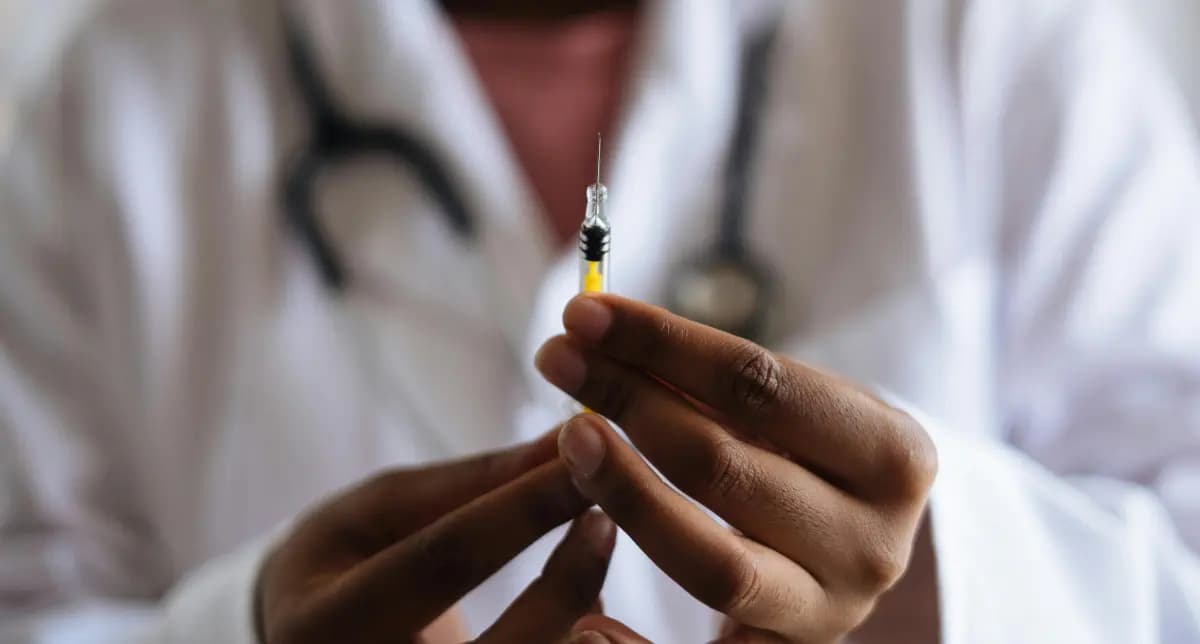
Pioneering Climate-Resilient Vaccines: The Future of Immunization in a Warming World.
Innovation on the Horizon: Climate-Resilient Vaccines
Scientists are developing next-generation vaccines to withstand extreme conditions in response to climate change's impact and temperature fluctuations. As a few examples, a study described a novel thin-film platform for preserving live viruses, bacteria, antibodies, and enzymes without refrigeration for extended periods. [9] Another study demonstrated that using sugar films, a live-attenuated HSV-2 vaccine retained its efficacy for at least two months of storage at 40°C. [10] Moreover, a 2023 review discusses research advances on the stability of mRNA vaccines, including storage at various high temperatures. [11]
CIMA Care Actions and Impacts
In the face of these climate-induced challenges, innovative solutions like CIMA Care) are more crucial than ever. CIMA's digital platforms not only enhance vaccination tracking and parent education and help professionals with continuous professional development through its Health Academy but also adapt to the evolving challenges posed by our changing climate. By providing real-time data and flexible scheduling, CIMA helps health systems respond swiftly to climate-related disruptions in immunization programs. To learn more about how CIMA contributes to climate-resilient vaccination efforts, visit www.cima.care.
CIMA: Empowering Vaccination Efforts Through Innovation and Education.
Image References
- 1- Adobe Stock. [Internet]. 2025 [cited 2025 Aug 19]. Available from: https://stock.adobe.com/de/455801976
- 2- Freepik. Doctor preparing COVID-19 vaccine [Internet]. 2025 [cited 2025 Aug 19]. Freepik Available from: https://www.freepik.com/free-photo/doctor-preparing-covid-19-vaccine_13436523.htm
- 2- Adobe Stock. [Internet]. 2025 [cited 2025 Aug 19]. Available from: https://stock.adobe.com/de/518585212
- 3- Freepik. Close-up of mosquito sucking blood from human arm [Internet]. 2025 [cited 2025 Aug 19]. Freepik Available from: https://www.freepik.com/free-photo/close-up-mosquito-sucking-blood-from-human-arm_1186022.htm
- 4- Adobe Stock. [Internet]. 2025 [cited 2025 Aug 19]. Available from: https://stock.adobe.com/791452720
- 5- Adobe Stock. [Internet]. 2025 [cited 2025 Aug 19]. Available from: https://stock.adobe.com/452006023
- 6- Pexels. Person holding injection [Internet]. 2025 [cited 2025 Aug 19]. Available from: https://www.pexels.com/photo/person-holding-injection-3825529/
Blog Resources
- 1- Stability of vaccines [Internet]. www.who.int. Available from: https://www.who.int/teams/health-product-policy-and-standards/standards-and-specifications/vaccine-standardization/stability-of-vaccines
- 2- CDC. Vector-Borne Diseases [Internet]. Climate and Health. 2024. Available from: Vector-Borne Diseases
- 3- Water and sanitation interventions to prevent and control mosquito borne disease: focus on emergencies [Internet]. www.who.int. Available from: Water and sanitation interventions to prevent and control mosquito borne disease: focus on emergencies
- 4- Kim CL, Agampodi S, Marks F, Kim JH, Excler JL. Mitigating the effects of climate change on human health with vaccines and vaccinations. Frontiers in Public Health. 2023 Oct 12;11:1252910.
- 5- Zhong ZP, Tian F, Roux S, Gazitúa MC, Solonenko NE, Li YF, et al. Glacier ice archives nearly 15,000-year-old microbes and phages. Microbiome. 2021 Jul 20;9(1).
- 6- Prieto A, Huang R, Eusebi CA, Shostak M. A Brief Overview of Emerging Vaccine Technologies for Pandemic Preparedness. Rand Health Quarterly. 2023 Dec;11(1).
- 7- Massaro L. Vaccines to Watch in 2024. wwwdrugtopicscom [Internet]. 2024 Mar 19;168. Available from: Vaccines to Watch in 2024
- 8- Projected impact of climate change to inform which new vaccines receive Gavi support [Internet]. Gavi, the Vaccine Alliance . 2024 [cited 2024 Aug 19]. Available from: Projected impact of climate change to inform which new vaccines receive Gavi support
- 9- Bajrovic I, Schafer SC, Romanovicz DK, Croyle MA. Novel technology for storage and distribution of live vaccines and other biological medicines at ambient temperature. Science Advances [Internet]. 2020 Mar 1 [cited 2020 Jul 25];6(10):eaau4819. Available from: https://advances.sciencemag.org/content/6/10/eaau4819
- 10- Leung V, Mapletoft J, Zhang A, Lee A, Vahedi F, Chew M, et al. Thermal Stabilization of Viral Vaccines in Low-Cost Sugar Films. Scientific Reports [Internet]. 2019 May 21;9. Available from: NCBI - WWW Error Blocked Diagnostic
- 11- Cheng F, Wang Y, Bai Y, Liang Z, Mao Q, Liu D, Wu X, Xu M. Research advances on the stability of mRNA vaccines. Viruses. 2023 Mar 2;15(3):668.
Enjoyed this article?
Share it with your friends on LinkedIn: Climate Change and Vaccine Efficacy: Scientific Challenges for Global Immunization 
Follow us on LinkedIn for more updates and insights: Cima Care GmbH