
Beyond Misconceptions: Unlocking Global Health's Reality |
July 01, 2025 . 5 Minutes read
Transforming Global Health Through Education: Eliminating Misconceptions
In our hyper-connected world, misinformation travels faster than truth. [1] Despite unprecedented access to data, global health misconceptions remain deeply rooted, creating barriers to progress and understanding. The CIMA Health Academy, like the Gapminder Foundation, is committed to combating these misconceptions through comprehensive education on vaccination and public health. While Gapminder exposes common misconceptions, and inaccurate public beliefs about global issues, this article presents some of its key findings related to global health.
The Progress Hidden in Plain Sight
The data shows a compelling story of advancement that most fail to recognize:
• The Perception Gap: What We Believe vs. Reality
When surveyed about global health metrics, people consistently demonstrate a striking disconnect between perception and reality. Consider this: 71% of the Gapminder survey's respondents incorrectly estimated child mortality rates before age five from 1900, with most dramatically underestimating the true figure of 40% to the lower percentages of 14% or 20%, compared to 4% in 2023. Similarly, 75% of the participants undervalued the global life expectancy of a century ago, failing to recognize it was just 37 years compared to today's 72 years. These are not isolated errors but part of a pattern revealing our collective blindness to the remarkable progress of global health.

The Gapminder digital survey reveals that approximately 71% of respondents underestimate global health progress.

72% don't know that child mortality has fallen from 18% to less than 10% in low-income countries. Gapminder highlights how progress often goes unnoticed.
• Child survival has dramatically improved
In low-income countries, the transformation of child mortality rates has been especially profound: in 1990, 18% of children died before their fifth birthday—today, that figure has dropped to less than 10%. Yet most people remain unaware of this progress. Despite this remarkable improvement, Gapminder's surveys reveal that 72% of respondents incorrectly assumed child mortality rates in these countries were either unchanged or worse than thirty years ago. This widespread misperception reflects our failure to recognize one of humanity's greatest achievements: significantly fewer mothers today must endure the heartbreak of losing their young children.
• Life expectancy has surged
In low-income countries, life expectancy has increased from 44 years in 1970 to around 60 years today, representing a 16-year gain in just five decades. A staggering 86% of people underestimated this achievement. Globally, the picture is equally positive; babies born today can expect to live approximately 74 years on average. However, 52% of respondents in Gapminder surveys incorrectly believed this figure to be 60 years or lower. This steadily improving life expectancy stems from multiple factors, including increased wealth, more effective and affordable healthcare, dramatically reduced child mortality, better education, safer working conditions, reduced indoor pollution, improved safety regulations, and others. Despite persistent suffering in many regions, the evidence is clear: even the world's poorest populations enjoy substantially better lives than their counterparts half a century ago, reflecting broad societal advances rather than isolated improvements.

About 86% of the Gapminder survey respondents miss the life expectancy surge: a 20-year gain in low-income countries.
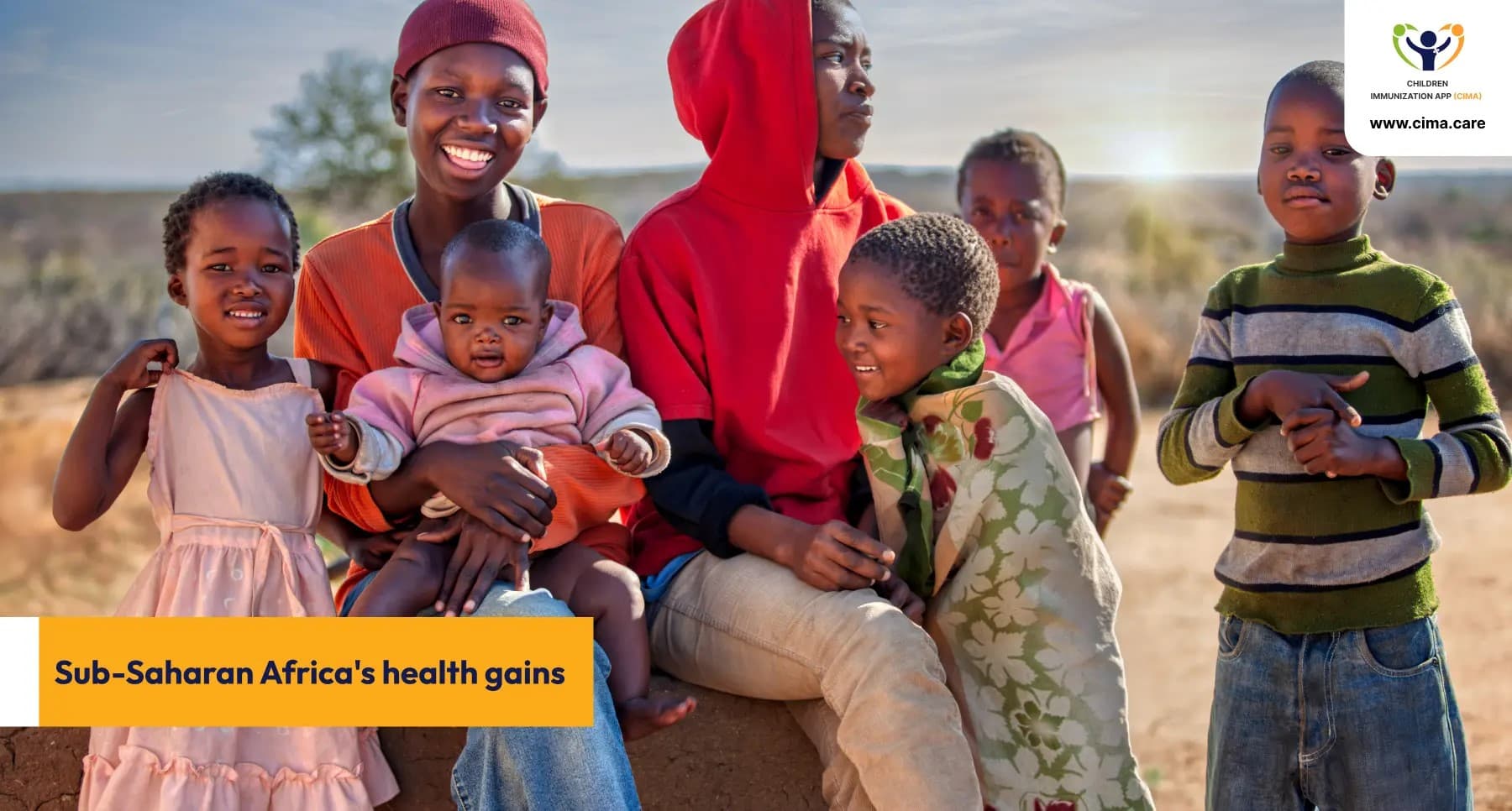
Gapminder: 88% underestimate Sub-Saharan Africa's life expectancy at 60 years, not 40-50.
• Sub-Saharan Africa's health gains
The average life expectancy in Sub-Saharan Africa is now around 60 years, not the 40-50 years that 88% of respondents mistakenly believed.
• Stable child population despite growth fears
Contrary to popular belief about exponential population growth, the UN estimates that the global child population (ages 0-14) will remain stable at approximately 2 billion between now and 2100, with a likely decrease to around 1.7 billion by the end of the century. This stabilization reflects declining birth rates associated with improved child survival, increased access to healthcare, and expanded educational opportunities for women. Yet an astonishing 89% of respondents incorrectly anticipated significant growth, revealing how deeply entrenched overpopulation fears remain despite demographic evidence to the contrary.
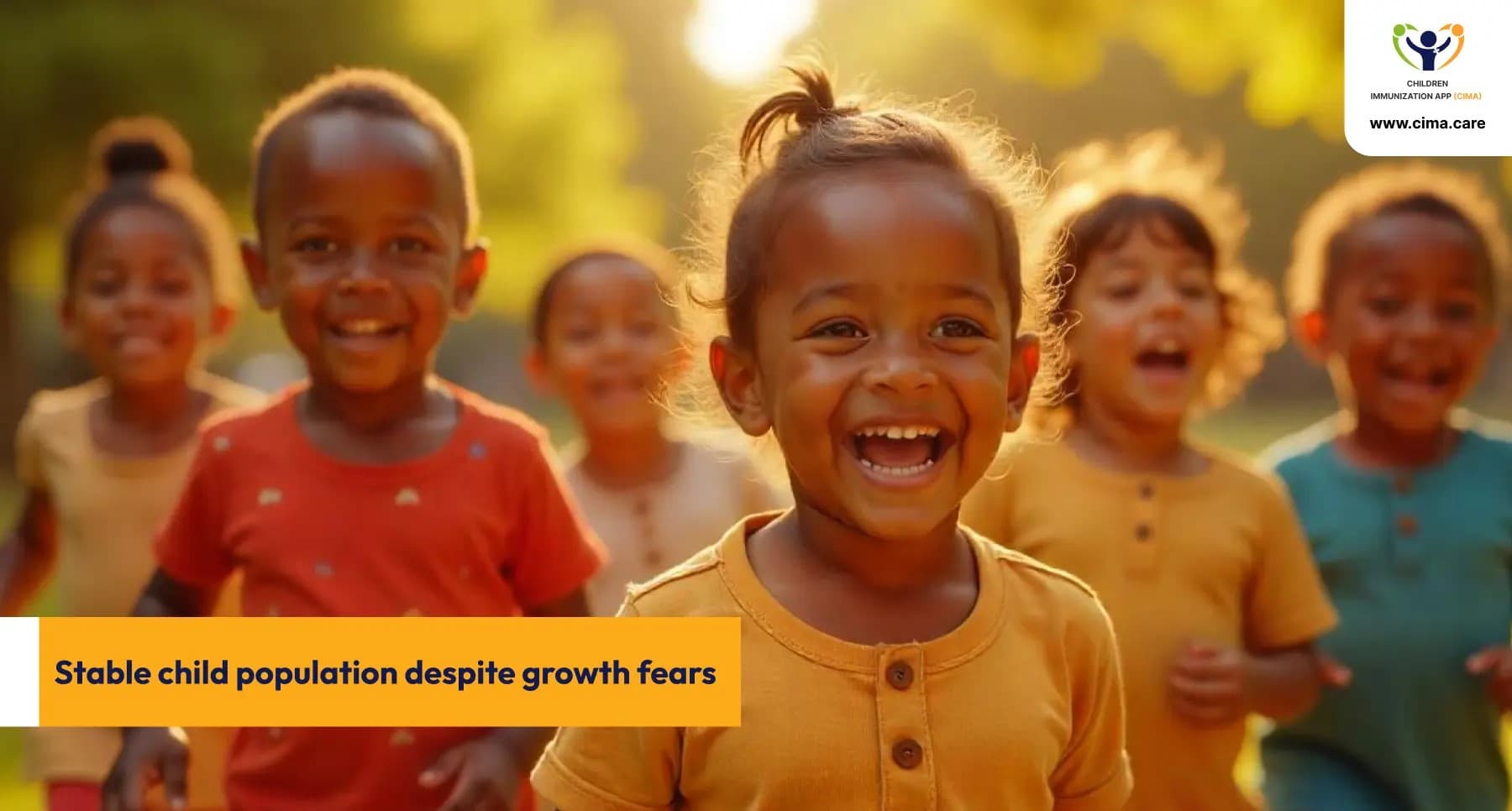
Gapminder: 89% of the survey respondents miss child population stability (aged 0-14). The UN projects no growth until 2100.
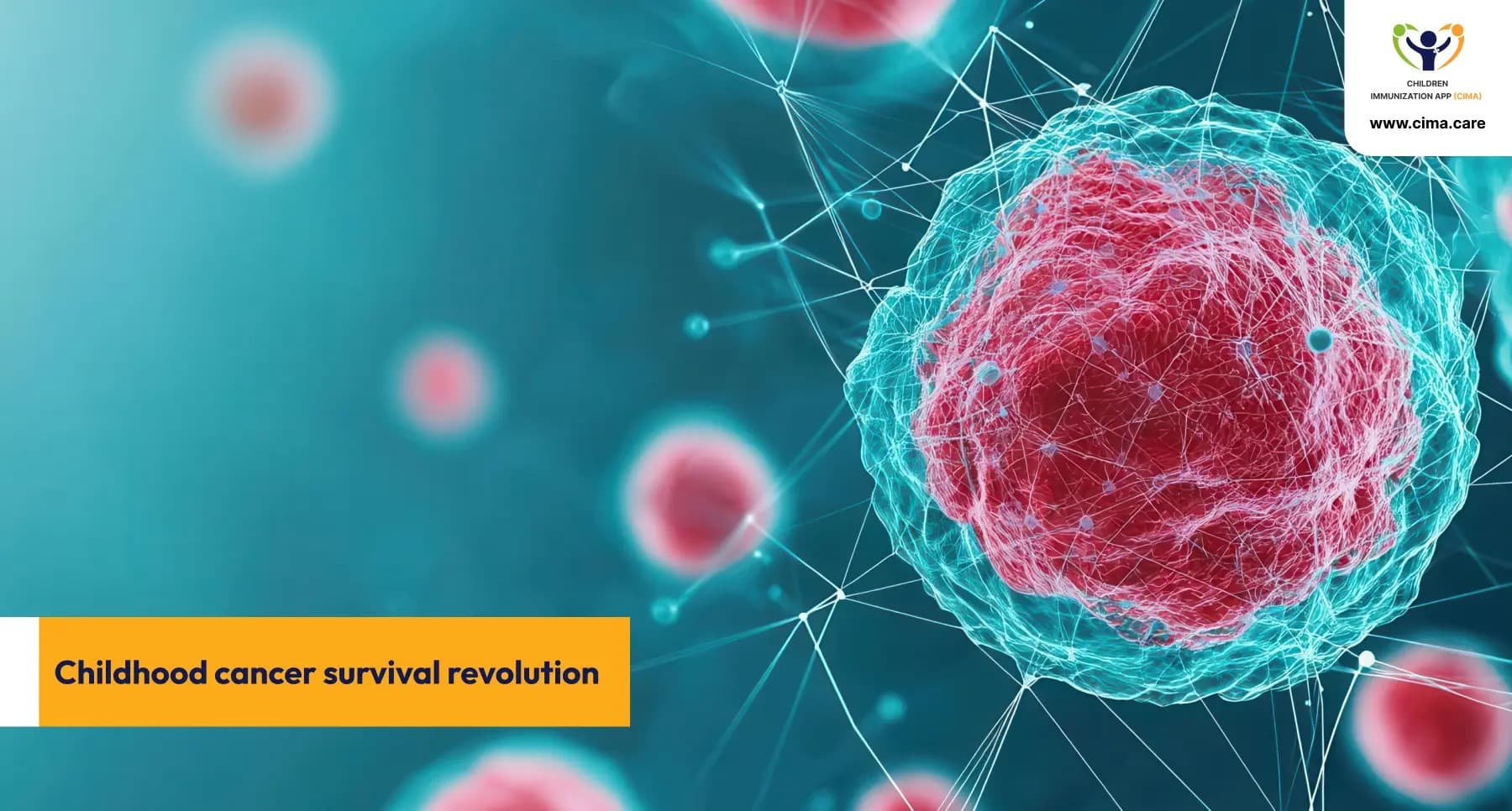
74% underestimate childhood cancer survival: A Gapminder survey reveals 58% to 80%+ progress.
• Childhood cancer survival revolution
In high-income countries, childhood cancer treatment has undergone a remarkable transformation. While only 58% of children diagnosed with cancer in 1975 survived beyond five years, today that figure exceeds 80%. Despite this dramatic improvement, Gapminder surveys show 74% of respondents significantly underestimated current survival rates. This misconception potentially undermines appreciation for the life-saving advances in pediatric oncology achieved through decades of research and clinical innovation.
• Childhood nutrition
While childhood obesity receives significant media attention, the reality is more nuanced than commonly perceived. Only 6% of children under age five worldwide are overweight, not the 26-46% estimated by 82% of respondents. Similarly, overweight and obesity contribute to less than 10% of global deaths, though 84% of survey participants believe the figure to be much higher. These exaggerated perceptions can distort public health priorities, making the challenges seem insurmountable. By understanding the full scope of the issue, we can design more focused and realistic interventions while also acknowledging the genuine challenges of implementing nutritional changes in populations emerging from poverty.

82% of Gapminder survey respondents miss the reality of childhood nutrition: the reality is 6% overweight, not the estimated 26-46%.
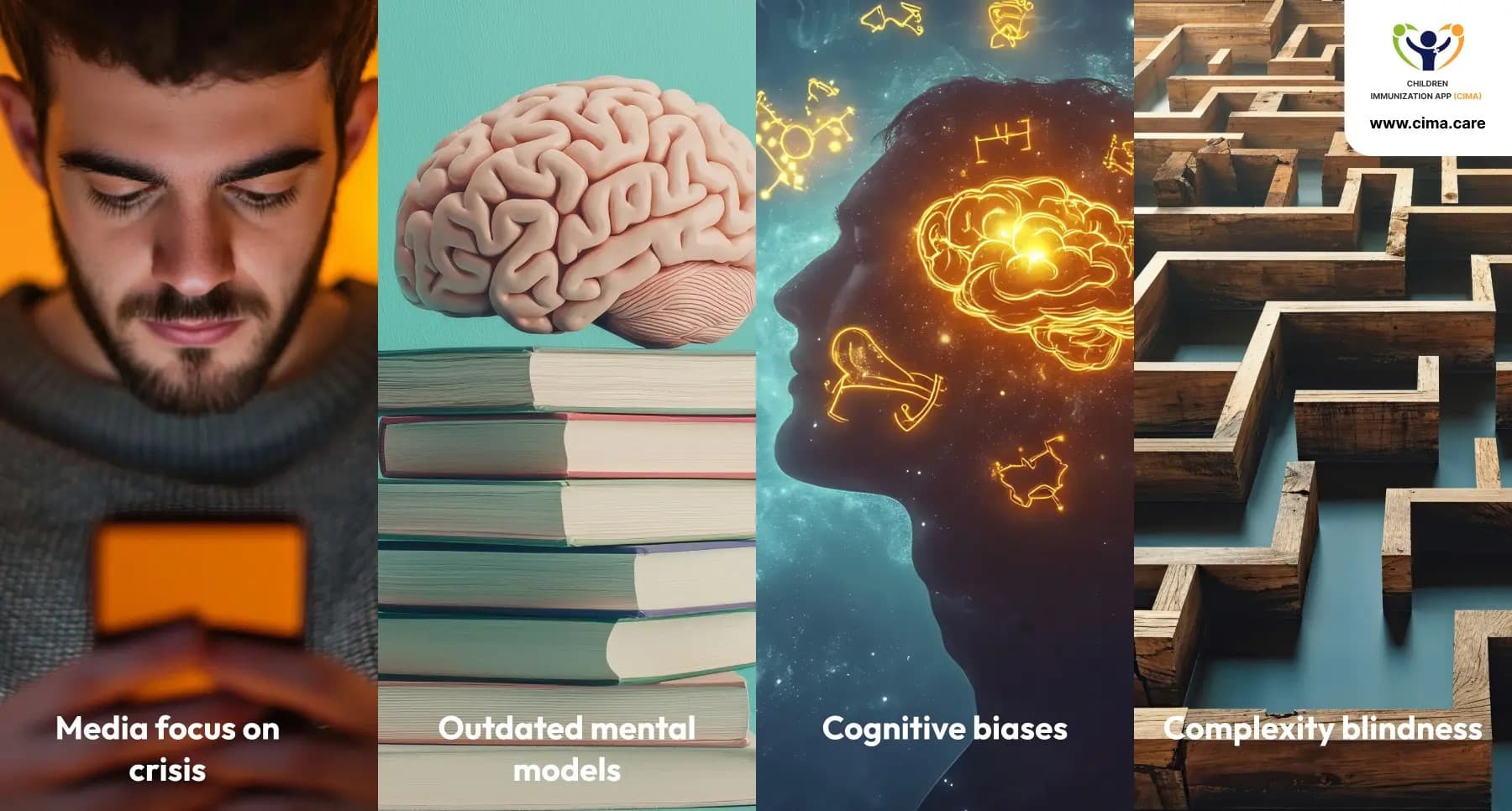
We miss progress because of media bias, outdated models, cognitive bias, complexity, and several other factors.
Why Do We Get It So Wrong?
Our collective pessimism stems from several factors:
1. Media focus on crisis: News coverage gravitates toward disaster and suffering rather than incremental improvements. [2]
2. Outdated mental models: We often shape our view of the world early in life, and seldom revise it based on new information. [3]
3. Cognitive biases: We tend to notice negative information more readily than positive developments. [4]
4. Complexity blindness: Long-term trends and system-wide improvements are harder to perceive than acute problems. [5]
Dr. Hans Rosling, co-founder of Gapminder, noted, "Progress is real. Contrary to popular belief, the world has made tremendous progress in areas like poverty reduction, education, and health... While problems persist, it's crucial to recognize significant improvements... Acknowledging progress doesn't mean ignoring problems; it provides a more accurate worldview and can inspire further action." [6]
Some Consequences of Misconception
These knowledge gaps are not merely academic concerns. They fundamentally shape how we approach global health challenges:
• Resource misallocation: If we believe health conditions are worse than they are, we may direct resources ineffectively. [7]
• Intervention design: Programs based on outdated information may address yesterday’s problems rather than today’s needs. [8]
• Motivation and hope: Believing no progress has occurred can lead to acceptance and reduced effort toward solutions. [9]
• Policy support: Public misunderstanding may translate to reduced backing for effective interventions. [10]
In South Asia, for example, 14% of children under five are dangerously underweight—more than twice the rate in Sub-Saharan Africa. Yet 85% of respondents incorrectly identified Africa as having the higher rate, potentially diverting attention from where it’s most needed.
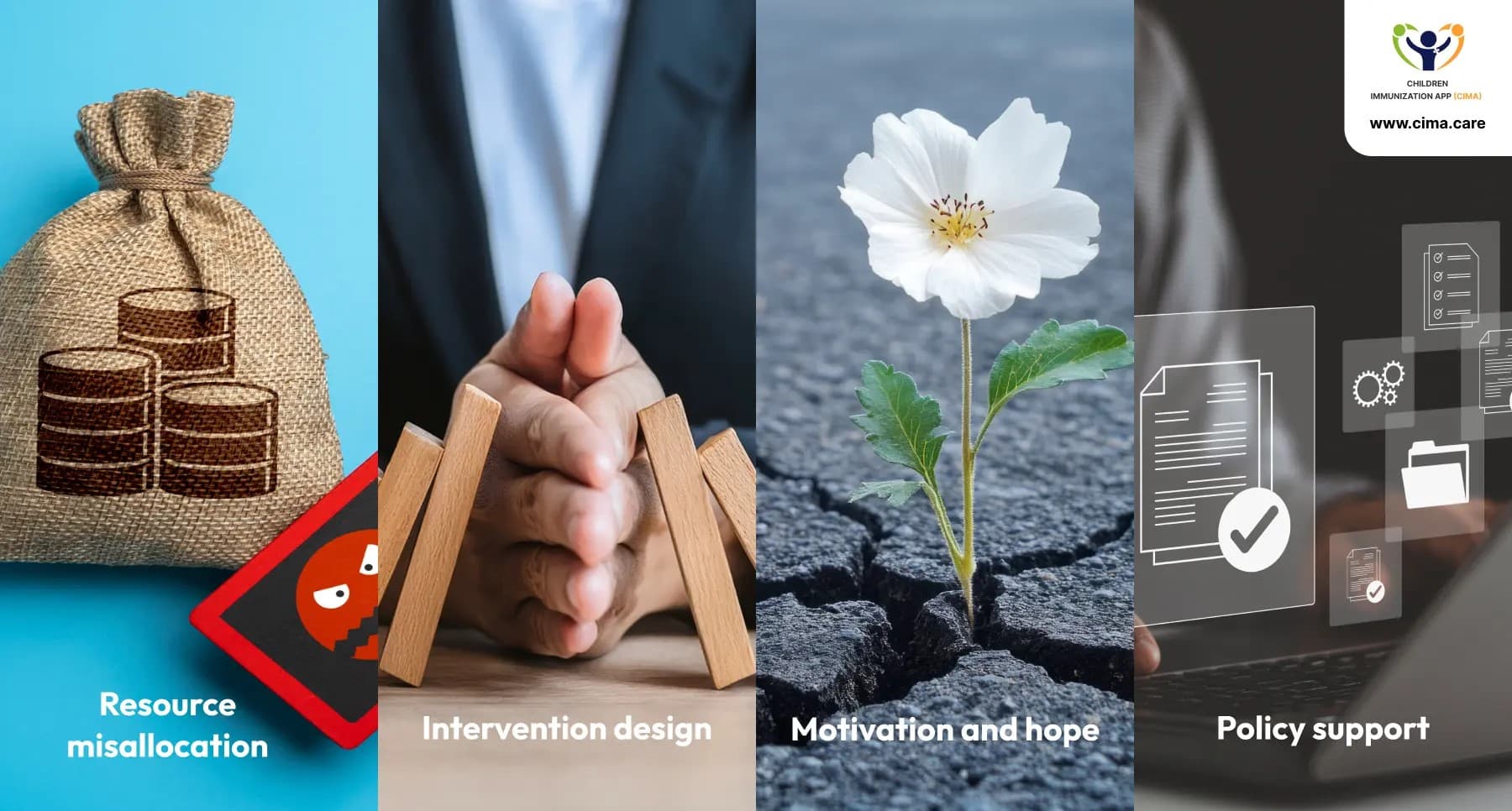
Misconceptions lead to resource loss, weak policy support, reduced effort, and numerous other consequences.

Health Academies empower professionals with evidence-based education to reshape perceptions.
The Role of Education in Reshaping Perception
CIMA Health Academy's educational modules are one of the attempts to directly address these misconceptions. By providing healthcare professionals with evidence-based information about global health trends, vaccination efficacy, and intervention outcomes, we empower the participants to:
• Make informed decisions based on current realities, not outdated perceptions.
• Communicate accurately with patients and communities.
• Advocate effectively for appropriate health policies and resource allocation.
• Maintain optimism grounded in verifiable progress.
Our curriculum incorporates the latest data on disease burden, intervention effectiveness, and demographic trends, ensuring professionals understand both challenges and successes in context.
The Path Forward: Building on Progress
The data reveals both achievement and ongoing needs. While celebrating reduced child mortality and increased life expectancy, we must acknowledge that:
• Millions of preventable child deaths still occur annually, with 49% concentrated in just five countries (Nigeria, India, Pakistan, the DRC, and Ethiopia).
• Dangerous underweight conditions affect 14% of children in South Asia.
• Infectious diseases cause approximately 45% of deaths in low-income countries versus just 5% in high-income countries.
By accurately understanding what has been accomplished and what remains to be done, healthcare professionals can contribute more effectively to continued progress.
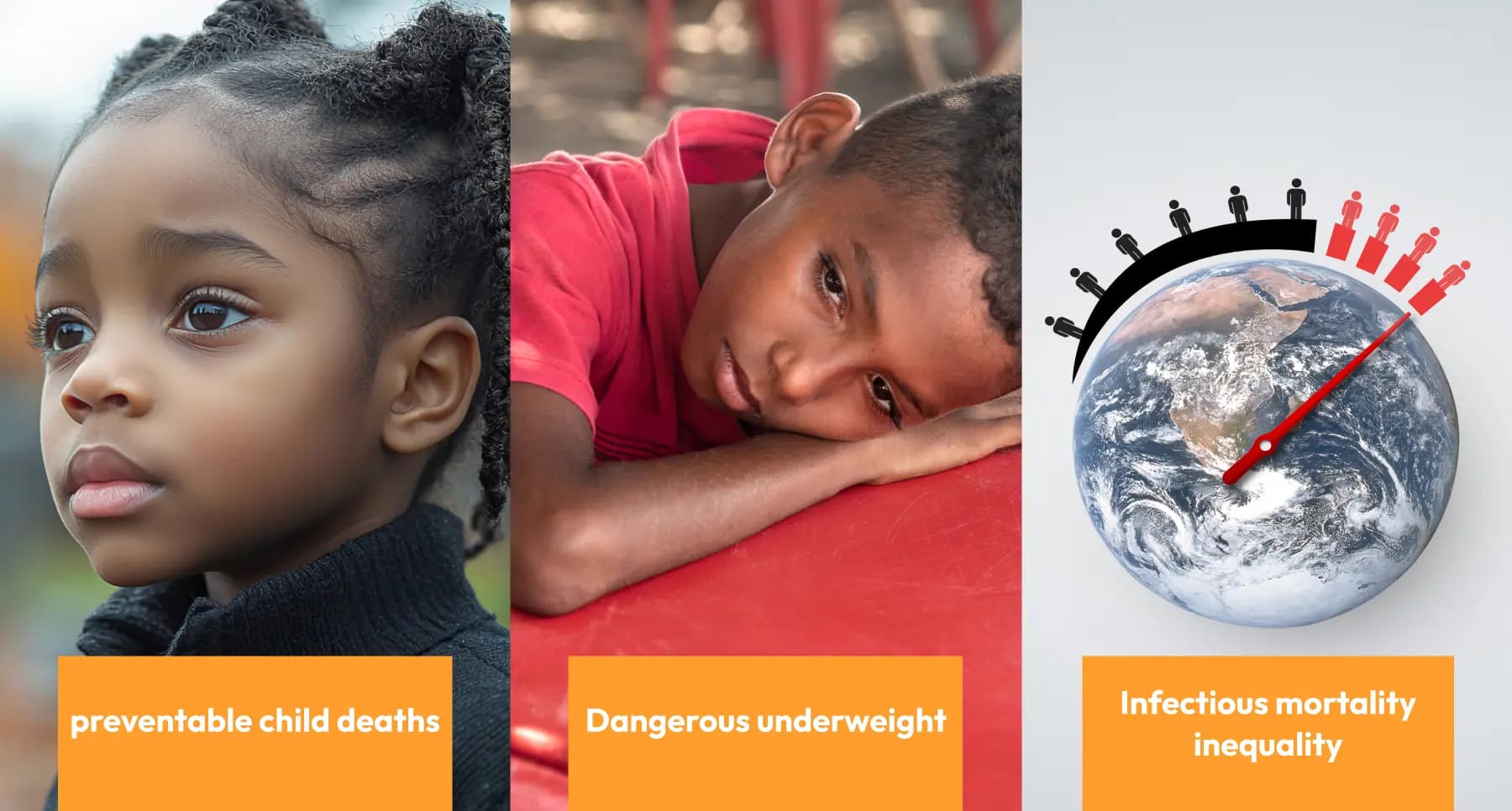
Need for progress continues: 49% of child deaths in 5 countries, 14% of underweight in South Asia. Infectious diseases cause 45% of deaths in low-income countries.
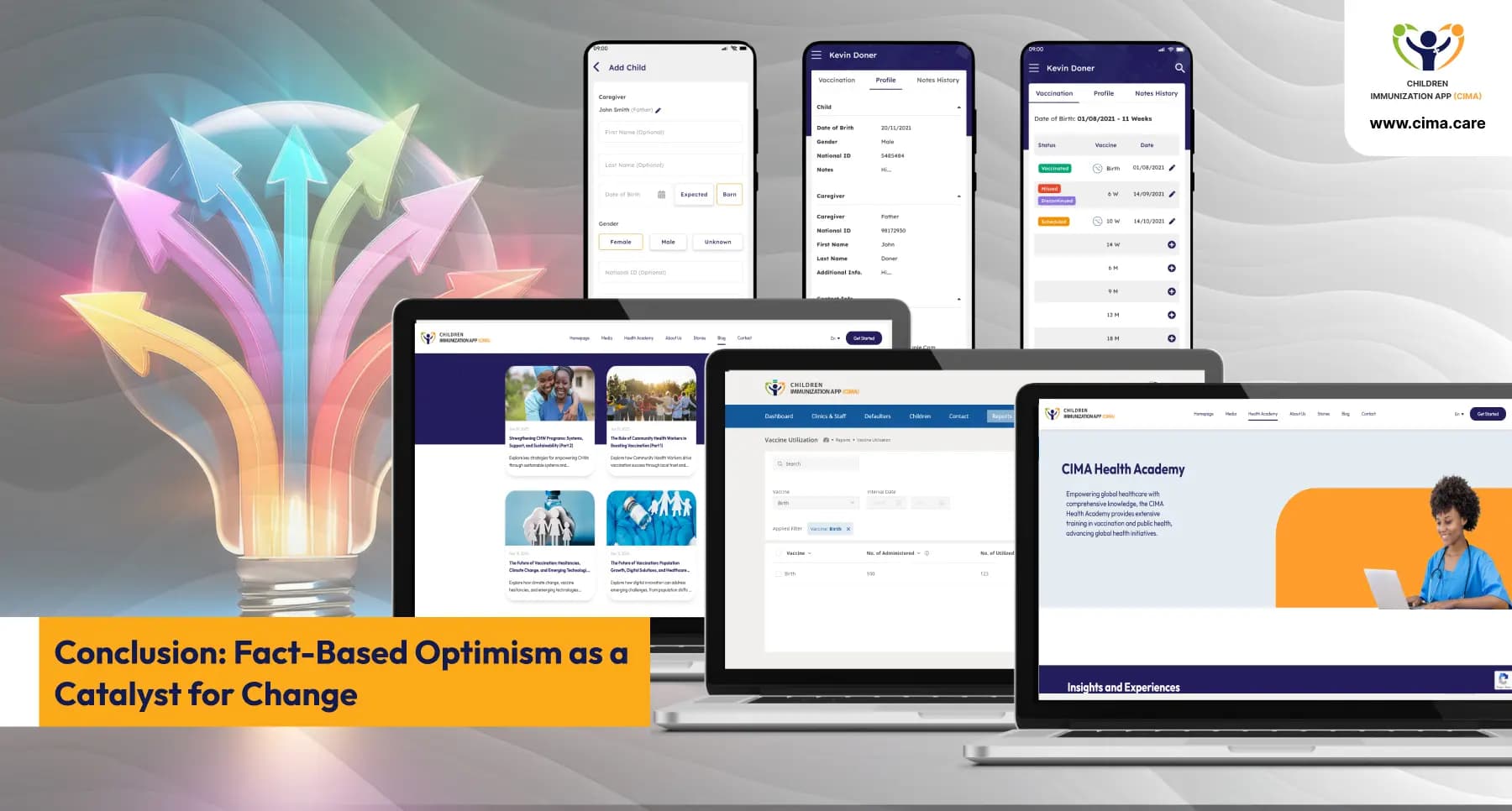
CIMA Health Academy helps transform healthcare workers with data, not fear.
Conclusion: Fact-Based Optimism as a Catalyst for Change
The CIMA Health Academy aims to foster what Dr. Rosling called "fact-based optimism." Neither naive positivity nor paralytic pessimism, but a clear-eyed recognition of both progress and challenges. By equipping healthcare professionals with accurate information about global health trends, we enable more effective intervention, advocacy, and education.
The gap between perception and reality in global health is not merely an interesting curiosity—it is a critical barrier to further progress. Through education, we can eliminate these misconceptions and accelerate the remarkable improvements in human health that have characterized the past century.
As we continue this journey, we invite healthcare professionals worldwide to join the CIMA Health Academy in pursuing a future where facts, not fear, drive decisions and where every child has the opportunity to grow into a healthy, productive adult.
Cima Children Immunization - Health Academy.
Acknowledgment of Gapminder Survey Data
The comprehensive survey data and public perception statistics that form the foundation of this article are drawn from the Gapminder Foundation's extensive global survey datasets. We extend our deepest gratitude to Gapminder for their invaluable contribution and generous permission to utilize these critical survey findings that reveal the striking gap between public perception and statistical reality. Gapminder's mission to eliminate devastating ignorance with evidence-based knowledge aligns seamlessly with CIMA Health Academy's commitment to transforming global health through comprehensive education. For more information about Gapminder's transformative work and educational methodologies, please visit
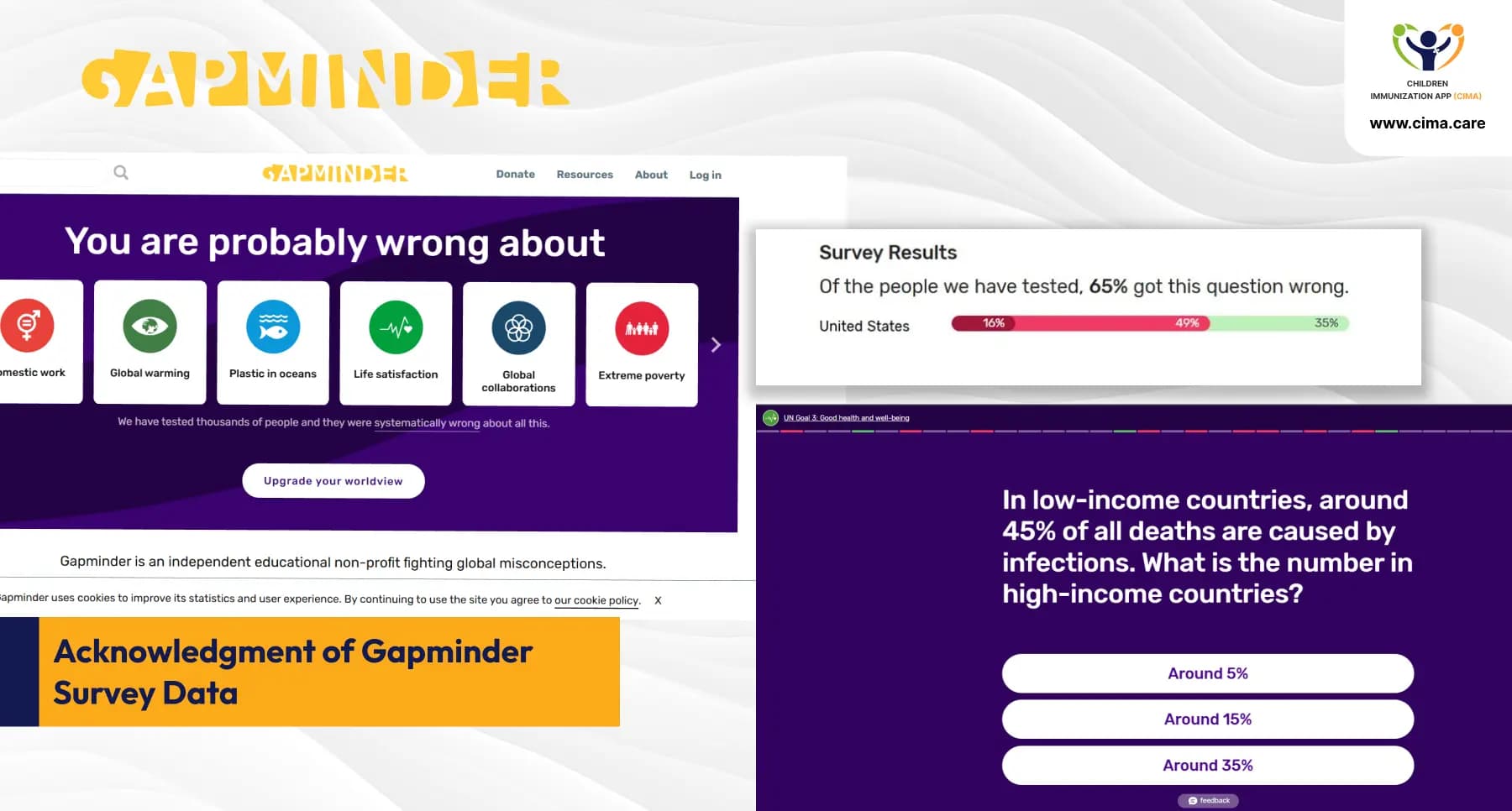
Gapminder reveals a high misconception rate: CIMA Care attempts to eliminate health ignorance.
Image References
- 1- Adobe Stock. A doctor holding a digital globe with connections in his hand, wearing a white coat and stethoscope [Internet]. Adobe Stock; [cited 2025 Aug 12]. Available from: https://stock.adobe.com/nl/images/a-doctor-holding-a-digital-globe-with-connections-in-his-hand-wearing-a-white-coat-and-stethoscope/1400470053
- 2- Adobe Stock. Doctor interacting with a futuristic network data visualization display [Internet]. Adobe Stock; [cited 2025 Aug 12]. Available from: https://stock.adobe.com/nl/images/doctor-interacting-with-a-futuristic-network-data-visualization-display/1289044556
- 3- Adobe Stock. African American father tenderly hugs his daughter, smiling, family love, warmth, care, Father’s Day, father’s love, suitable for parenthood advertising, family content, parenting blogs [Internet]. Adobe Stock; [cited 2025 Aug 12]. Available from: https://stock.adobe.com/nl/images/african-american-father-tenderly-hugs-his-daughter-smiling-family-love-warmth-care-father-s-day-father-s-love-suitable-for-parenthood-advertising-family-content-parenting-blogs/1266035783
- 4- Adobe Stock. Black family walking at sunset with parents, children, and grandparents spending time together in nature, spring love, or environment, bonding with kids and senior relatives [Internet]. Adobe Stock; [cited 2025 Aug 12]. Available from: https://stock.adobe.com/nl/images/black-family-walking-or-sunset-with-parents-children-and-grandparents-spending-time-together-in-nature-spring-love-or-environment-with-kids-and-senior-relatives-taking-a-walk-while-bonding/581024359
- 5- Adobe Stock. NGO volunteer charity organizations helping people to have a healthy, better life in Africa village, large African family, children, and teenagers [Internet]. Adobe Stock; [cited 2025 Aug 12]. Available from: https://stock.adobe.com/nl/images/ngo-volunteer-charity-organizations-helping-people-to-have-a-healthy-better-life-africa-village-large-african-family-children-and-teenagers/1123906715
- 6- Adobe Stock. Breast cancer cell network, digital connections, blue and green tones [Internet]. Adobe Stock; [cited 2025 Aug 12]. Available from: https://stock.adobe.com/nl/images/breast-cancer-cell-network-digital-connections-blue-and-green-tones/933912332
- 7- Adobe Stock. Baby weaning, caring black mother feeding little toddler son from spoon in kitchen, loving African American mommy giving porridge or mashed fruit puree to cute child at home [Internet]. Adobe Stock; [cited 2025 Aug 12]. Available from: https://stock.adobe.com/nl/images/baby-weaning-caring-black-mother-feeding-little-toddler-son-from-spoon-in-kitchen-loving-african-american-mommy-giving-porridge-or-mash-fruit-puree-to-cute-little-child-at-home-closeup-shot/1065547505
- 8- Adobe Stock. Male loneliness epidemic, loneliness crisis, social network and isolation, a young man intently gazes at his phone in a dimly lit setting illuminated by warm ambient lights [Internet]. Adobe Stock; [cited 2025 Aug 12]. Available from: https://stock.adobe.com/nl/images/male-loneliness-epidemic-loneliness-crisis-social-network-and-isolation-a-young-man-intently-gazes-at-his-phone-in-a-dimly-lit-setting-illuminated-by-warm-ambient-lights/1142897086
- 9- Adobe Stock. A stack of outdated textbooks on neuroscience and psychology sits atop a vintage wooden table, used for academic research and study in cognitive science and mental health [Internet]. Adobe Stock; [cited 2025 Aug 12]. Available from: https://stock.adobe.com/nl/images/a-stack-of-outdated-textbooks-on-neuroscience-and-psychology-sits-atop-a-vintage-wooden-table-used-for-academic-research-and-study-in-the-fields-of-cognitive-science-and-mental-health/1385082402
- 10- Adobe Stock. Psychological symbolism, dream analysis depicted with unconscious mind symbols [Internet]. Adobe Stock; [cited 2025 Aug 12]. Available from: https://stock.adobe.com/nl/images/psychological-symbolism-dream-analysis-depicted-with-unconscious-mind-symbols/1222524289
- 11- Adobe Stock. Unraveling behavioral finance principles and cognitive biases through maze artistry [Internet]. Adobe Stock; [cited 2025 Aug 12]. Available from: https://stock.adobe.com/nl/images/unraveling-behavioral-finance-principles-and-cognitive-biases-through-maze-artistry/1439690246
- 12- Adobe Stock. Money bag and parasitic expenses, financial burden, poor financial management, overspending, cost leakage, money mismanagement, resource drain [Internet]. Adobe Stock; [cited 2025 Aug 12]. Available from: https://stock.adobe.com/nl/images/money-bag-and-parasitic-expenses-financial-burden-poor-financial-management-expense-overload-overspending-cost-leakage-money-mismanagement-excessive-outflows-resource-drain/1307745604
- 13- Adobe Stock. Risk and strategy in business, hand stopping wooden block domino, business crisis effect or risk protection concept [Internet]. Adobe Stock; [cited 2025 Aug 12]. Available from: https://stock.adobe.com/nl/images/risk-and-strategy-in-business-hand-stopping-wooden-block-domino-business-crisis-effect-or-risk-protection-concept-business-solution-and-intervention/1354219369
- 14- Adobe Stock. White flower growing on cracked asphalt represents new life and hope for the future [Internet]. Adobe Stock; [cited 2025 Aug 12]. Available from: https://stock.adobe.com/nl/images/white-flower-growing-on-cracked-asphalt-represents-new-life-and-hope-for-future/1438289604
- 15- Adobe Stock. Audit business concept, compliance with internal organization, financial services regulation, examination of business financial management system [Internet]. Adobe Stock; [cited 2025 Aug 12]. Available from: https://stock.adobe.com/nl/images/audit-business-concept-compliance-with-internal-organization-financial-services-regulation-financial-examination-for-business-financial-management-system-auditing-accounts-within-the-organization/1098811390
- 16- Adobe Stock. A sorrowful African American child stands at a funeral in a cemetery, reflecting on loss and grief during a burial [Internet]. Adobe Stock; [cited 2025 Aug 12]. Available from: https://stock.adobe.com/nl/images/a-sorrowful-african-american-child-stands-at-a-funeral-in-a-cemetery-reflecting-on-loss-and-grief-during-a-burial/1068078292
- 17- Adobe Stock. Unhappy little Hispanic boy, serious facial expression [Internet]. Adobe Stock; [cited 2025 Aug 12]. Available from: https://stock.adobe.com/nl/images/unhappy-little-hispanic-boy-serious-facial-expression/283118148
- 18- Adobe Stock. High resolution images for World Population Day events [Internet]. Adobe Stock; [cited 2025 Aug 12]. Available from: https://stock.adobe.com/nl/images/high-resolution-images-for-world-population-day-events/619781393
Blog Resources
- 1- Combating Health Mis/Disinformation: CIMA Care’s Evidence-Based Approach in the Digital Age [Internet]. CIMA Care. 2025 [cited 2025 May 8]. Available from: https://www.cima.care/post?id=29
- 2- Steinar Brandslet. Increase in media coverage of crises, but not in the number of crises [Internet]. Norwegian SciTech News. 2024. Available from: Increase in media coverage of crises, but not in the number of crises
- 3- in. Robbie Swale [Internet]. Robbie Swale. 2024 [cited 2025 May 7]. Available from: Wherever the biggest stress in your life is: look for an outdated Mental Model — Robbie Swale.
- 4- Kam K. Your brain is biased to negativity. Here’s how to be more positive. [Internet]. The Washington Post. 2025 [cited 2025 May 7]. Available from: Your brain is biased to negativity. Here’s how to be more positive.
- 5- Pascal Wicht. Complexity Blindness [Internet]. Whispers & Giants. 2023 [cited 2025 May 7]. Available from: Complexity Blindness
- 6- Rosling H. How I Learned to Understand the World. Hachette UK; 2020.
- 7- Murphy RP, Boyce CJ, Dolan P, Brown GD, Wood AM. Do misconceptions about health-related quality of life affect general population valuations of health states?. Value in Health. 2023 May 1;26(5):750-9.
- 8- Alicia O, Croot L, Duncan E, Rousseau N, Sworn K, Turner KM, Yardley L, Hoddinott P. Guidance on how to develop complex interventions to improve health and healthcare. BMJ open. 2019 Aug 1;9(8):e029954.
- 9- Alis. How Hopelessness Affects Your Future Goals - Alis Behavioral Health [Internet]. Alis Behavioral Health. 2024. Available from: How Hopelessness Affects Your Future Goals - Alis Behavioral Health
- 10- Van Der Linden S. Misinformation: susceptibility, spread, and interventions to immunize the public. Nature medicine. 2022 Mar;28(3):460-7.
Enjoyed this article?
Share it with your friends on LinkedIn: Transforming Global Health Through Education: Eliminating Misconceptions 
Follow us on LinkedIn for more updates and insights: Cima Care GmbH