
Adapting Immunization Systems for Tomorrow's Challenges and Advancements
|
December 18, 2024 . 4 Minutes read
The Future of Vaccination: Hesitancies, Climate Change, and Emerging Technologies (Part2)
As global health systems evolve to meet new challenges, the intersection of climate change, vaccine hesitancy, and technological advancement creates both opportunities and obstacles. Understanding these dynamics is crucial for ensuring sustainable vaccination programs worldwide.
Vaccine Hesitancy Projections
Divergent Patterns in Vaccine Hesitancy Expected
Two distinct groups will likely emerge, including those with strengthened pro-vaccine beliefs and those with increased hesitancy. [1]
- Communities with low COVID-19 vaccination coverage are predicted to experience growing hesitancy toward routine childhood vaccines. [2]
- The impact of COVID-19 vaccine skepticism is likely to continue affecting routine vaccination decisions. [1]
Vaccine Hesitancy and Future Intervention Requirements
In the years that healthcare workers' vaccine confidence is projected to become increasingly polarized, and administration engagement and peer influence will become more critical factors in healthcare worker vaccination rates, [3] the need for comprehensive vaccination training among healthcare workers is expected to grow. [4] Simultaneously, communication strategies, like digital and social media, will play an increasingly important role in health education, and cultural and contextually suitable communication approaches will become more crucial. [1]
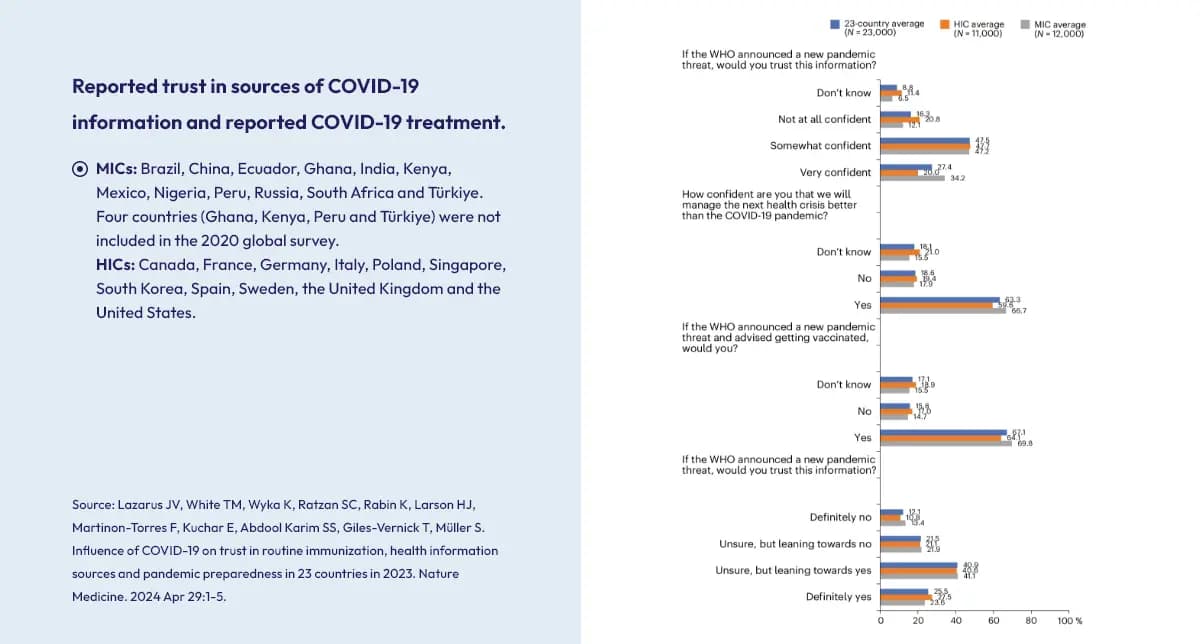
Global Trust Patterns: COVID-19 Information Sources and Pandemic Preparedness Across 23 Nations (2023).
Climate Change and Tackling Its Profound Impact in the Coming Years
- 1. Climate Change and Disease Management Knowledge
Emerging Diseases:
• Training requirements will expand for managing vector-borne diseases in new geographical regions. [5]
• Healthcare workers will require enhanced knowledge of climate-influenced vaccine-preventable diseases. [6]
• Expertise in tropical and mosquito-borne illnesses will become crucial in previously unaffected areas. [7] - 2. Climate Change and Technical Requirements
Cold Chain Management:
• Advanced training in vaccine resilience management during extreme weather events will be necessary.
• Knowledge of temperature monitoring methods will become increasingly influential as climate changes affect vaccine storage conditions.
• Expertise in handling heat-compromised vaccines will be vital as high temperatures can denature vaccine proteins. [5] - 3. Climate Change and Community Engagement
Communication Needs:
• Non-judgmental and culturally sensitive practices will be required to address growing vaccine hesitancy. [7]
• Enhanced knowledge of community-specific factors affecting vaccine acceptance will be necessary.
• Training in coordinated communication efforts that demonstrate transparency will be crucial. [8] - 4. Climate Change and System Adaptations
Infrastructure Knowledge:
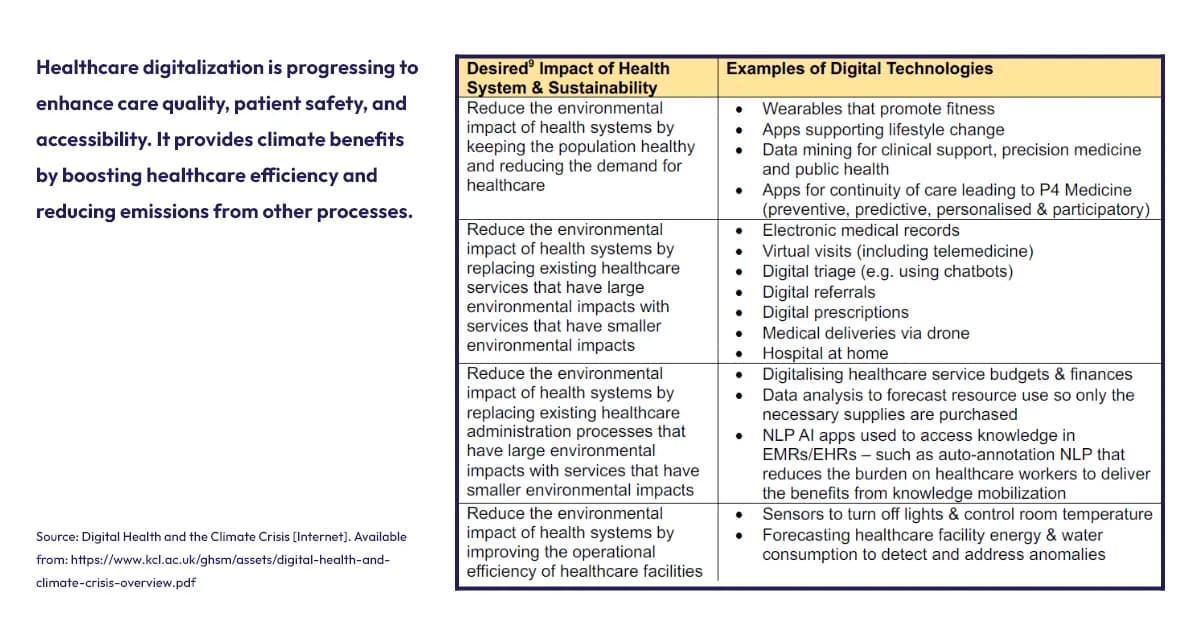
• Understanding digital health technologies for vaccine allocation will become critical.
• Expertise in managing vaccination networks across different regions or areas will be needed. [8]
• Knowledge of climate-resilient vaccination systems will be crucial for maintaining effective immunization coverage. [6]
The above projections confirm a significant shift toward more complicated and comprehensive training needs as climate change continues to impact global health systems.
Rotavirus vaccination shows about a 13% reduced T1D risk in children, with sustained protection over time.
The Future of Vaccine Technology
Trans-amplifying mRNA Technology and Beyond
This revolutionary platform represents the next generation of vaccine production with several groundbreaking features, including enabling key vaccine components to be manufactured ahead of outbreak time and faster pandemic response within 100 days of pathogen identification. [9]
Growing Need for Continuous Professional Development
As vaccination technology rapidly evolves, continuous professional development is crucial for healthcare professionals to stay ahead. From advanced mRNA platforms to emerging applications in personalized medicine, the demands for specialized knowledge and skills are higher than ever. Hee is why ongoing training is vital:
- Managing Complex Vaccines: Professionals need expertise in multivalent vaccines capable of targeting multiple pathogens or diseases in a single shot, revolutionizing disease management. [10]
- Accelerating Production Skills: Rapid vaccine production techniques and simplified manufacturing processes require a skilled workforce trained in cold chain management. [11]
- Adapting to Emerging Applications: From personalized cancer vaccines to heat-stable formulations, new uses for mRNA technology are reshaping healthcare, necessitating tailored expertise. [11 & 12]
- Responding to Industry Growth: With the mRNA vaccine market projected to grow at 16% annually from 2026 to 2035, knowledge gaps must be addressed to meet increasing demands. [13]
Investing in continuous education ensures that healthcare workers are equipped to handle such advancements, delivering safer and more effective vaccination solutions worldwide.
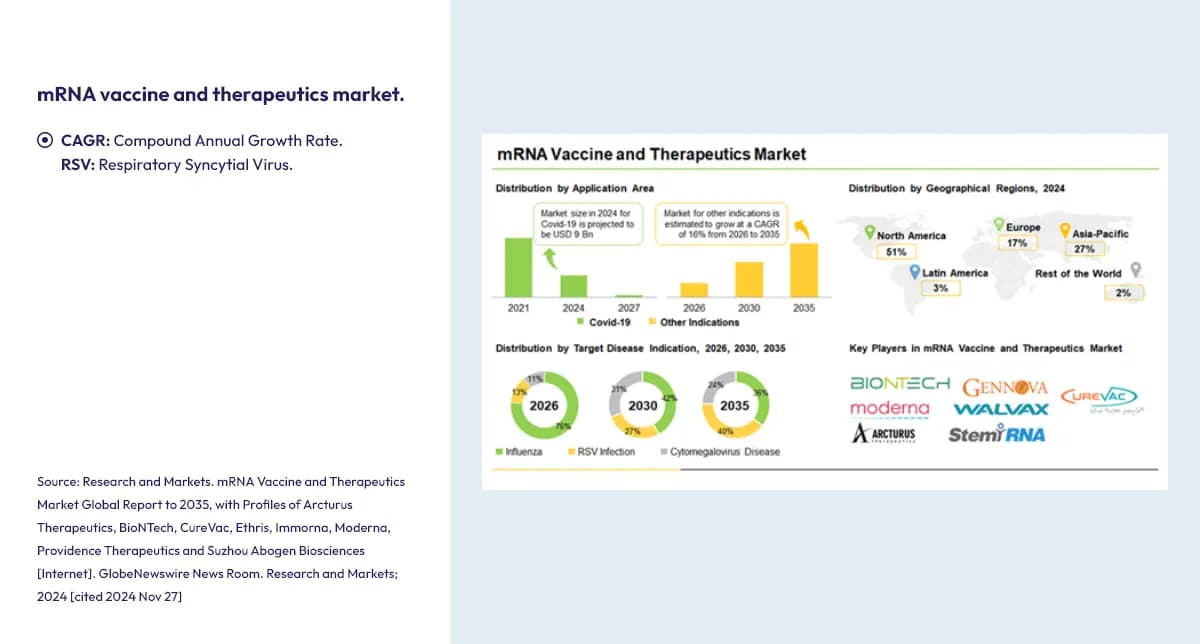
mRNA Market Evolution: Growth Projections and Global Distribution Analysis (2021-2035).

Join CIMA Care's Global Healthcare Network: Advancing Immunization Education and Healthcare Systems Together.
CIMA Care: Pioneering Tomorrow's Vaccine Solutions Today
CIMA Care's digital platform helps healthcare systems navigate emerging challenges and innovations. Through our innovative platform and CIMA Health Academy's professional development programs, we help healthcare providers acclimate to climate-related challenges, address vaccine hesitancy, and stay current with advancing vaccine technologies. Together, we are building resilient vaccination systems for tomorrow's needs.
Explore our specialized courses at www.cima.care/health-academy and join healthcare professionals worldwide in preparing for tomorrow's immunization landscape.
Image References
- 1- Nature. A new era of mRNA vaccines. Nat Med [Internet]. 2024 [cited 2025 Aug 19];30:—. Available from:
https://www.nature.com/articles/s41591-024-02939-2 - 2- King’s College London. Digital health and climate crisis overview [Internet]. London: King’s College London; 2024 [cited 2025 Aug 19]. Available from: https://www.kcl.ac.uk/ghsm/assets/digital-health-and-climate-crisis-overview.pdf
- 3- GlobeNewswire. mRNA vaccine and therapeutics market global report to 2035 [Internet]. 2024 Sep 26 [cited 2025 Aug 19]. Available from: https://www.globenewswire.com/news-release/2024/09/26/2953694/28124/en/mRNA-Vaccine-and-Therapeutics-Market-Global-Report-to-2035-with-Profiles-of-Arcturus-Therapeutics-BioNTech-CureVac-Ethris-Immorna-Moderna-Providence-Therapeutics-and-Suzhou-Abogen-.html
- 4- Adobe Stock. Medical concept image [Internet]. Adobe; [cited 2025 Aug 19]. Available from: https://stock.adobe.com/965440194
- 1- Nature. A new era of mRNA vaccines. Nat Med [Internet]. 2024 [cited 2025 Aug 19];30:—. Available from:
Blog Resources
- 1- Lazarus JV, White TM, Wyka K, Ratzan SC, Rabin K, Larson HJ, Martinon-Torres F, Kuchar E, Abdool Karim SS, Giles-Vernick T, Müller S. Influence of COVID-19 on trust in routine immunization, health information sources and pandemic preparedness in 23 countries in 2023. Nature Medicine. 2024 Apr 29:1-5.
- 2- The pandemic’s role in shaping parents’ attitudes toward vaccines | News | University of Michigan School of Public Health | Vaccines | COVID-19 Pandemic | Childhood Vaccination | [Internet]. U-M School of Public Health. Available from: The pandemic's role in shaping parents' attitudes toward vaccines
- 3- Key Strategies for Overcoming Vaccine Hesitancy among Healthcare Workers [Internet]. HOME. 2024 [cited 2024 Nov 27]. Available from: Key Strategies for Overcoming Vaccine Hesitancy among Healthcare Workers [Report]
- 4- Catamco E. Addressing Vaccine Hesitancy Through Pediatric Immunization Training [Internet]. American Medical Compliance. 2024 [cited 2024 Nov 27]. Available from: Addressing Vaccine Hesitancy Through Pediatric Immunization Training
- 5- Price K. Climate Change Makes Vaccines More Important—While Also Undercutting Them - Inside Climate News [Internet]. Inside Climate News. 2024 [cited 2024 Nov 27]. Available from: Climate Change Makes Vaccines More Important—While Also Undercutting Them - Inside Climate News
- 6- Leedom M. How climate change is changing vaccination planning. bmj. 2024 Mar 19;384.
- 7- 1.Vaccine hesitancy rising as climate-related disease spreads [Internet]. University of Portsmouth. 2024 [cited 2024 Nov 27]. Available from: Vaccine hesitancy rising as climate-related disease spreads
- 8- Public. Full report: Realizing the Future of Vaccination for Public Health - Canada.ca [Internet]. Canada.ca. 2024. Available from: Full report: Realizing the Future of Vaccination for Public Health
- 9- New research to investigate next generation “trans-amplifying” mRNA vaccines | CEPI [Internet]. CEPI . Available from: New research to investigate next generation ‘trans-amplifying’ mRNA vaccines | CEPI
- 10- Hamzelou J. What’s next for mRNA vaccines [Internet]. MIT Technology Review. 2023. Available from: What’s next for mRNA vaccines
- 11- Peter RM. mRNA vaccines: a promising future [Internet]. Labiotech.eu. 2023. Available from: mRNA vaccines: a promising future
- 12- The Future of mRNA Technology | CHEManager [Internet]. Startseite | CHEManager. Available from: The Future of mRNA Technology | CHEManager
- 13- Research and Markets. mRNA Vaccine and Therapeutics Market Global Report to 2035, with Profiles of Arcturus Therapeutics, BioNTech, CureVac, Ethris, Immorna, Moderna, Providence Therapeutics and Suzhou Abogen Biosciences [Internet]. GlobeNewswire News Room. Research and Markets; 2024 [cited 2024 Nov 27]. Available from: mRNA Vaccine and Therapeutics Market Global Report to 2035, with Profiles of Arcturus Therapeutics, BioNTech, CureVac, Ethris, Immorna, Moderna, Providence Therapeutics and Suzhou Abogen Biosciences
Enjoyed this article?
Share it with your friends on LinkedIn: The Future of Vaccination: Hesitancies, Climate Change, and Emerging Technologies (Part2) 
Follow us on LinkedIn for more updates and insights: Cima Care GmbH