
Brain and Immunity: The Crucial First Two Years of Development |
August 08, 2024 . 5 Minutes read
The Incredible Journey: Brain and Immune System Development from Birth to Age Two
In the first two years of life, a child's brain and immune system undergo remarkable changes. This period sets the foundation for lifelong health and learning, with each milestone shaping future outcomes.
The Brain's Growth Spurt
Building the Foundation
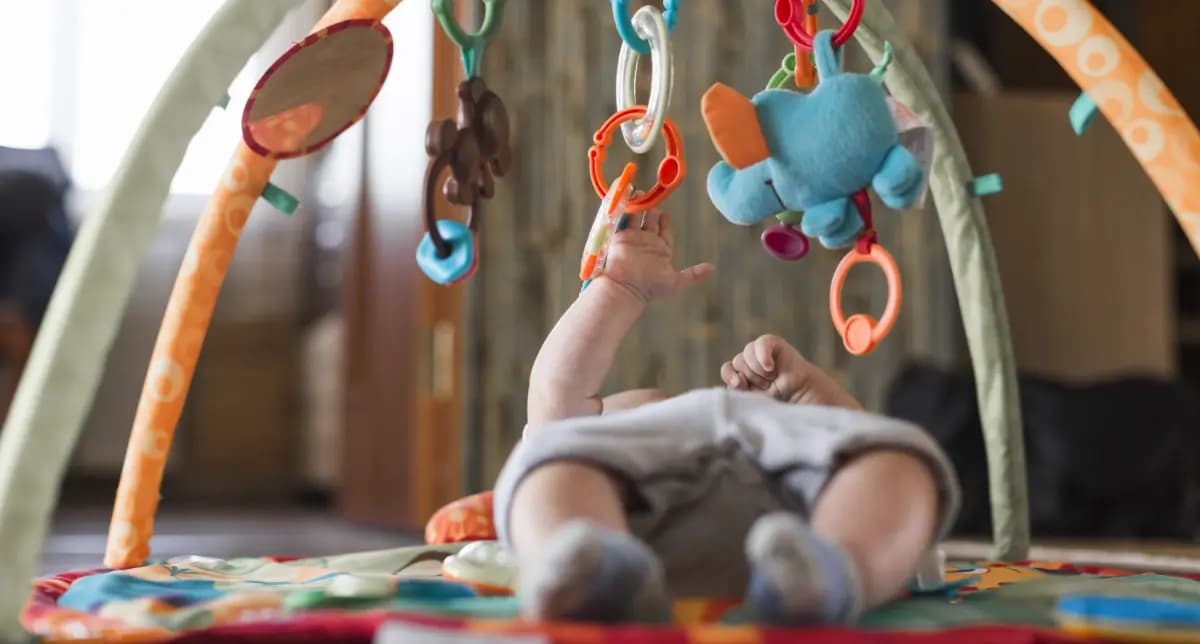
- • Rapid Neural Changes and Plasticity: The brain undergoes rapid changes in the first year of life, forming connections at an unprecedented rate, especially in sensory regions like visual and auditory cortices. During this year, hundreds of synapses are formed in a second, creating connections for language, hearing, vision, and movement. Early brain development significantly affects later life outcomes.
- • Influence of Experience and Environment: Early brain development, including responsive and nurturing interactions, is crucial for building a stable brain foundation. Environmental experiences, including interactions with caregivers, shape early brain development significantly. These early experiences are crucial for forming the foundation of neurocognitive and socioemotional capacities.
- • Role of Caregiving and Home Environment: The caregiver, often a parent, is the cornerstone of an infant`s early development, underscoring the pivotal role of a supportive caregiving environment. Everyday activities and caregiver interactions are instrumental in shaping brain development. Early interaction with adults is critical for language and communication development, and the brain`s overall function depends on a well-set foundation in the early years. [1 & 2]
Did you know? Good nutrition, especially iron and healthy fats, is super important for brain growth. It`s like giving your baby`s brain the best building blocks! [3]
Learn more: https://developingchild.harvard.edu/science/key-concepts/brain-architecture/

The Immune System (Part 1)
From Mom's Protection to the Baby's Own Defense
- • At birth, infants have an immature immune system that relies heavily on innate immunity (such as includes physical barriers like the skin, protective chemicals in the blood, and certain white blood cells that can attack pathogens), and maternal antibodies.
- • Early protection against many infectious diseases is provided by passive IgG antibodies transferred from the mother transplacentally and through breast milk.
- • The immune system gradually matures during infancy, with both innate and adaptive components developing over time.
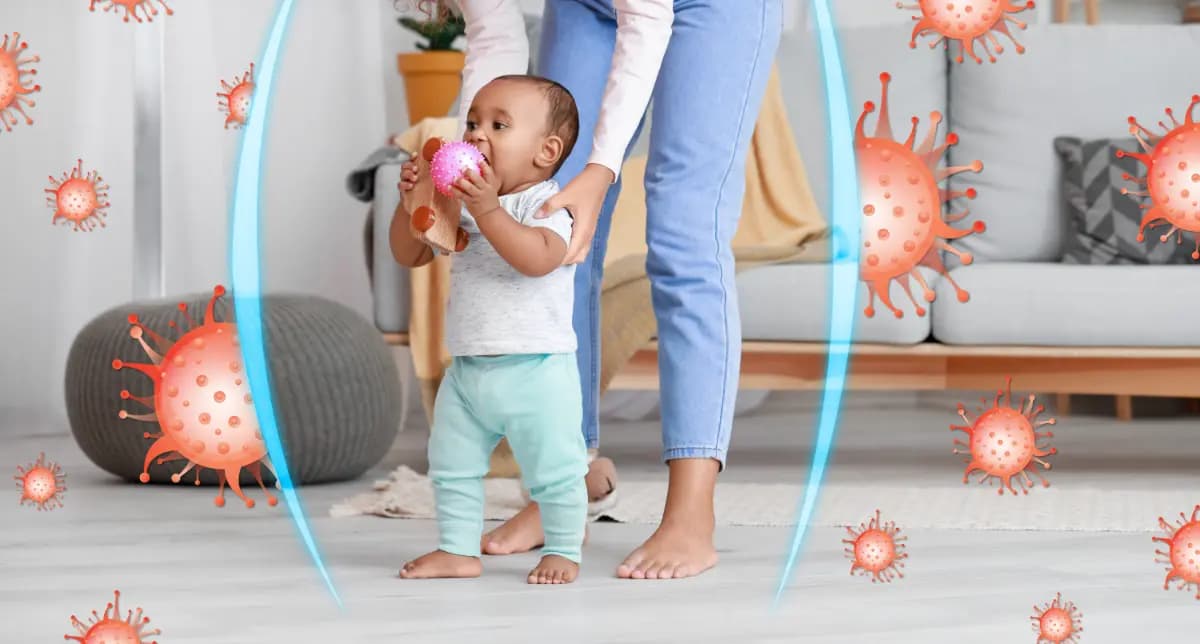
- • As maternal antibodies fade away, young children become more vulnerable to infections, but their own immune systems are maturing to provide protection.
- • Over time, children acquire immunological memory through exposure to pathogens and vaccinations, leading to increased protection against infections. [4 & 5]
Fun fact: Breastfeeding is like a superpower, giving babies extra immune support that lasts even after they stop nursing!
Explore further: https://www.who.int/health-topics/breastfeeding
The Immune System
(Part 2)
Immune System Milestones: From Birth to Toddlerhood
Let's take a closer look at how a baby's immune system grows and changes in the first two years:
At Birth: The Newborn's Shield
- • Relies mainly on innate immunity and mom's antibodies. [6]
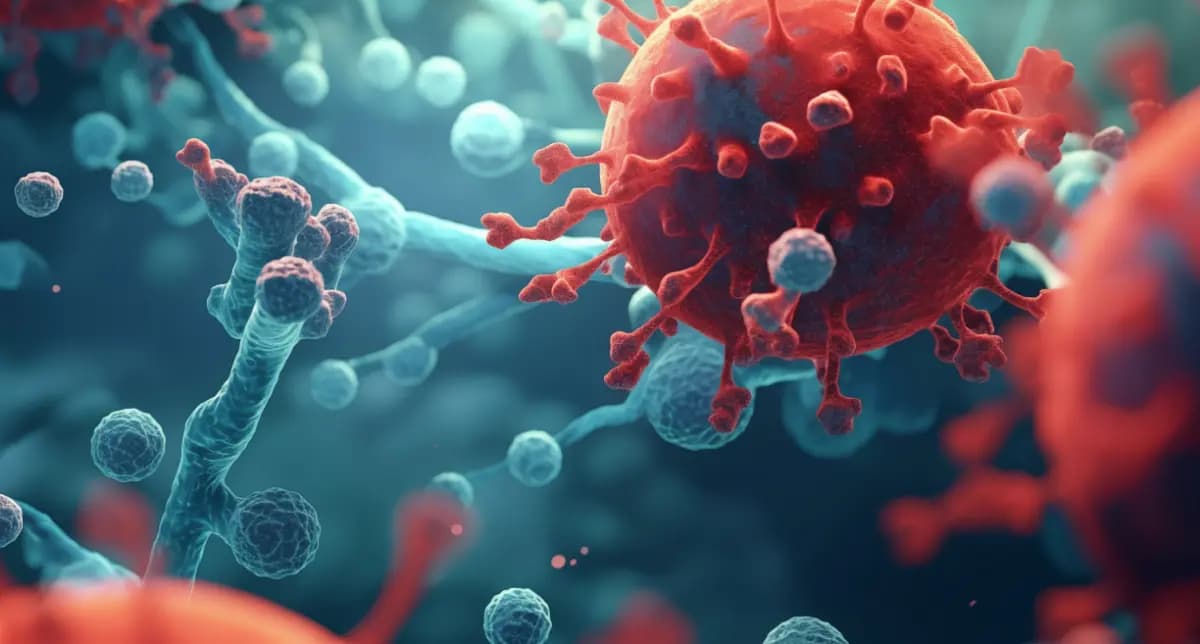
- • T cells are mostly 'new recruits', ready to learn. Recent research in 2024 shows that newborns' T cells outperform those of adults in fighting off numerous infections, but they function differently, participating more in innate immunity than adaptive immunity. [7]
- • B cells are just starting to make antibodies, mainly IgM.
0–3 Months: The First Steps
- • T cells are varied, but they are still learning the ropes.
- • B cells are becoming more diverse.
- • The immune system starts shifting from 'innate' to 'adaptive' responses.
3-6 Months: Growing Defenses
- • T cells continue to develop, still favoring 'newbie' cells.
- • B cells start to fine-tune their antibody production.
- • Vaccine responses are starting, but not quite up to adult levels yet.
6–12 Months: Building Strength
- • T cells begin to specialize, developing different 'teams'. Recent research in 2024 shows that newborns' T cells outperform those of adults in fighting off numerous infections, but they function differently, participating more in innate immunity than adaptive immunity.
- • B cells get better at remembering past invaders.
- • Vaccine responses improve, but they still rely on mom's antibodies too.
12-24 Months: Becoming a Pro
- • T cells can now handle a variety of threats more effectively.
- • B cells are almost as good as adults at making specialized antibodies.
- • Vaccine responses are stronger and last longer. [6]
Fun fact: Infants and young children (up to 4 years old) have a strong, sustained antibody response to SARS-CoV-2, but their immune response differs from adults! [8]
Gut Feelings
How Tummy Bugs Help the Immune System
- • In the developmental phase (months 3–14), the baby's gut starts to collect friendly bacteria.
- • In the transitional phase (months 15–30), the gut's bacterial community stabilizes. [9]
Did you know that a healthy gut helps the immune system function? It's like having a garden in your tummy that helps your whole body!
Learn more: https://www.nature.com/articles/d41586-020-00194-2
Understanding these crucial developmental stages underscores the importance of comprehensive early childhood care. At CIMA, we're dedicated to supporting this vital period of growth, promoting optimal brain and immune system development in children worldwide. Our initiatives aim to empower caregivers and healthcare providers with the knowledge and tools to nurture healthy development.
To learn more about how we're supporting early childhood development and to access resources for optimal child growth, visit our website at https://cima.care. Together, we can give every child the best start in life, particularly in areas where resources might be limited.
Image References
- 1- Freepik. Baby lying on developing rug with mobile educational toys [Internet]. Freepik; [cited 2025 Aug 17]. Available from: https://www.freepik.com/free-photo/baby-lying-developing-rug-with-mobile-educational-toys_3279894.htm#fromView=image_search&page=1&position=0&uuid=92f38277-9370-4733-956e-70589d50cf51
- 2- Adobe Stock. Mother with her cute little baby at home, concept of strong immunity [Internet]. Adobe Stock; [cited 2025 Aug 17]. Available from: https://stock.adobe.com/fi/images/mother-with-her-cute-little-baby-at-home-concept-of-strong-immunity/537704465
- 3- Adobe Stock. Chimeric antigen receptor (CAR) T-cell therapy – use of genetically modified T cells expressing a special protein called CAR, 3D rendering [Internet]. Adobe Stock; [cited 2025 Aug 17]. Available from: https://stock.adobe.com/fi/images/chimeric-antigen-receptor-car-car-t-cell-therapy-car-t-cell-therapy-is-the-use-of-genetically-modified-t-cells-that-express-a-special-protein-called-a-chimeric-antigen-receptor-3d-rendering/785616534
- 4- Adobe Stock. African American mother teaching her little baby to walk, concept of strong immunity [Internet]. Adobe Stock; [cited 2025 Aug 17]. Available from: https://stock.adobe.com/fi/images/african-american-mother-teaching-her-little-baby-to-walk-concept-of-strong-immunity/537703555
Blog Resources
- 1- Scott LS, Brito NH. Supporting Healthy Brain and Behavioral Development During Infancy. Policy Insights from the Behavioral and Brain Sciences. 2022 Feb 23;9(1):129–36.
- 2- Center on the developing child at Harvard University. Experiences Build Brain Architecture [Internet]. YouTube. 2011. Available from: https://www.youtube.com/watch?v=VNNsN9IJkws
- 3- McCann S, Perapoch Amadó M, Moore SE. The role of iron in brain development: a systematic review. Nutrients. 2020 Jul 5;12(7):2001.
- 4- Niewiesk S. Maternal antibodies: clinical significance, mechanism of interference with immune responses, and possible vaccination strategies. Frontiers in immunology. 2014 Sep 16;5:446.
- 5- Simon AK, Hollander GA, McMichael A. Evolution of the immune system in humans from infancy to old age. Proceedings of the Royal Society B: Biological Sciences. 2015 Dec 22;282(1821):20143085.
- 6- Semmes EC, Chen JL, Goswami R, Burt TD, Permar SR, Fouda GG. Understanding Early-Life Adaptive Immunity to Guide Interventions for Pediatric Health. Frontiers in Immunology [Internet]. 2021 Jan 21;11. Available from: https://www.ncbi.nlm.nih.gov/pmc/articles/PMC7858666/
- 7- Babies use immune system differently, but efficiently [Internet]. ScienceDaily. Available from: https://www.sciencedaily.com/releases/2024/02/240225212521.htm
- 8- 1.Study reveals how young children’s immune systems tame SARS-CoV-2 [Internet]. National Institutes of Health (NIH). 2023. Available from: https://www.nih.gov/news-events/news-releases/study-reveals-how-young-children-s-immune-systems-tame-sars-cov-2
- 9- 1.Stewart CJ, Ajami NJ, O’Brien JL, Hutchinson DS, Smith DP, Wong MC, et al. Temporal development of the gut microbiome in early childhood from the TEDDY study. Nature [Internet]. 2018 Oct;562(7728):583–8. Available from: https://www.nature.com/articles/s41586-018-0617-x
Enjoyed this article?
Share it with your friends on LinkedIn: The Incredible Journey: Brain and Immune System Development from Birth to Age Two 
Follow us on LinkedIn for more updates and insights: Cima Care GmbH