
Gender Equality Can Boost Vaccine Coverage |
November 27, 2024 . 4 Minutes read
Gender Equality in Immunization: Unveiling the Data (Part 1)
Explore the profound influence of gender equality and maternal/healthcare professionals' empowerment, knowledge, and authority on improving childhood vaccination rates and immunization outcomes.
Understanding the gender gap in immunity
Gender equity in immunization is not just a moral imperative; it's a crucial factor in reaching global health goals. Studies provide evidence for the negative impact of gender inequality and the related barriers to childhood immunization coverage. The impacts strengthen calls for transformative approaches and practices to offer gender equity in immunization services.
- Gender inequality and immunization coverages: A 2022 study analyzing 702 subnational regions across 57 countries found that areas with higher gender inequality had lower DTP3 immunization coverage (71.0% in higher-inequality regions vs. 79.2% in the lower-inequality areas). [1] A systematic review and meta-analysis of one hundred and eight studies found that females were 3% less likely to be fully vaccinated. [8] Moreover, 2022 findings reveal a significant disparity in rural regions of the United States, where women are less likely to be vaccinated, with lower first-dose coverage in rural counties (61.4%) compared to women in urban counties (77.6%). [9]
- National-level gender inequality and immunization: A multi-country study among children aged 12-23 months, using data from 2010-2019, found that higher gender inequality at the national level was significantly associated with more zero-dose DTP vaccine doses and lower full DTP3 immunization coverage. The study concludes that national gender inequality impacts childhood immunization rates, emphasizing the need to address gender barriers to achieve universal vaccine coverage and ensure no child is left behind. [2]
- Women's empowerment and decision-making authority: Research shows a strong link between mothers' decision-making power and childhood vaccination rates. For instance, in Nigeria, when women had more say in household decisions, their children were 64% more likely to receive all recommended vaccines. Another study in Ethiopia is even more dramatic. When mothers could make healthcare decisions independently, their children were four times more likely to be fully vaccinated than families where husbands made all health decisions. Similarly, in Bangladesh, women with greater freedom in healthcare decisions had a higher rate of fully vaccinated children than those without such autonomy (86.1% vs. 78.8%). [3]
- Maternal education: Several studies have shown that maternal education is significantly associated with children's vaccination coverage. Women with limited literacy or poor education are less likely to comprehend vaccination schedules and the importance of numerous vaccine uptakes. [5] According to a study, children of mothers without formal education were 27% less likely to be fully vaccinated compared to those whose mothers had at least primary education. [8]
- Access and decision-making barriers: Gender inequality makes access barriers for women. Such as limited mobility, lack of access to transportation, limited access to money and other resources, and time restrictions due to family and caregiving burdens. Moreover, in many regions, women must depend on men to provide transportation, therapy fees, and permission to receive immunization services for children. These obstacles directly contribute to lower vaccination coverage rates, preventing timely and equitable coverage of essential healthcare services. [4 & 5]
- Health workforce composition: In some regions, women are not allowed to interact with unrelated men, and men often prefer that female health workers vaccinate their wives and daughters. In India, a study found that districts with over 50% lady medical officers had higher full immunization rates for children aged 12–23 months compared to districts with fewer female officers (69.7% vs. 63.7%). However, many female health workers face challenges, including safety concerns, harassment from caregivers, and issues with low or delayed payment. [3]
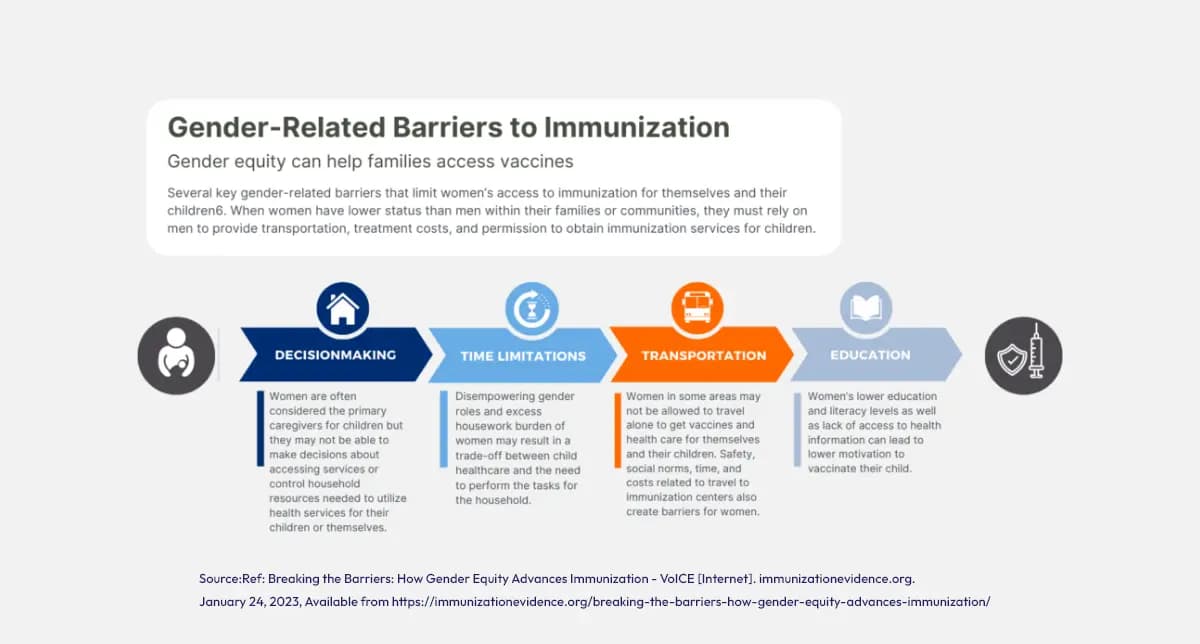
Addressing gender barriers can boost immunization coverage for women and children.
Training Disparities and Deployment Challenges
- Limited Access to Education: In many low- and middle-income countries, girls and women face significant educational barriers, restricting their ability to enter healthcare professions and advance in their careers.
- Stereotyping and Mentorship: Gender stereotypes often limit women to roles like nursing and discourage them from leadership or surgical positions, while governments and organizations may prioritize mentorship opportunities for males.
- Occupational Segregation: Women in healthcare often engage in lower-status roles, mainly in nursing, midwifery, and primary care, limiting their career advancement.
- Gender Occupancy, Senior Role, and Payment: Despite making up 70% of the global health workforce, women occupy only 25% of senior roles, and around $1.5 trillion of women's assistance to health is unpaid. [6]

Empowering women through education is crucial to overcome healthcare barriers.
Workplace Discrimination
Gender inequality in the workplace affects female healthcare workers' placement and continued employment. As a result, vaccination coverage rates suffer, especially among women and children, who may be less likely to access immunization services in the absence of female healthcare workers.
- Belittlement by colleagues: Women healthcare workers report experiencing belittlement from colleagues, impacting their confidence and career progression.
- Gendered workload distributions: Female healthcare workers often face an unequal distribution of tasks, with expectations that they take on more administrative assistance or caregiving roles.
- Unequal opportunities: Women report fewer prospects for professional advancement than their male counterparts.
- Communication expectations: There are often different expectations for how women should communicate in the workplace, which can impact their effectiveness and perception by others. [7]

Workplace discrimination hinders female healthcare workers' growth and impact.
From Data to Action: CIMA's Commitment to Global Health
At CIMA Care, we recognize the complex challenges of gender inequality in global immunization. We invite healthcare professionals, policymakers, institutions, and researchers to address gender disparities in immunization. By fostering awareness and providing equal access to information and digital tools, we hope to contribute to a more equitable global health landscape. Visit www.cima.care to explore how our tools can support your work in improving vaccination rates for all.
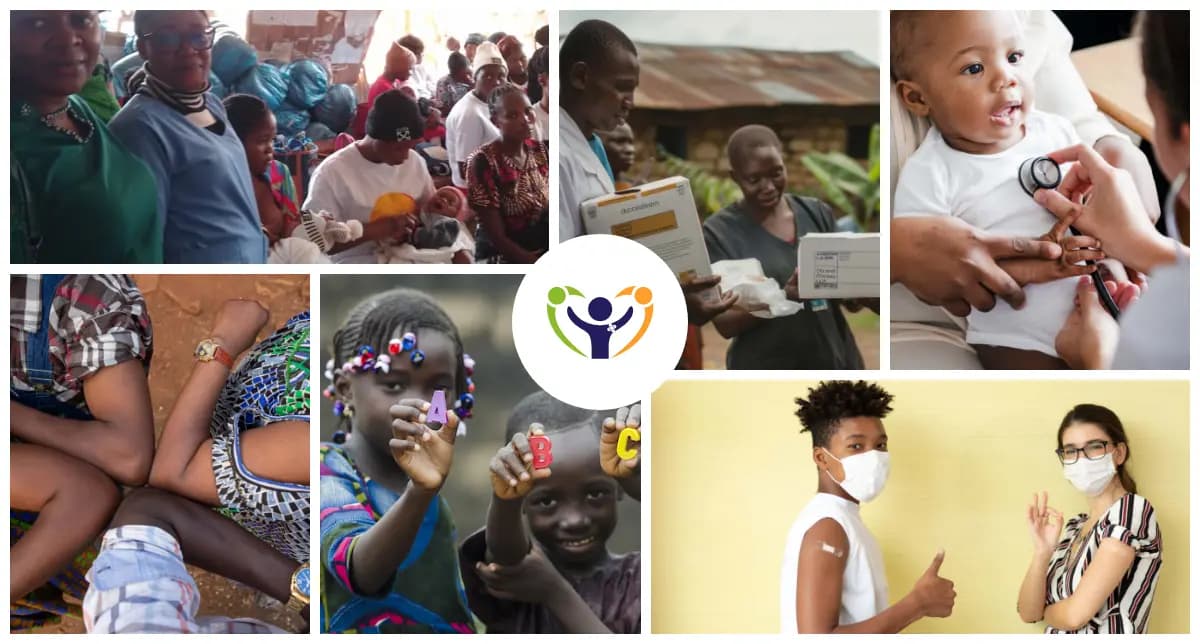
CIMA Care provides holistic health services equally for all genders.
Image References
- 1- Adobe. Adobe Firefly [Internet]. 2025 [cited 2025 Aug 19]. Available from: https://www.adobe.com/uk/products/firefly.html
- 2- Immunization Evidence. Breaking the barriers: How gender equity advances immunization [Internet]. 2025 [cited 2025 Aug 19]. Available from: https://immunizationevidence.org/breaking-the-barriers-how-gender-equity-advances-immunization/
- 3- Adobe. Adobe Firefly [Internet]. 2025 [cited 2025 Aug 19]. Available from: https://www.adobe.com/uk/products/firefly.html
- 4- Adobe Stock. Business and health illustration [Internet]. 2025 [cited 2025 Aug 19]. Available from: https://stock.adobe.com/nl/581130191
Blog Resources
- 1- Johns NE, Kirkby K, Goodman TS, Heidari S, Munro J, Shendale S, Hosseinpoor AR. Subnational gender inequality and childhood immunization: an ecological analysis of the subnational gender development index and DTP coverage outcomes across 57 countries. Vaccines. 2022 Nov 18;10(11):1951.
- 2- Vidal Fuertes C, Johns NE, Goodman TS, Heidari S, Munro J, Hosseinpoor AR. The association between childhood immunization and gender inequality: a multi-country ecological analysis of zero-dose DTP prevalence and DTP3 immunization coverage. Vaccines. 2022 Jun 27;10(7):1032.
- 3- Kalbarczyk A, Brownlee N, Katz E. Of Money and Men: A Scoping Review to Map Gender Barriers to Immunization Coverage in Low-and Middle-Income Countries. Vaccines. 2024 Jun 5;12(6):625.
- 4- Gender-related Barriers to Immunization: Zero-dose Children [Internet]. UNICEF . 2023 [cited 2024 Oct 1]. Available from: Gender-related Barriers to Immunization: Zero-dose Children
- 5- Breaking the Barriers: How Gender Equity Advances Immunization – VoICE [Internet]. The Value of Immunization Compendium of Evidence. January 24, 2023, Available from: Breaking the Barriers: How Gender Equity Advances Immunization
- 6- Seeking Gender Equality in the Global Health Workforce | Think Global Health [Internet]. Council on Foreign Relations. March 8, 2024. Available from: Seeking Gender Equality in the Global Health Workforce | Think Global Health
- 7- Hennein R, Gorman H, Chung V, Lowe SR. Gender discrimination among women healthcare workers during the COVID-19 pandemic: Findings from a mixed methods study. Plos one. 2023 Feb 6;18(2):e0281367.
- 8- Ali HA, Hartner AM, Echeverria-Londono S, Roth J, Li X, Abbas K, Portnoy A, Vynnycky E, Woodruff K, Ferguson NM, Toor J. Vaccine equity in low and middle income countries: a systematic review and meta-analysis. International journal for equity in health. 2022 Jun 11;21(1):82.
- 9- Saelee R, Zell E, Murthy BP, Castro-Roman P, Fast H, Meng L, et al. Disparities in COVID-19 Vaccination Coverage Between Urban and Rural Counties — United States, December 14, 2020–January 31, 2022. MMWR Morbidity and Mortality Weekly Report. 2022 Mar 4;71(9):335–40.
Enjoyed this article?
Share it with your friends on LinkedIn: Gender Equality in Immunization: Unveiling the Data (Part 1)
Follow us on LinkedIn for more updates and insights: Cima Care GmbH