
Vaccine Durability: The Memory Paradox. Decoding Why Some Vaccines Protect for a Lifetime, While Others Need a Booster |
July 23, 2026 . 5 Minutes read
Why Some Vaccines Provide Lifelong Protection While Others Fade, and What Scientists Are Doing About It
Reviewed by Fabrice Sewolo Matondo, MD, MPH, MSc — PhD Student, Epidemiologist
Published 23 July 2026 · 5 min read
One dose of yellow fever vaccine can protect a traveler for the rest of their life. One dose of this year's influenza vaccine may lose much of its protective power within months. Both engage the very same immune system, the same B cells, the same antibody factories, the same molecular memory machinery, yet they leave behind radically different legacies of protection. This is the "memory paradox" at the heart of modern vaccinology: identical immunological hardware producing wildly divergent durability. For decades, this gap was explained mostly through clinical observation rather than mechanisms. Today, tools that let scientists watch immune memory form in real time inside human lymph nodes, combined with new methods for tracking individual B-cell lines over decades, are finally providing an evidence-based answer and a fast-growing toolkit to close the durability gap that leaves under-protected populations vulnerable to entirely preventable diseases. [1-2]
The Cellular Engine Room of Immunological Memory
Two distinct cell populations do the actual work of "remembering" a vaccine, and their biology explains almost everything that follows. Long-lived plasma cells (LLPCs) take up residence in the bone marrow and continuously secrete antibodies for years or even decades without further antigen exposure, while memory B cells circulate in the blood and lymphoid tissue in a resting state, ready to reactivate and mount a rapid antibody surge upon re-exposure. [3]
Both of these cell types are created in the same place: germinal centers, special "training hubs" inside lymph nodes where B cells are refined and improved over several weeks. In these centers, activated B cells compete for support from T follicular helper cells and repeatedly mutate their antibody genes; the best-performing cells are selected in a process called affinity maturation. The strength (how intense) and duration (how long) of this germinal center process are now recognized as the main factor that decides whether a vaccine will leave behind a long-lasting pool of LLPCs in the bone marrow. [4]
In 2025, a major study watched how specific families of antibody producing B cells changed in people's blood over many years. It found that long‑term b‑cell memory develops at steady, similar rates (the key point is that the creation of memory during immune responses is seen across many people and many different infections or vaccines) when the immune system responds to different vaccines or infections. In other words, strong, lasting immune memory is a normal, built‑in feature of the part of our immune system that learns and remembers (the adaptive immune system), not something rare or just a matter of luck. [5]
Cellular Memory:
- Long‑lived plasma cells (LLPCs): Special immune cells that settle in the bone marrow and keep making protective antibodies for many years after a vaccine or infection.
- Memory B cells: “Backup” immune cells that quietly patrol the body and can quickly wake up to produce large amounts of antibodies if the same germ appears again.
- Germinal centers: Small training hubs inside lymph nodes where B cells are improved and selected so that only the best, strongest antibody‑producing cells become long‑term memory cells.
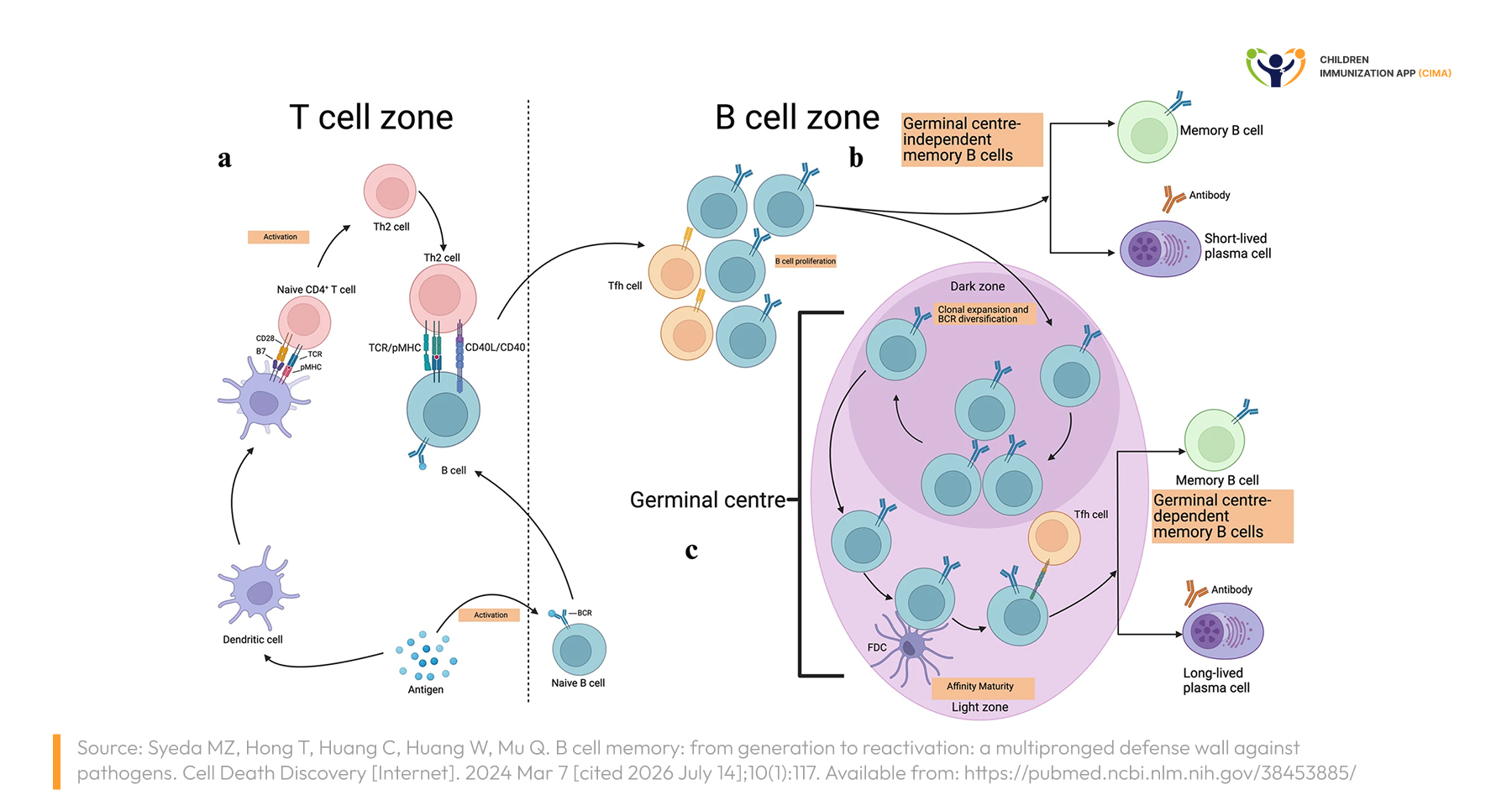
Germinal center “engine room” showing how B cells, with T‑cell help, undergo affinity maturation and differentiate into memory B cells and long-lived plasma cells.
The Antibody Half-Life Spectrum: From 11 Years to (Effectively) Forever
The differences in durability are not subtle. In a landmark longitudinal study, Amanna and colleagues analyzed serum samples from adults followed for up to about 26 years and modeled antibody decay for common viral infections and toxoid vaccines, providing benchmark estimates of humoral immunity duration. The calculated half‑lives span nearly three orders of magnitude, from roughly a decade for tetanus and diphtheria toxoid vaccines to a functionally permanent, multi‑century half-life for measles and mumps antibodies, as summarized below. [6]
Key Immune Concepts:
- Antibody half-life: How long it takes for the level of a specific antibody in the blood to drop to half of its original amount.
- Humoral immunity: The part of the immune system that protects us using antibodies circulating in the blood and other body fluids.
- Longitudinal study: A research study that follows the same people over many years to see how something (like antibody levels) changes over time.
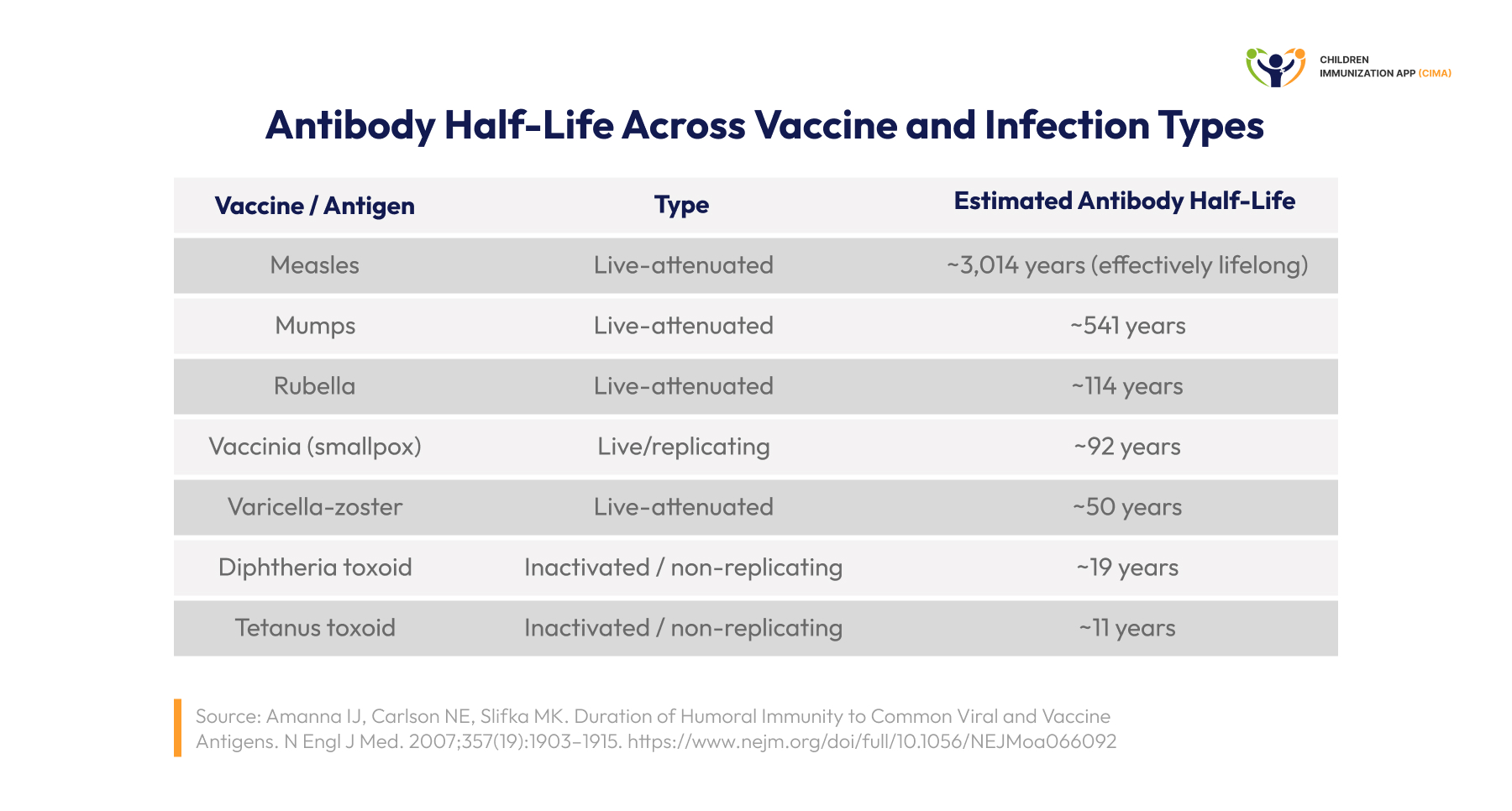
Estimated antibody half-lives derived from a long-term cohort, illustrating how antiviral responses to natural infection or live viral antigens leave behind a substantially more durable antibody response than protein/toxoid vaccines
Why Live-Attenuated Vaccines Achieve Near-Permanent Protection
Live-attenuated vaccines such as measles and yellow fever earn their durability by mimicking natural infection: the weakened virus still replicates transiently inside the vaccinated person, generating a longer, more intense wave of antigen than a single injected dose ever could and driving deep, prolonged germinal center reactions across multiple lymphoid compartments. [3]
The WHO's Strategic Advisory Group of Experts on Immunization concluded in 2014 that a single dose of yellow fever vaccine confers sustained, lifelong protection, and the International Health Regulations were formally amended in 2016 to remove any requirement for booster doses. [7-8] Long-term follow-up continues to confirm that decision: a 2025 study of Japanese travelers vaccinated years earlier documented persistent protective neutralizing antibody titers well beyond a decade after a single injection, with no evidence of clinically meaningful waning. [9]
Measles vaccine tells the same story at scale, precisely why two documented doses in childhood are considered adequate for life and why measles outbreaks trace overwhelmingly to unvaccinated pockets rather than to waning immunity among the vaccinated. [10]
In practice, not every child develops a strong immune response after one dose. About 5–10% of children fail to respond to a single MMR dose ("primary vaccine failure"). A second dose is therefore recommended to “catch” these nonresponders and push overall protection in the population up to about 97%. Once a person has had two documented doses, the chance that both failed is extremely small, so they are generally considered protected for life and do not need boosters, barring special circumstances. [11-12]
key vaccine terms:
- Live‑attenuated vaccine: A vaccine made from a weakened version of a virus or bacteria that can still replicate briefly, safely training the immune system as if it had fought a real infection.
- Primary vaccine failure: When a person’s immune system does not respond properly to a vaccine dose, so they do not become protected even though they were vaccinated.
- Booster dose: An extra vaccine dose given after the initial series to “remind” the immune system and increase or restore protection when needed.
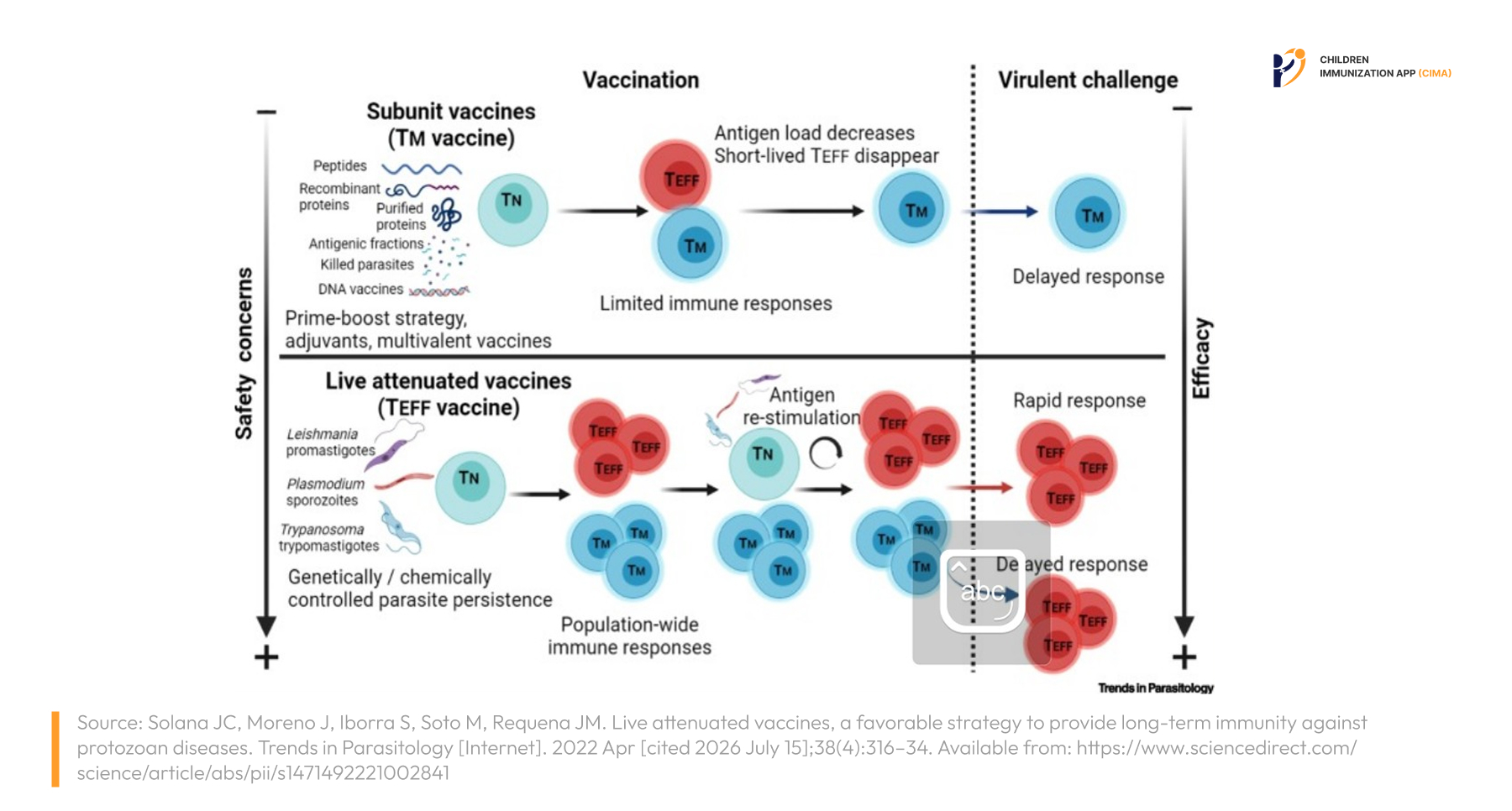
Live‑attenuated vaccines keep antigen stimulation going, building stronger, longer‑lasting T‑ and B‑cell memory than subunit vaccines and enabling rapid protection when real infection occurs.
The Fading Frontier: Toxoids, Antigenic Drift, and the Limits of Non-Replicating Vaccines
Some vaccines can closely copy how a real infection trains the immune system, and pertussis (whooping cough) shows what a difference that makes. The older "whole‑cell" pertussis vaccines contain the entire killed bacterium, so they trigger a strong, broad immune reaction that leans toward Th1 and Th17 responses and includes good protection at the lining of the nose and throat. Because of this, they usually protect people for about 10–12 years and also reduce how long the bacteria can live and silently spread in the airways. Newer "acellular" pertussis vaccines use only a few purified proteins from the bacterium rather than the whole organism. They tend to cause fewer local reactions at the injection site, but they shift the immune response toward a more Th2‑type pattern, give solid protection for only around 3–5 years, and provide little defense at the nasal and throat surfaces. As a result, people can still carry and pass on the bacteria even if they are vaccinated, which is now thought to be an important reason why wh. [13]
Toxoid vaccines, like those for tetanus and diphtheria, are made from toxins that have been inactivated so they cannot replicate or spread in the body. Because these "quiet" proteins do not provide ongoing antigen stimulation, they drive a more modest and shorter‑lived germinal center response than live vaccines and typically support antibody protection for only about 11 to 19 years, which aligns with the need for the familiar 10‑year booster schedule to maintain protective immunity. [14-15]
Influenza vaccines can stop working overtime for two reasons. First, like many vaccines, the protection they give can gradually fade as immune memory slowly weakens. Second, and more specifically to flu, the virus itself keeps changing. Small genetic changes, called antigenic drift, slowly reshape the hemagglutinin spikes on the virus's surface. As these spikes change, the antibodies your immune system remembers from past vaccines or infections no longer fit the virus as well. The more the new flu strain has drifted away from the original vaccine strain, the more “escape routes” it has, making it easier for the virus to slip past even existing immune memory and cause infection. [16]
Compounding this, a person's earliest childhood influenza exposure can "imprint" B-cell responses toward that original strain epitopes, measurably impairing the breadth of antibody responses to the haemagglutinin stalk region in later years. [17]
The result is a vaccine that can generate durable memory to the wrong, out-of-date target—which is why annual reformulation, not durability engineering, remains influenza's core challenge. [18]
Helper T‑cell response types:
- Th1: A type of helper T‑cell response that helps activate macrophages and other cells to kill germs inside the body’s tissues, especially in the lungs.
- Th17: A type of helper T‑cell response that is important at body surfaces like the nose and throat, helping recruit neutrophils and clear bacteria from mucosal linings.
- Th2: A type of helper T‑cell response that focuses more on making antibodies, especially against parasites and allergens, and is less effective than Th1/Th17 responses at clearing bacteria from the lungs, nose, and throat.
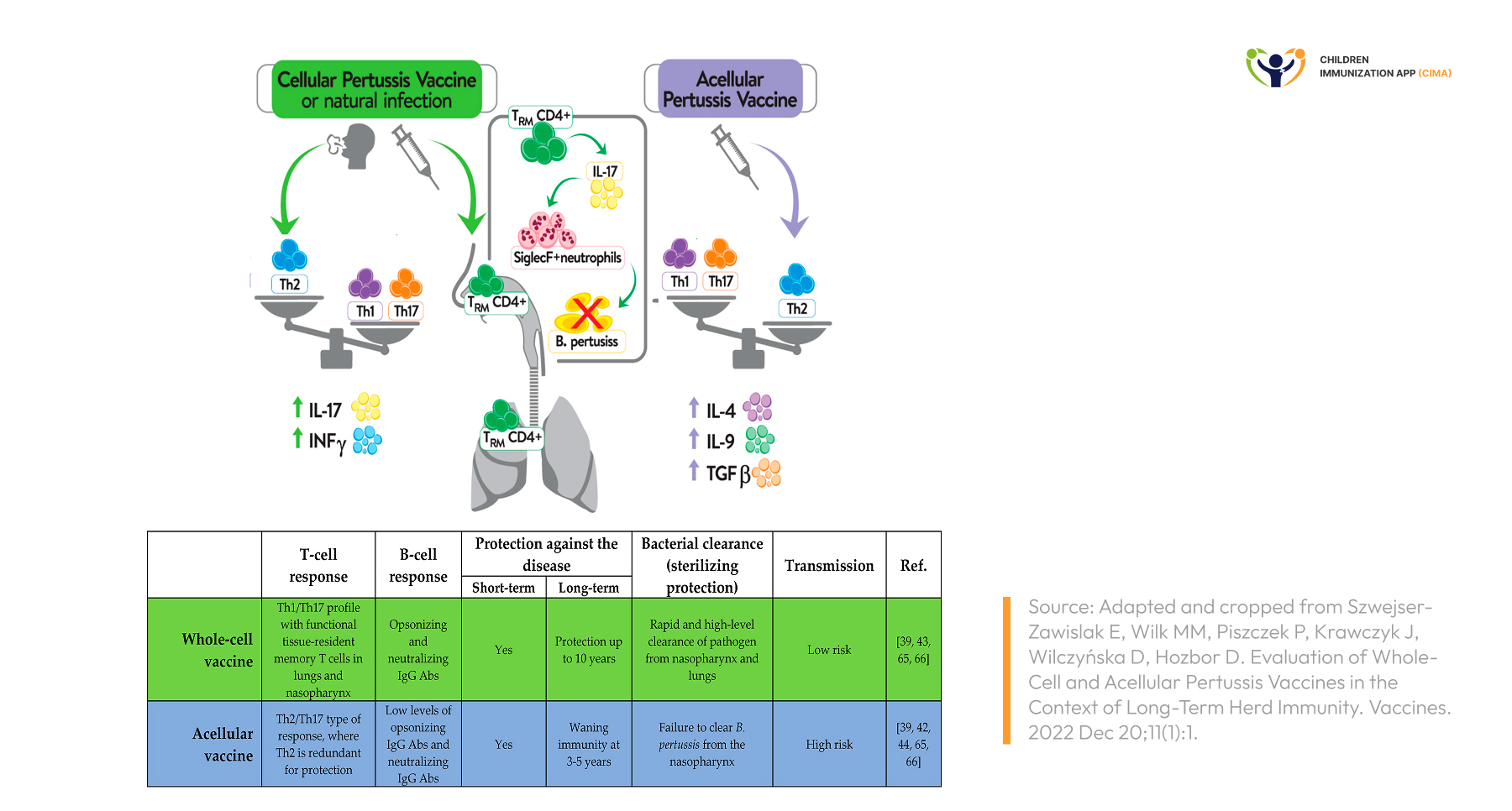
Whole‑cell pertussis vaccines drive stronger responses that clear bacteria from the airways and give longer‑lasting protection than acellular vaccines, illustrating how infection‑like immunity reduces both disease and silent transmission.
The mRNA Puzzle: Robust, But Relatively Short-Lived
mRNA COVID-19 vaccines forced the field to confront durability in real time and in unprecedented mechanistic detail. Using repeated, ultrasound-guided fine-needle aspiration of the same draining lymph node in the same volunteers, Ellebedy and colleagues showed that mRNA vaccination triggers germinal centers that remain active for at least six months after the primary series—among the most persistent human germinal center reactions ever directly observed. [4 &19]
More recent work is now dissecting exactly which mRNA vaccine components—the lipid nanoparticle, the modified nucleosides, the encoded antigen itself—cooperate to instruct that germinal center program, opening a rational path to engineering it further. [20]
Even so, circulating neutralizing antibody titers measurably decline within months of vaccination, which drove the repeated booster campaigns of the pandemic years. The reassuring half of the story is that T-cell memory behaves quite differently: it is broader, more cross-reactive against variants, and considerably more durable than antibody titers—and it is this compartment, rather than circulating antibody, that appears to carry most of the ongoing protection against severe disease and hospitalization even as antibodies fade. [21]
Key immune concepts:
- Lipid nanoparticle: A tiny fat‑based bubble that safely carries the mRNA into our cells so it can instruct them to make the vaccine’s target protein.
- Neutralizing antibody: Special antibodies that can directly block a virus from entering cells, acting like tiny shields that stop the virus before it can cause illness.
- T‑cell memory: Long‑lasting immune cells that “remember” a virus and help the body quickly control severe disease in the future, even if antibody levels have gone down.
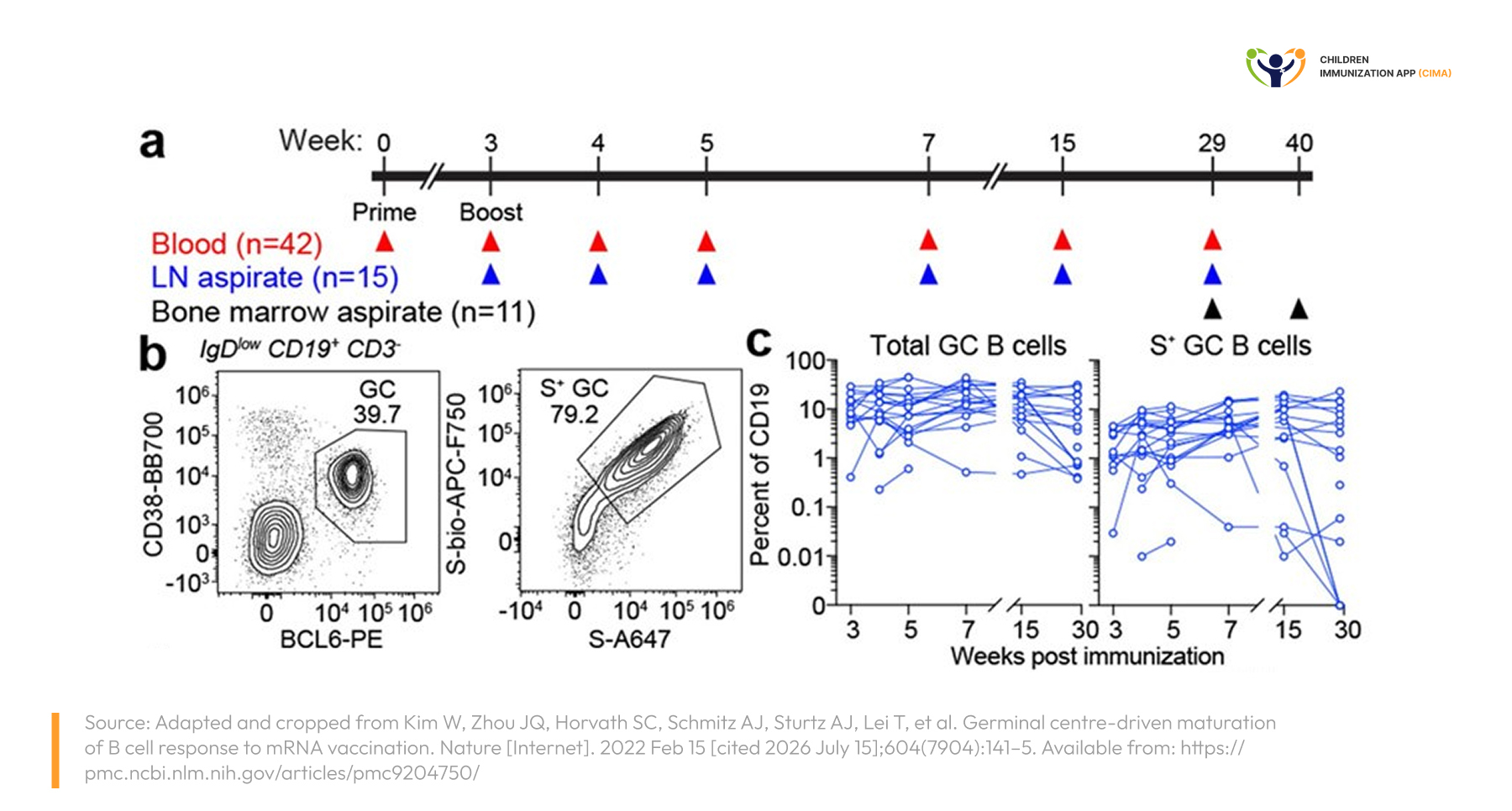
Persistent germinal centers in lymph nodes after SARS‑CoV‑2 mRNA vaccination, measured by repeated fine‑needle aspirates over six months, illustrating how these vaccines sustain B‑cell training even as circulating antibody levels later decline.
Modern Recombinant Vaccines That Get It Right: HPV and Hepatitis B
Two of medicine’s newer, non-live vaccine platforms show that durability is achievable without a replicating pathogen, if the antigen and adjuvant are engineered well. Virus-like-particle HPV vaccines have now been followed for 14 years in Nordic women who received the quadrivalent vaccine, with sustained antibody responses and no evidence of waning protection against high-grade cervical disease across the entire follow-up period. [22]
A separate 10-year follow-up of the 9-valent HPV vaccine likewise found durable immunogenicity, sustained effectiveness, and no breakthrough HPV-related disease. [23] Hepatitis B vaccine offers an even more instructive case: circulating anti-HBs antibody does measurably wane over 20 to 30 years, yet immune memory persists independently in HBsAg-specific B and T cells, which is why the large majority of vaccinees mount a rapid, protective “anamnestic” antibody surge upon re-exposure decades later. The reason global guidelines still do not recommend routine booster doses. [24] The lesson for vaccine designers is an important one: measuring antibody titers alone can seriously underestimate true durability, because memory B and T cells keep working long after visible antibody has faded. [25]
Key ideas behind long‑lasting vaccines
- Virus‑like particle (VLP) HPV vaccines: Vaccines that use empty “shells” of the HPV virus (no genetic material) to safely train the immune system to prevent HPV infections and cervical cancer.
- Immune memory: The immune system’s long‑term “memory” of a germ, stored in special B and T cells, so the body can respond quickly and strongly even if measurable antibodies have faded.
- Anamnestic response: A rapid surge of protective antibodies that happens when the immune system “remembers” a past vaccine or infection and is exposed to the same germ again.
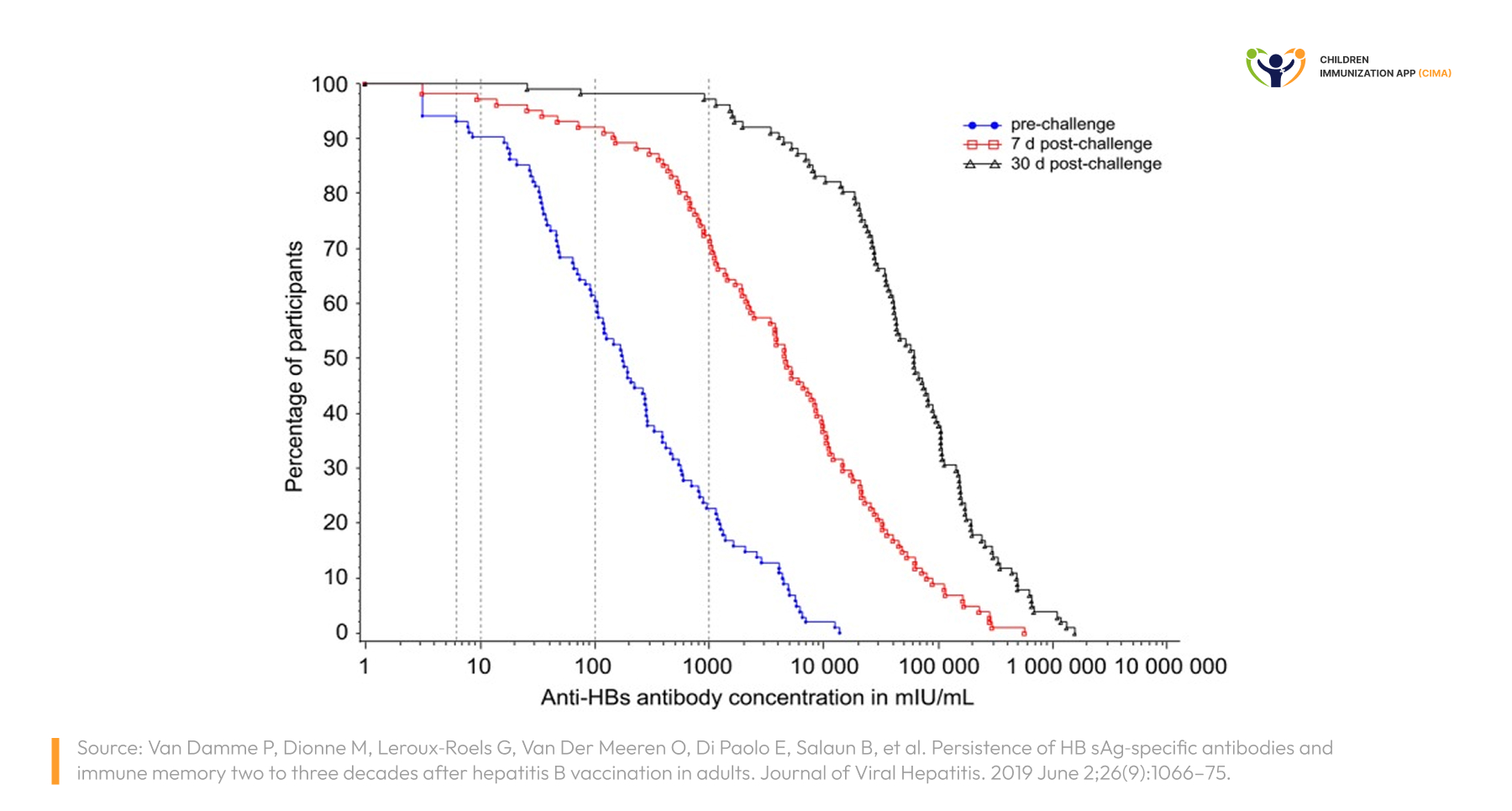
Hepatitis B vaccinees show low or undetectable anti‑HBs antibody before a controlled booster injection or test dose but mount a rapid, massive antibody surge within 7–30 days, illustrating how long‑lived immune memory can protect even when baseline antibody appears to have waned.
Engineering Durability: What Scientists Are Doing About It
The most active frontier in vaccinology today is not discovering new antigens—it is engineering old and new antigens to leave behind the kind of memory that live vaccines generate naturally. Saponin‑based adjuvants are special helper ingredients added to vaccines to make the immune response stronger. In this case, the adjuvant is called Matrix‑M, which is built from plant‑derived molecules called saponins mixed with fats. These ingredients self‑assemble into tiny 40‑nanometer, open, cage‑like nanoparticles that carry the vaccine antigen on their surface. When Matrix‑M is injected with an antigen, it causes very early activation of the innate immune system, the body’s fast, first‑line defense, right at the injection site and in the nearby draining lymph nodes (the lymph nodes that collect fluid and immune cells from the injection area). This early activation shapes how the later, more specific response develops. In particular, Matrix‑M pushes the immune system toward a Th1 response (a type of helper T‑cell pattern that supports strong antiviral and antibacterial immunity) and a T‑follicular‑helper (Tfh) response (a specialized helper T‑cell type that lives in lymph node follicles and helps B cells improve their antibodies). This combination helps the immune system recognize a broader range of epitopes, that is, more individual “patches” or features on the antigen that antibodies can bind to. By broadening which epitopes are recognized and strengthening the germinal center reaction, specialized "training hubs" inside lymph nodes where B cells are refined, mutated, and selected, Matrix‑M measurably increases the quality and amount of the output from these germinal centers. In simple terms, it helps vaccines elicit stronger, more durable B‑cell memory and antibody responses, bringing non‑live vaccines closer to the long‑lived protection typically seen with live vaccines. [26]
Self-amplifying mRNA platforms take a different route to the same goal: by encoding their own RNA-replication machinery alongside the antigen, they extend the duration of antigen expression inside the body at a fraction of the mRNA dose, and head-to-head trial data through 12 months already show meaningfully higher antibody persistence than a conventional mRNA vaccine. [27]
A third strategy borrows structural biology: mosaic nanoparticles displaying antigen fragments from multiple viral strains on a single particle surface are being engineered, atom by atom, to steer the immune system toward broadly cross-reactive antibody lineages rather than narrow, strain-specific ones, potentially building durability and breadth into the same shot. [28] None of these approaches yet rivals the multi-decade memory of a live measles or yellow fever vaccine, but together they represent the first serious attempt to reverse-engineer nature’s most durable trick. [29]
Three new tools for longer lasting vaccines:
- Matrix‑M adjuvant: A plant‑based helper ingredient added to some vaccines to make the immune response stronger and longer‑lasting by “waking up” the immune system early at the injection site and nearby lymph nodes.
- Self‑amplifying mRNA (sa‑mRNA): A newer type of mRNA vaccine that carries its own “copying” instructions, so the body makes the vaccine antigen for a longer time using a smaller dose, helping antibodies last longer than with standard mRNA.
- Mosaic nanoparticles: Tiny particles that display pieces from several virus strains at once, training the immune system to recognize many versions of a virus instead of just one, aiming for broader and more durable protection in a single shot.
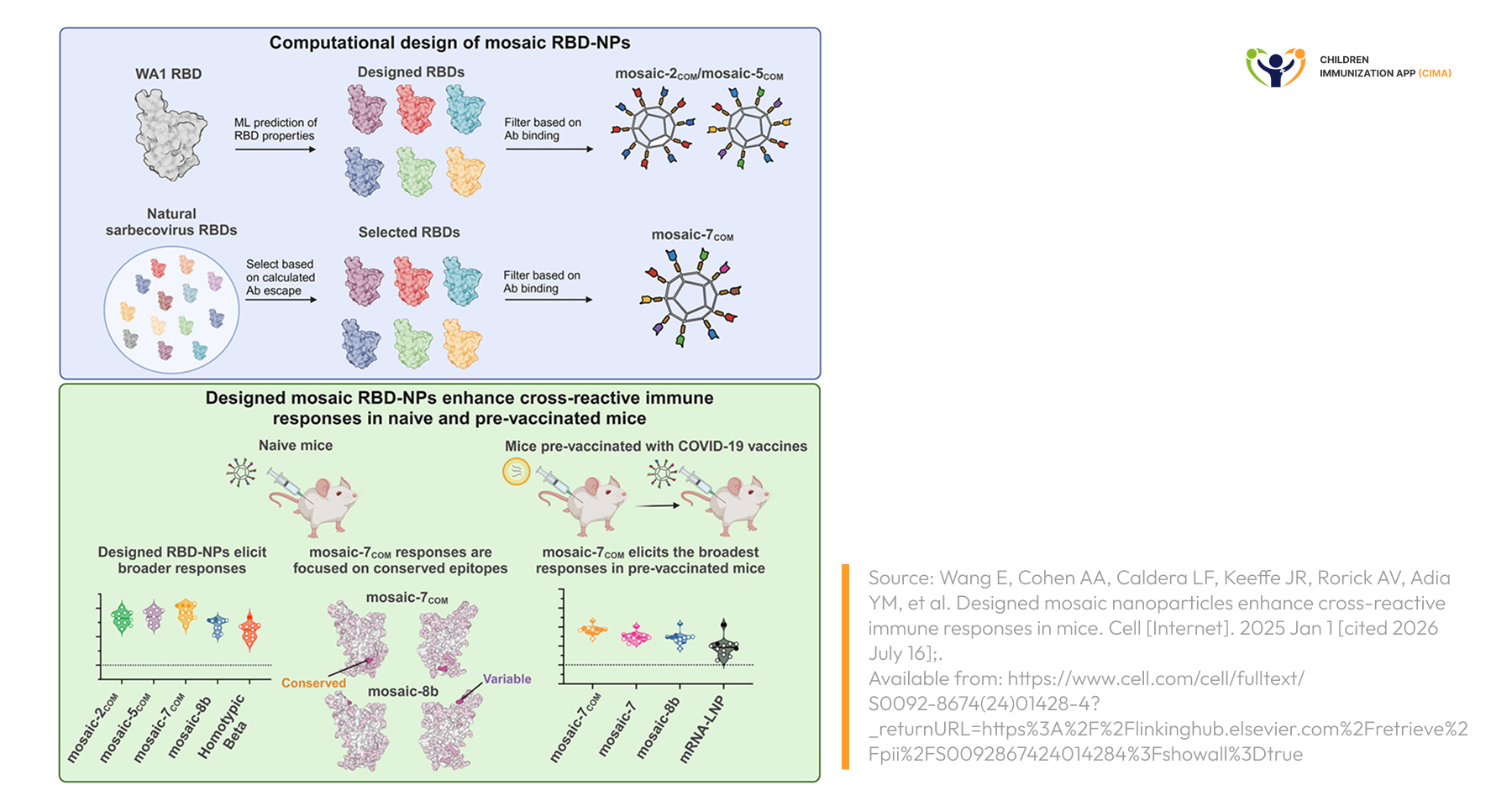
Mosaic receptor‑binding‑domain nanoparticles are computationally designed from multiple SARS‑like coronaviruses and then tested in mice, showing that a single mosaic particle can steer the immune system toward conserved epitopes and broader, cross‑reactive responses.
Turning the Science of Durability Into Protection That Does Not Lapse
Understanding why immunity fades is only useful if that knowledge changes what happens in the clinic, where CIMA Care's digital ecosystem is built to make a difference. Vaccines with known short durability windows, such as acellular pertussis, tetanus-diphtheria, and COVID-19 boosters, depend entirely on returning on schedule; the CIMA Care App's automated, multilingual SMS reminders and defaulter-identification tools are designed to improve rates and close the gap, so that booster-dependent protection does not quietly lapse between doses. Our data visualization and analytics dashboards can give healthcare teams a real-time view of coverage and booster compliance across an entire population, surfacing precisely where waning-immunity risk is concentrated and where outreach is most needed. Moreover, as germinal centers, memory B cells, antigenic drift, and next-generation adjuvants evolve quickly, CIMA Care Health Academy's CPD-certified Vaccination Programs courses keep healthcare professionals current on the science behind each vaccine entry, translating frontier research into confident, evidence-based conversations with patients and families.
The durability of a vaccine is a biological fact that scientists are only now learning to engineer. Still, the durability of a vaccination program is a choice health systems make every single day. Together, we can make sure every dose and every booster count.
Join CIMA Care in turning the science of immunological memory into protection that lasts. Visit www.cima.care to see how our platform helps healthcare teams keep every dose and every booster on schedule.
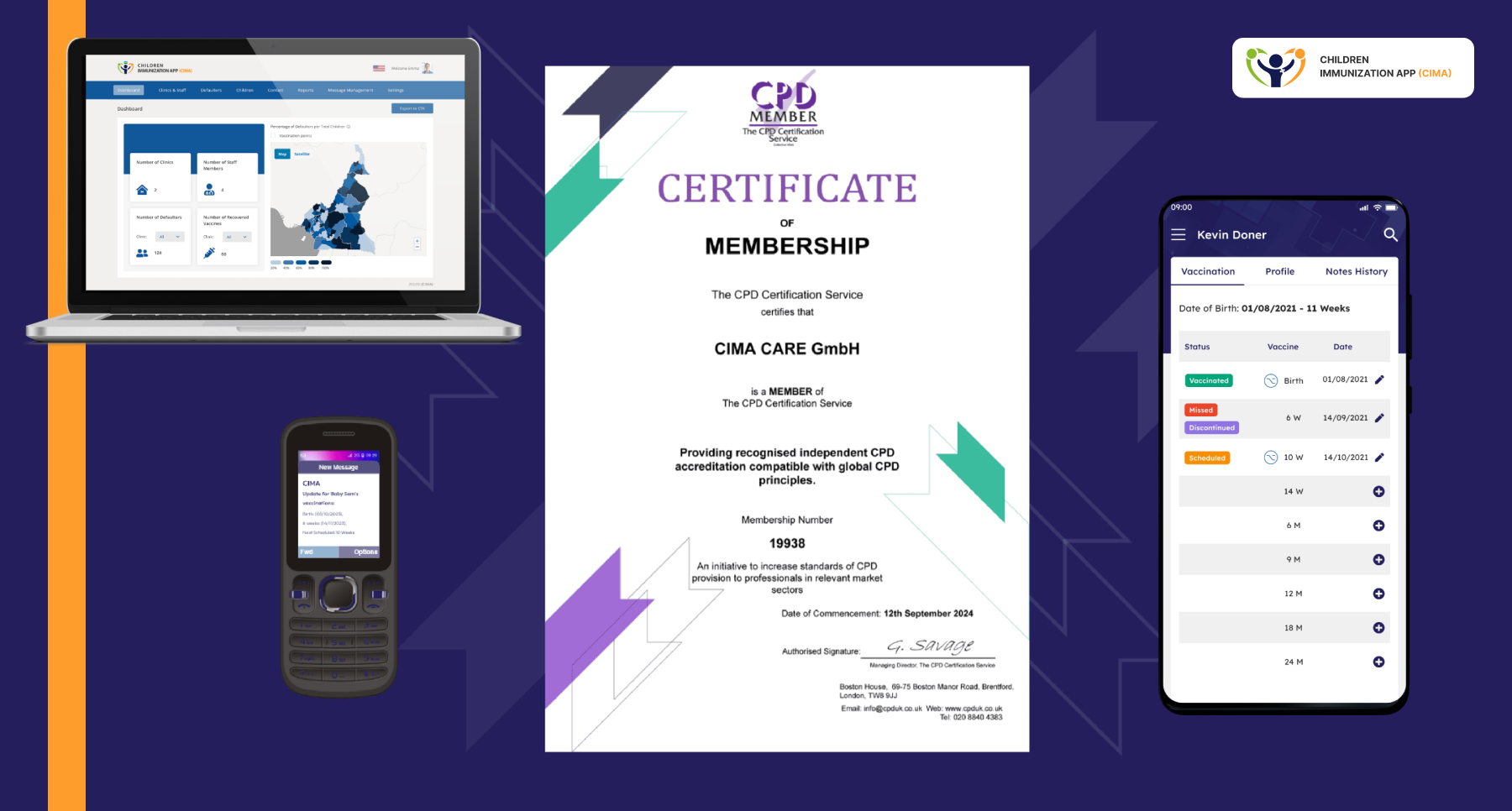
CIMA Care turns the science of immunity into action: CPD‑accredited training, real‑time dashboards, and SMS reminders work together to keep every dose on schedule, so vaccine protection does not quietly fade between doses.
CONFLICTS OF INTEREST
The author and reviewer declare no financial or non-financial conflicts of interest in relation to the content of this page. Full declarations are held on file only, and are available on request.
LICENCE


Image References
- 1. Cohen J. How long do vaccines last? The surprising answers may help protect people longer [Internet]. Science. 2019 [cited 2026 Jul 16]. Available from: https://www.science.org/content/article/how-long-do-vaccines-last-surprising-answers-may-help-protect-people-longer
- 2. Syeda MZ, Hong T, Huang C, Huang W, Mu Q. B cell memory: from generation to reactivation: a multipronged defense wall against pathogens. Cell Death Discov [Internet]. 2024 Mar 7 [cited 2026 Jul 14];10(1):117. Available from: https://www.gavi.org/progress-report
- 3. Amanna IJ, Carlson NE, Slifka MK. Duration of humoral immunity to common viral and vaccine antigens. N Engl J Med. 2007;357(19):1903–15. Available from: https://www.gavi.org/progress-report
- 4. Solana JC, Moreno J, Iborra S, Soto M, Requena JM. Live attenuated vaccines, a favorable strategy to provide long-term immunity against protozoan diseases. Trends Parasitol [Internet]. 2022 Apr [cited 2026 Jul 15];38(4):316–34. Available from: https://www.sciencedirect.com/science/article/abs/pii/S1471492221002841
- 5. Adapted and cropped from: Szwejser-Zawislak E, Wilk MM, Piszczek P, Krawczyk J, Wilczyńska D, Hozbor D. Evaluation of whole-cell and acellular pertussis vaccines in the context of long-term herd immunity. Vaccines (Basel) [Internet]. 2022 Dec 20;11(1):1. Available from: https://www.mdpi.com/2076-393X/11/1/1
- 6. Adapted and cropped from: Kim W, Zhou JQ, Horvath SC, Schmitz AJ, Sturtz AJ, Lei T, et al. Germinal centre-driven maturation of B cell response to mRNA vaccination. Nature [Internet]. 2022 Feb 15 [cited 2026 Jul 15];604(7904):141–5. Available from: https://pmc.ncbi.nlm.nih.gov/articles/PMC9204750/
- 7. Van Damme P, Dionne M, Leroux-Roels G, Van Der Meeren O, Di Paolo E, Salaun B, et al. Persistence of HBsAg-specific antibodies and immune memory two to three decades after hepatitis B vaccination in adults. J Viral Hepat. 2019 Jun 2;26(9):1066–75.
- 8. Wang E, Cohen AA, Caldera LF, Keeffe JR, Rorick AV, Adia YM, et al. Designed mosaic nanoparticles enhance cross-reactive immune responses in mice. Cell [Internet]. 2025 Jan 1 [cited 2026 Jul 16]. Available from: https://www.cell.com/cell/fulltext/S0092-8674(24)01428-4
Blog Resources
- 1- Schnyder JL, Hanna, Bache BE, Schaumburg F, Grobusch MP. Long-term immunity following yellow fever vaccination: a systematic review and meta-analysis. The Lancet Global Health. 2024 Mar 1;12(3):e445–56.
- 2- Doyon-Plourde P, Przepiorkowski J, Young K, Zhao L, Sinilaite A. Intraseasonal waning immunity of seasonal influenza vaccine – A systematic review and meta-analysis. Vaccine [Internet]. 2023 June 16 [cited 2026 July 14];. Available from: https://www.sciencedirect.com/science/article/pii/S0264410X23007132
- 3- Emerging novel methodologies to understand and strategically target long-lived plasma cells in vaccine design to induce durable immunity. Front Immunol. 2025. Available from: https://www.frontiersin.org/journals/immunology/articles/10.3389/fimmu.2025.1680375/full
- 4- Kim W, Zhou JQ, Horvath SC, Schmitz AJ, Sturtz AJ, Lei T, et al. Germinal centre-driven maturation of B cell response to mRNA vaccination. Nature. 2022 Feb 15;604(7904):141–5.
- 5- Cvijović I, Swift M, Quake SR. Long-term B cell memory emerges at uniform relative rates in the human immune response. Proc Natl Acad Sci U S A. 2025;122(9):e2406474122. Available from: https://www.pnas.org/doi/10.1073/pnas.2406474122
- 6- Amanna IJ, Carlson NE, Slifka MK. Duration of Humoral Immunity to Common Viral and Vaccine Antigens. N Engl J Med. 2007;357(19):1903–1915. Available from: https://www.nejm.org/doi/full/10.1056/NEJMoa0660927- WHO. Yellow fever [Internet]. Fact sheets. 2023. Available from: https://www.who.int/news-room/fact-sheets/detail/yellow-fever8- WHO. Vaccines and vaccination against yellow fever: WHO Position Paper, June 2013--recommendations. Vaccine [Internet]. 2015 Jan [cited 2026 July 15];33(1):76–7. Available from: https://pubmed.ncbi.nlm.nih.gov/24852721/9- Fukushima S, Lim CK, Hamada A. A Single Dose of Yellow Fever Vaccine Provides Long-Term Immunity in Japanese Travelers. Vaccines. 2025;13(7):675. Available from: https://www.mdpi.com/2076-393X/13/7/67510- Centers for Disease Control and Prevention. Measles Vaccination [Internet]. Measles (Rubeola). CDC; 2024 [cited 2026 July 15]. Available from: https://www.cdc.gov/measles/vaccines/index.html11- Zapata K. An expert answers questions about the measles - UT Health San Antonio [Internet]. UT Health San Antonio. 2025 [cited 2026 July 15]. Available from: https://news.uthscsa.edu/an-expert-answers-questions-about-the-measles/12- World Health Organization. Evidence for measles vaccine effectiveness: background to the WHO position paper on measles vaccines, April 2017 [Internet]. Geneva: World Health Organization; 2017. Available from: https://cdn.who.int/media/docs/default-source/immunization/position_paper_documents/measles/measles-grad-effectiveness.pdf13- Szwejser-Zawislak E, Wilk MM, Piszczek P, Krawczyk J, Wilczyńska D, Hozbor D. Evaluation of Whole-Cell and Acellular Pertussis Vaccines in the Context of Long-Term Herd Immunity. Vaccines. 2022 Dec 20;11(1):1.14- World Health Organization. The immunological basis for immunization series. Module 3: Tetanus. Update 2018 [Internet]. Geneva: World Health Organization; 2018 [cited 2026 Jul 15]. Available from: https://www.who.int/publications/i/item/978924151361615- Committee IMUVS, Stratton KR, Howe CJ, Richard B. Johnston J. Diphtheria and Tetanus Toxoids [Internet]. www.ncbi.nlm.nih.gov. National Academies Press (US); 1994 [cited 2026 July 15]. Available from: https://www.ncbi.nlm.nih.gov/books/NBK236292/16- Maurer DP, Vu M, Schmidt AG. Antigenic drift expands influenza viral escape pathways from recalled humoral immunity. Immunity [Internet]. 2025 Feb 28 [cited 2026 July 15];58(3):716–27.e6. Available from: https://www.sciencedirect.com/science/article/abs/pii/S107476132500074317- Sun J, Jo G, Troxell CA, Fu Y, Hoezl R, Lv H, et al. B cell imprinting in children impairs antibodies to the haemagglutinin stalk. Nature [Internet]. 2026 Mar 11 [cited 2026 July 15];1–10. Available from: https://www.nature.com/articles/s41586-026-10248-618- Houser K, Subbarao K. Influenza vaccines: challenges and solutions. Cell Host & Microbe. 2015;17(3):295–300. Available free via PubMed Central: https://pmc.ncbi.nlm.nih.gov/articles/PMC4362519/19- Turner JS, O’Halloran JA, Kalaidina E, Kim W, Schmitz AJ, Zhou JQ, et al. SARS-CoV-2 mRNA vaccines induce persistent human germinal centre responses. Nature [Internet]. 2021 June 28 [cited 2026 July 15];596:1–5. Available from: https://www.nature.com/articles/s41586-021-03738-220- Castaño D, Bettini E, Kumar B, Chudnovskiy A, Siv A, Protti G, et al. Distinct components of mRNA vaccines cooperate to instruct efficient germinal center responses. Cell [Internet]. 2025 Dec [cited 2026 July 15];188(26):7461–80.e23. Available from: https://www.cell.com/cell/fulltext/s0092-8674(25)01358-321- Wang L, Nicols A, Turtle L, Richter A, Duncan CJ, Dunachie SJ, et al. T cell immune memory after covid-19 and vaccination. BMJ Medicine [Internet]. 2023 Nov 1 [cited 2026 July 15];2(1). Available from: https://bmjmedicine.bmj.com/content/2/1/e00046822- Kjaer SK, Nygård M, Sundström K, Dillner J, Tryggvadottir L, Munk C, et al. Final analysis of a 14-year long-term follow-up study of the effectiveness and immunogenicity of the quadrivalent human papillomavirus vaccine in women from four nordic countries. EClinicalMedicine. 2020 June;23:100401.23- Restrepo J, Herrera T, Samakoses R, et al. Ten-Year Follow-up of 9-Valent Human Papillomavirus Vaccine: Immunogenicity, Effectiveness, and Safety. Pediatrics. 2023;152(4):e2022060993. Available from: https://publications.aap.org/pediatrics/article/152/4/e2022060993/19388624- Van Damme P, Dionne M, Leroux‐Roels G, Van Der Meeren O, Di Paolo E, Salaun B, et al. Persistence of HB sAg‐specific antibodies and immune memory two to three decades after hepatitis B vaccination in adults. Journal of Viral Hepatitis. 2019 June 2;26(9):1066–75.25- Brooks BD, Beland A, Aguero G, Taylor N, Towne FD. Moving beyond Titers. Vaccines. 2022 Apr 26;10(5):683.26- Stertman L, Palm AKE, Behdad Zarnegar, Carow B, Carolina Lunderius Andersson, Magnusson SE, et al. The Matrix-MTM adjuvant: A critical component of vaccines for the 21st century. Human vaccines & immunotherapeutics [Internet]. 2023 Apr 27 [cited 2026 July 16];19(1). Available from: https://www.ncbi.nlm.nih.gov/pmc/articles/PMC10158541/27- Self-Amplifying mRNA COVID-19 Vaccine Demonstrates Superior Immune Response Compared with mRNA Vaccine at 12 Months Post-Vaccination [Internet]. Global Newsroom | CSL. 2024 [cited 2026 July 16]. Available from: https://newsroom.csl.com/2024-09-30-Self-Amplifying-mRNA-COVID-19-Vaccine-Demonstrates-Superior-Immune-Response-Compared-with-mRNA-Vaccine-at-12-Months-Post-Vaccination28- Wang E, Cohen AA, Caldera LF, Keeffe JR, Rorick AV, Adia YM, et al. Designed mosaic nanoparticles enhance cross-reactive immune responses in mice. Cell [Internet]. 2025 Jan 1 [cited 2026 July 16];. Available from: https://www.cell.com/cell/fulltext/S0092-8674(24)01428-4?_returnURL=https%3A%2F%2Flinkinghub.elsevier.com%2Fretrieve%2Fpii%2FS0092867424014284%3Fshowall%3Dtrue29- Srivastava S, Jayaswal N, Gupta P, Sridhar SB, Jaiswal P, Tariq Mohd, et al. The Yellow Fever Vaccine Journey: Milestones and Future Directions. Vaccines [Internet]. 2026 Jan 5 [cited 2026 July 16];14(1):65. Available from: https://www.mdpi.com/2076-393X/14/1/65?utm_source=chatgpt.com
Enjoyed this article?
Share it with your friends on LinkedIn: Why Some Vaccines Provide Lifelong Protection While Others Fade, and What Scientists Are Doing About It 
Follow us on LinkedIn for more updates and insights: Cima Care GmbH