
Building Resilient Health Systems: Empowering CHWs for Lasting Impact |
Strengthening CHW Programs: Systems, Support, and Sustainability (Part 2)
Reviewed by Fabrice Sewolo Matondo, MD, MPH, MSc — PhD Student, Epidemiologist
Published 29 January 2025 · 4 min read
From data collection to economic sustainability, successful CHW programs require robust support systems and strategic investments. Discover key strategies for strengthening CHW programs to achieve lasting improvements in vaccination coverage.
Data Collection and Surveillance
CHWs contribute significantly to the health system through their data collection efforts.
- For instance, studies in Kenya, Nepal, Senegal, and Zambia showed CHWs' attempts to track uptake rates, [2] conduct surveys, track vaccination records, and contribute to health system data collection. [1]
- An Implementation Study in Uganda demonstrated that CHWs successfully tracked and linked defaulters to immunization services, and more than two-thirds (68%) of defaulting children returned for catch-up immunization. [4]
Strategy: Provide CHWs with simple, standardized data collection and reporting tools and integrate the collected data into national health information systems.

Community health worker collecting immunization data in a local community setting.

CHW and healthcare professional demonstrating supportive partnership in patient care coordination.
Incentives and Recognition
- Sustaining CHW motivation is crucial for long-term program success, and incentives play a critical role in motivating Community Health Workers (CHWs) to actively support and improve community health.
- By providing tangible rewards such as financial compensation, essential supplies like food staples, childcare assistance, and practical resources like bicycles and uniforms, CHWs are more empowered and equipped to perform their roles effectively. Additional incentives, such as training certificates and access to free healthcare services, enhance their professional development and improve their personal well-being, increasing their commitment to the communities they serve. [1]
- To enhance immunization rates in under-immunized and zero-dose communities, in countries where CHWs administer vaccines, they should ensure they receive sufficient pay, adequate supervision, supply chain support, and formal inclusion within the healthcare system. [3]
Strategy: Implement a combination of financial and non-financial incentives, including career development opportunities and public recognition, to motivate CHWs.
Collaboration with Formal Health Systems
Strengthening links between CHWs and formal health facilities can enhance overall immunization efforts.
- Communication channels between CHWs and health facilities can help CHWs effectively connect community members to the formalized healthcare system, and regular audit meetings between CHWs and health facility staff improve coordination. [1 & 4]
- Successful integration of CHWs into formal health systems, establishing clear supply chain connections between CHWs and health facilities, and providing regular supervision and support from health facility staff are quite beneficial in vaccination coverage rate and effectiveness. [5]
Strategy: Establish clear referral pathways and communication channels between CHWs and health facilities and involve CHWs in health facility planning and outreach activities.
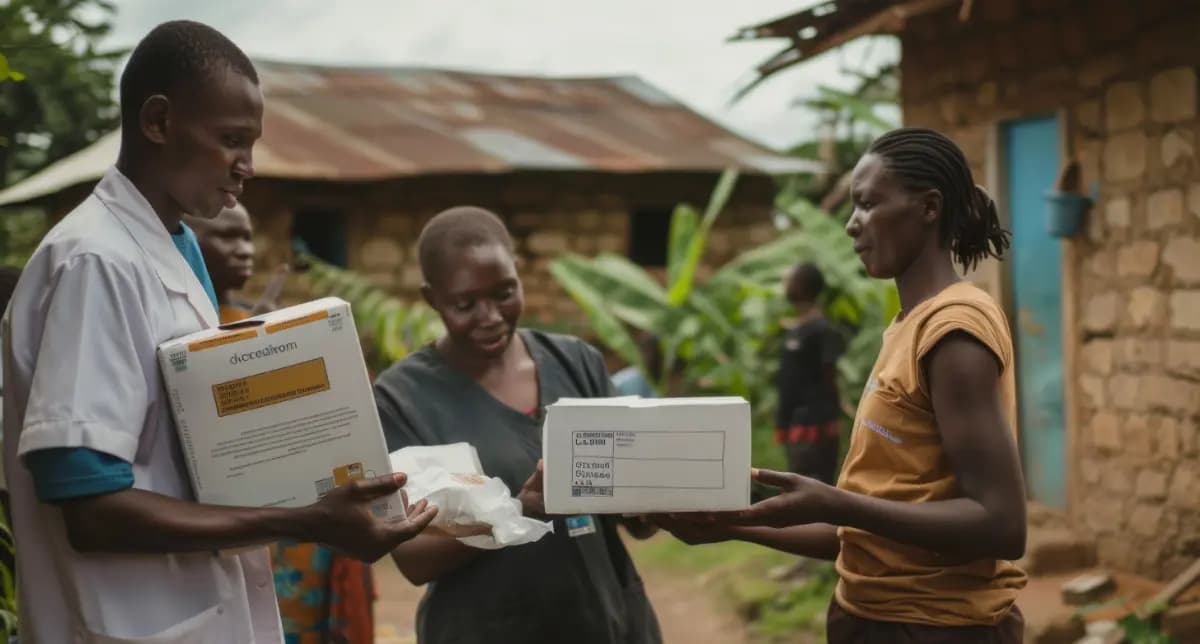
CHWs receiving essential medical supplies and recognition, demonstrating effective supply chain support and resource provision.
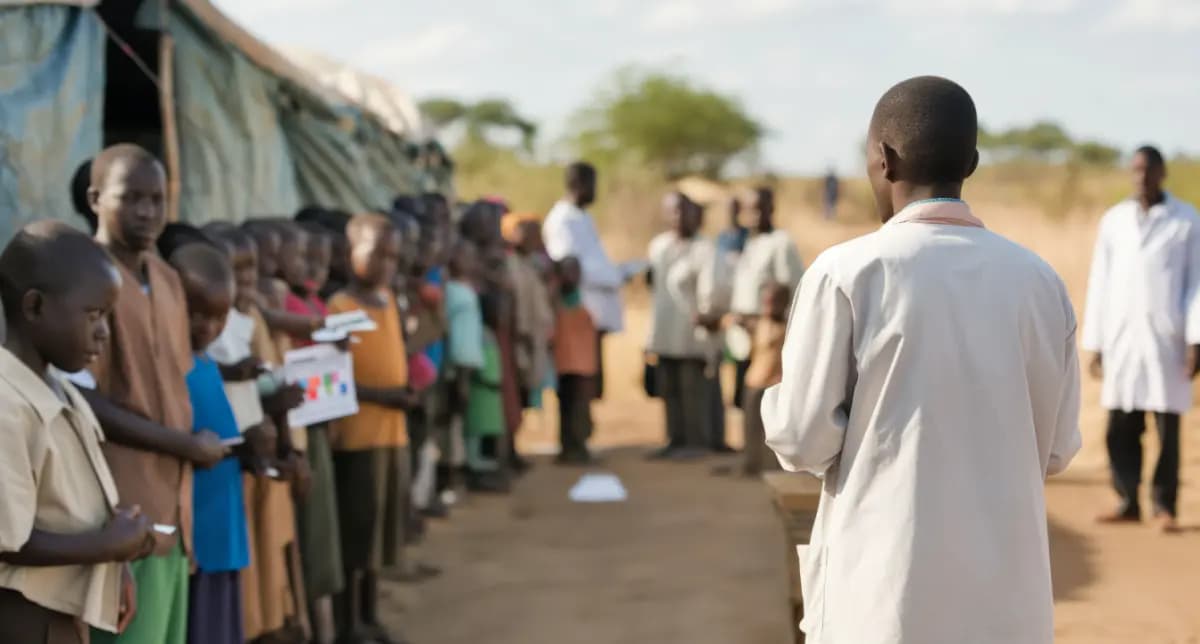
CHW coordinating community vaccination outreach, demonstrating sustainable healthcare delivery in action.
Economic Impact and Sustainability
Countries with clear financial management systems for CHWs, as seen in successful cases in Ethiopia and Bangladesh, experience improved vaccination coverage. Adequate remuneration is essential for sustaining these programs, which, in turn, brings economic benefits by reducing the disease burden and easing the workload on healthcare facilities. [6]
Strategy: Implement sustainable financing mechanisms through multi-stakeholder partnerships; develop clear financial management systems that include regular CHW compensation; calculate and communicate the return on investment of CHW programs through reduced disease burden and healthcare facility costs; and integrate CHW program funding into national health budgets to ensure long-term sustainability. Create performance-based incentive structures that reward improved vaccination coverage while maintaining cost-effectiveness.
Conclusion
In conclusion, Community Health Workers (CHWs) are vital to increasing vaccination coverage in underserved areas. To enhance their impact, it is essential to provide reliable pay and incentives, integrate them into vaccine supply chains, and offer regular supervision to ensure they have the tools needed for success. Formal recognition within national health systems and maintaining accurate demographic data will further support their work, allowing CHWs to deliver vaccines effectively and equitably. Together, these strategies empower CHWs to expand immunization access and improve public health outcomes.
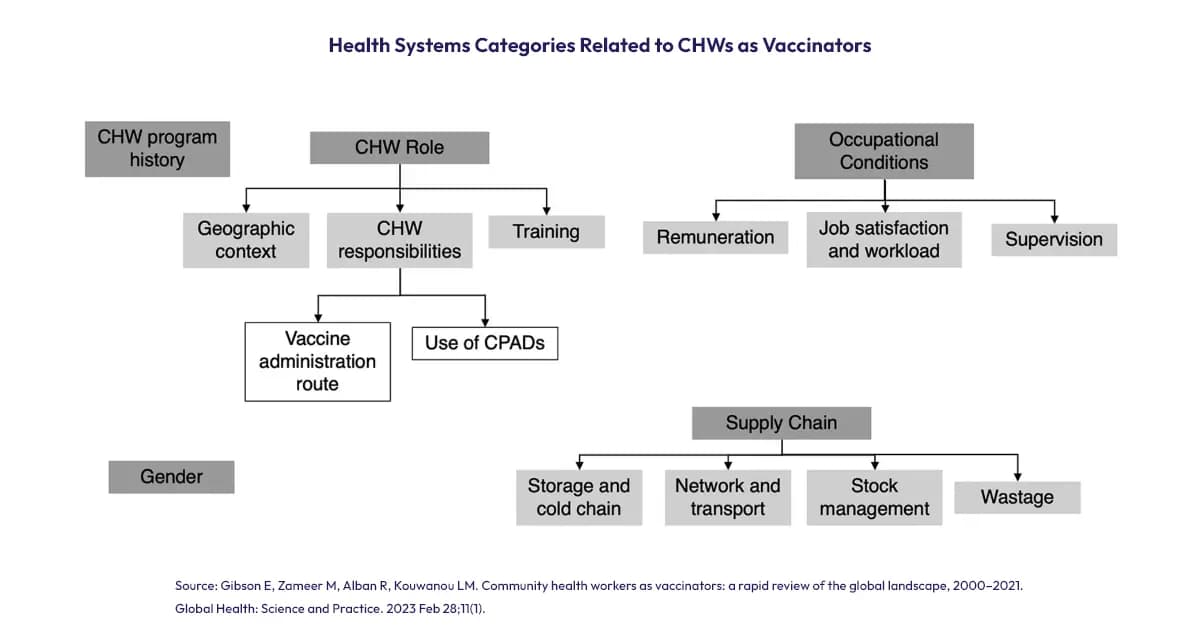
A comprehensive framework showing key elements of successful CHW vaccination programs.
Empowering Local Heroes: CIMA Care's Support for Community Health Workers
At CIMA Care, we recognize the pivotal role of CHWs in achieving global health equity. CIMA Care's digital platform offers tailored solutions to anyone concerned and actively cooperates in local or global health enhancement. Accompanying parents and children in the region, CHWs can use the information gained through CIMA Care's app and web-based admin dashboard to trace the defaulter children in regions and remind the caregivers before vaccination appointments.
Moreover, through CIMA Health Academy, CIMA Care provides specialized training programs for anyone interested, including CHWs, enhancing their skills and knowledge in vaccine delivery and community engagement.
Investing in and empowering Community Health Workers can build stronger, more resilient health systems that reach every child with life-saving vaccines. Together, we can create a world where vaccine-preventable diseases are a thing of the past.
Visit www.cima.care to learn more about how CIMA Care can support CHWs and advance global immunization efforts.
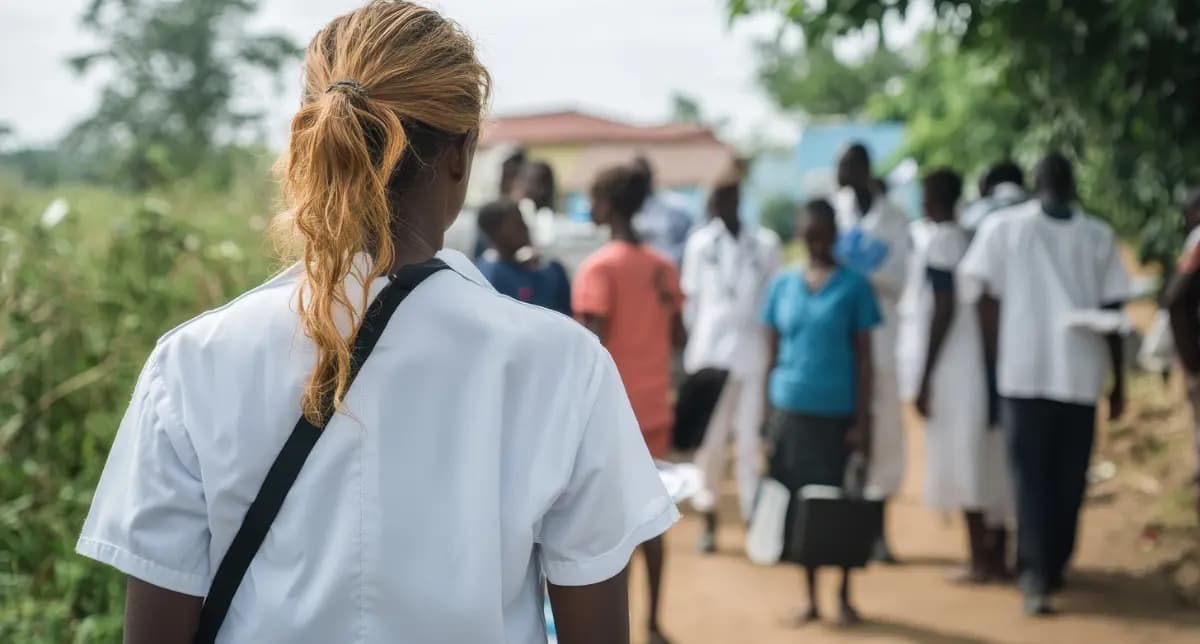
CIMA Care-supported CHW can lead community health initiatives for improved vaccination coverage.
CONFLICTS OF INTEREST
The author and reviewer declare no financial or non-financial conflicts of interest in relation to the content of this page. Full declarations are held on file only, and are available on request.
LICENCE
Strengthening CHW Programs: Systems, Support, and Sustainability (Part 2) © 2025 by CIMA Care GmbH is licensed under CC BY-NC-ND 4.0 


Image References
- 1- Adobe Stock. Happy African healthcare workers teamwork smiling nurses outdoor portrait [Internet]. Adobe Stock; [cited 2025 Aug 5]. Available from: https://stock.adobe.com/images/happy-african-healthcare-workers-teamwork-smiling-nurses-outdoor-portrait/1076992417
- 2- Adobe Stock. Black woman tablet or smile in outdoor for reading or check interview research for community news [Internet]. Adobe Stock; [cited 2025 Aug 5]. Available from: https://stock.adobe.com/images/black-woman-tablet-or-smile-in-outdoor-for-reading-or-check-interview-research-for-community-news-female-journalist-park-or-ebook-with-happy-story-on-social-media-tech-for-job-in-costa-rica/834567050
- 3- Adobe Stock. Nurse hands and senior patient in empathy, safety and support [Internet]. Adobe Stock; [cited 2025 Aug 5]. Available from: https://stock.adobe.com/images/nurse-hands-and-senior-patient-in-empathy-safety-and-support-of-help-trust-and-healthcare-consulting-nursing-home-counseling-and-gratitude-for-medical-caregiver-client-and-hope-in-consultation/560060526
- 4- Adobe Stock. A healthcare professional handing over essential medical supplies to local women in a rural village [Internet]. Adobe Stock; [cited 2025 Aug 5]. Available from: https://stock.adobe.com/images/a-healthcare-professional-handing-over-essential-medical-supplies-to-local-women-in-a-rural-village-setting-symbolizing-care-and-community-support/749463367
- 5- Adobe Stock. Healthcare workers provide medical assistance to children in a field hospital in Africa [Internet]. Adobe Stock; [cited 2025 Aug 5]. Available from: https://stock.adobe.com/images/healthcare-workers-provide-medical-assistance-to-children-in-a-field-hospital-in-africa-during-a-humanitarian-outreach/980113335
- 6- Global Health: Science and Practice. Figure 3: Countries and regions covered by the mapped initiatives [Internet]. GHSP; c2023 [cited 2025 Aug 5]. Available from: https://www.ghspjournal.org/content/ghsp/11/1/e2200307/F3.large.jpg
- 7- Adobe Stock. Medical team visiting a rural community in Africa [Internet]. Adobe Stock; [cited 2025 Aug 5]. Available from: https://stock.adobe.com/images/medical-team-visiting-a-rural-community-in-africa/984260283
Blog Resources
- 1- Ogutu EA, Ellis AS, Hester KA, Rodriguez K, Sakas Z, Jaishwal C, Yang C, Dixit S, Bose AS, Sarr M, Kilembe W. Success in vaccination programming through community health workers: a qualitative analysis of interviews and focus group discussions from Nepal, Senegal and Zambia. BMJ open. 2024 Apr 1;14(4):e079358.
- 2- Shumba CS, Kiraithe P, Kambo I, Shaibu S. Community Health Volunteers’ experiences of implementing COVID-19 vaccine education and promotion in Kenya: a qualitative descriptive study. Frontiers in Public Health. 2024 Jul 10;12:1406959.
- 3- Gibson E, Zameer M, Alban R, Kouwanou LM. Community health workers as vaccinators: a rapid review of the global landscape, 2000–2021. Global Health: Science and Practice. 2023 Feb 28;11(1).
- 4- Bakkabulindi P, Ampeire I, Ayebale L, Mubiri P, Feletto M, Muhumuza S. Engagement of community health workers to improve immunization coverage through addressing inequities and enhancing data quality and use is a feasible and effective approach: An implementation study in Uganda. Plos one. 2023 Oct 19;18(10):e0292053.
- 5- Ouédraogo HS, Kabore YL, Sawadogo AG, Bakouan M, Sawadogo N, Mano M, Zongo A, Sanou S, Kaboré L. Task-Shifting Immunization Activities to Community Health Workers: A Mixed-Method Cross-Sectional Study in Sahel Region, Burkina Faso. Global Health: Science and Practice. 2023 Oct 30;11(5).
- 6- Three Reasons to Invest in Community Health Workers | Frontline Health Workers Coalition [Internet]. Home | Frontline Health Workers Coalition. Available from: Three Reasons to Invest in Community Health Workers
Enjoyed this article?
Share it with your friends on LinkedIn: Strengthening CHW Programs: Systems, Support, and Sustainability (Part 2) 
Follow us on LinkedIn for more updates and insights: Cima Care GmbH