
A child's first vaccines should never depend on a mother's schooling or a family's income — yet WHO's decade-long evidence across 92 low- and middle-income countries shows they still do. |
July 13, 2026 . 5 Minutes read
Same Borders, Unequal Chances: A Landmark WHO Study Reveals the Childhood Immunization Inequality a Decade Has Not Closed
Vaccines and routine childhood immunization are among the most cost-effective tools in all public health. Since the Expanded Program on Immunization began in 1974, an estimated 154 million deaths have been averted,101 million of them in infants under one year, accounting for roughly 40% of the global decline in infant mortality. [1-2]
In 2024 alone, Gavi reached a record of 72 million children through routine immunization. [3] Yet national averages tell only part of the story. Behind every "average" coverage figure are under-vaccinated and zero-dose children who are systematically missed, and a major new World Health Organization study shows precisely who they are.
Published in March 2026 in the journal Vaccines, the analysis by the WHO Health Inequality Monitoring team is the most comprehensive look at within-country inequality in childhood immunization across low- and middle-income countries in a decade. Its conclusion is sobering: Economic and educational inequalities in childhood immunization have persisted over the past 10 years.[4]
For anyone working to reach the last unprotected child, this is not abstract data, it is a map of where the work remains to be done. It is also the exact terrain for which CIMA Care was built.
The Core Finding: Two Inequalities That Refuse to Close
Using nationally representative household survey data from up to 92 low- and middle-income countries, the authors assessed vaccine equity and inequalities in nine childhood immunization indicators between 2004–2013 and 2014–2023. They find that economic- and education-related inequalities in childhood immunization within these countries have persisted over the past decade. Overall, differences in vaccination coverage by child sex, mother's age, and urban versus rural residence were small or absent. In contrast, inequalities related to maternal education and household economic status were substantially larger. For immunization coverage indicators, the median difference between children of the most and least educated mothers ranged from 9 to 14 percentage points across countries, indicating a consistently sizable education-related coverage gap. [4]
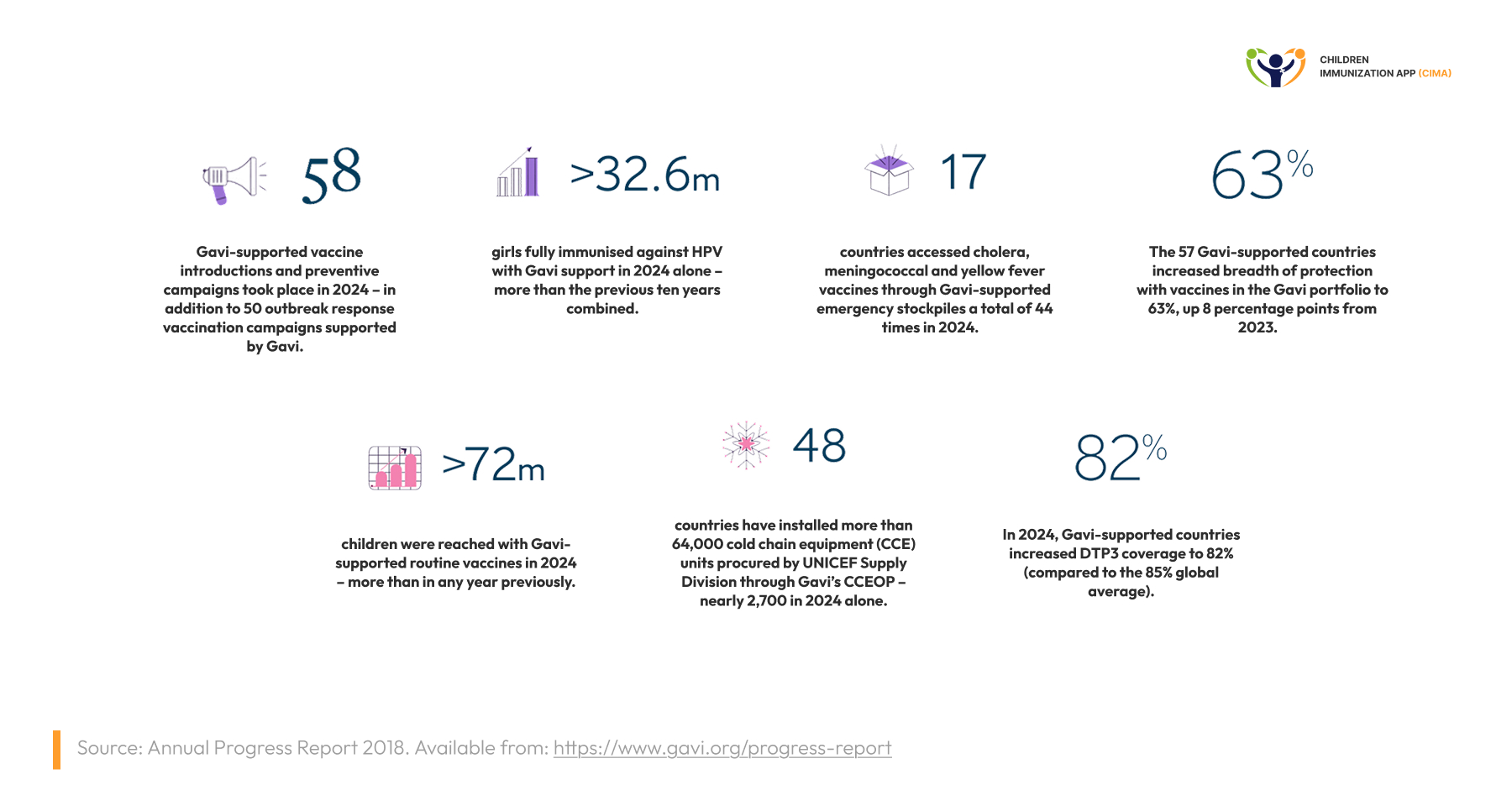
Gavi’s expanding vaccine portfolio and record 2024 reach, illustrating how global initiatives are scaling up routine immunization to protect more children in low- and middle-income countries where education- and wealth-related coverage gaps persist.
Maternal Education: A Powerful Determinant of Childhood Vaccination
The clearest signal in the analysis concerns maternal education. Across low- and middle-income study countries, the median prevalence of non-receipt of all four core childhood vaccines (BCG, DTP, measles, and polio) was 9.3% among children of mothers in the least educated group, compared with 3.0% among those in the most educated subgroup. Put differently, children whose mothers had the lowest level of schooling were roughly three times as likely to have missed every one of these basic vaccines that protect against vaccine-preventable diseases. Using a population-attributable risk approach, the authors estimated how national zero-dose DTP prevalence would change if education-related inequality were eliminated; in 14 African countries, including Cameroon, Chad, Nigeria, Mali, and Zambia, zero-dose prevalence would fall by at least half under this scenario. [4]
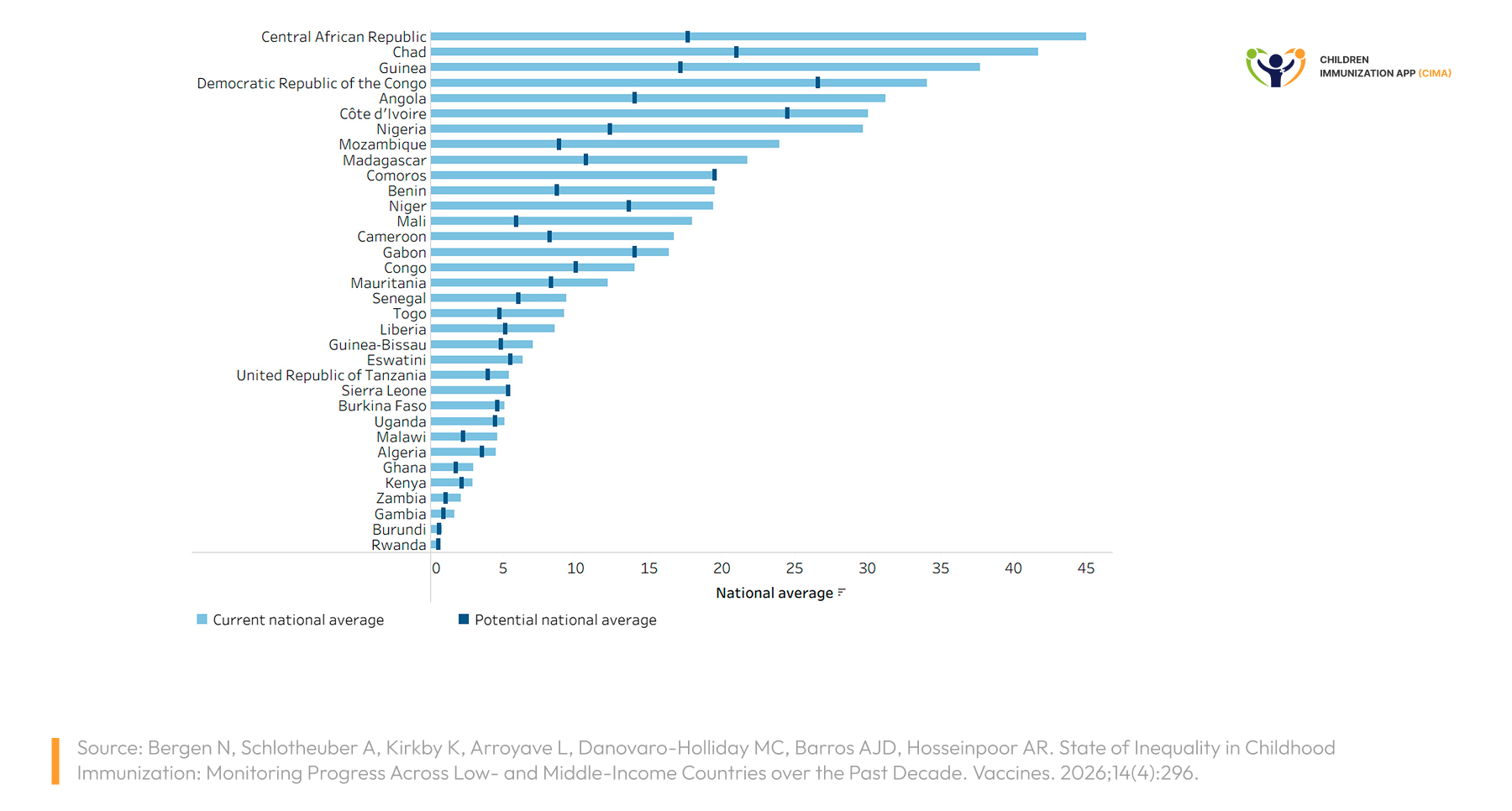
Potential reduction in zero-dose DTP prevalence if education-related inequality were eliminated in 34 African countries.
The Poverty Penalty: Where a Child Is Born Still Shapes Their Chances of Protection
Household wealth shows a pattern similar to maternal education, in shaping vaccination coverage rates, with the heaviest burden falling on children in the poorest countries. Across country income groups, overall economic related inequality in childhood immunization was consistently larger in low‑income countries than in lower‑middle‑ and upper‑middle‑income countries for every indicator examined. In these low‑income settings, the gap between the poorest and richest households is substantial. Among 20 low‑income study countries, the median difference in zero‑dose DTP prevalence between the poorest and richest subgroups reached 11.8 percentage points. These results underline how strongly a child's chances of receiving basic vaccines still depend on being born into a wealthier household in a better‑resourced health system. [4]
The economics behind this divide are stark. Sub-Saharan Africa, the region with both the lowest immunization coverage and the widest economic gaps, spends only a fraction per person on health compared with wealthy regions: roughly US$92 per capita in 2021, about one-fifth of even the next-lowest world region. [5]
A disparity of this order, spotlighted at the 2025 Global Digital Health Forum as a gap of up to 69-fold between sub-Saharan Africa and Europe. [6] This means that in the very places where the poorest children are most likely to miss their vaccines, health systems have the least to work with. That makes low-cost, high-leverage solutions not a luxury, but a necessity.
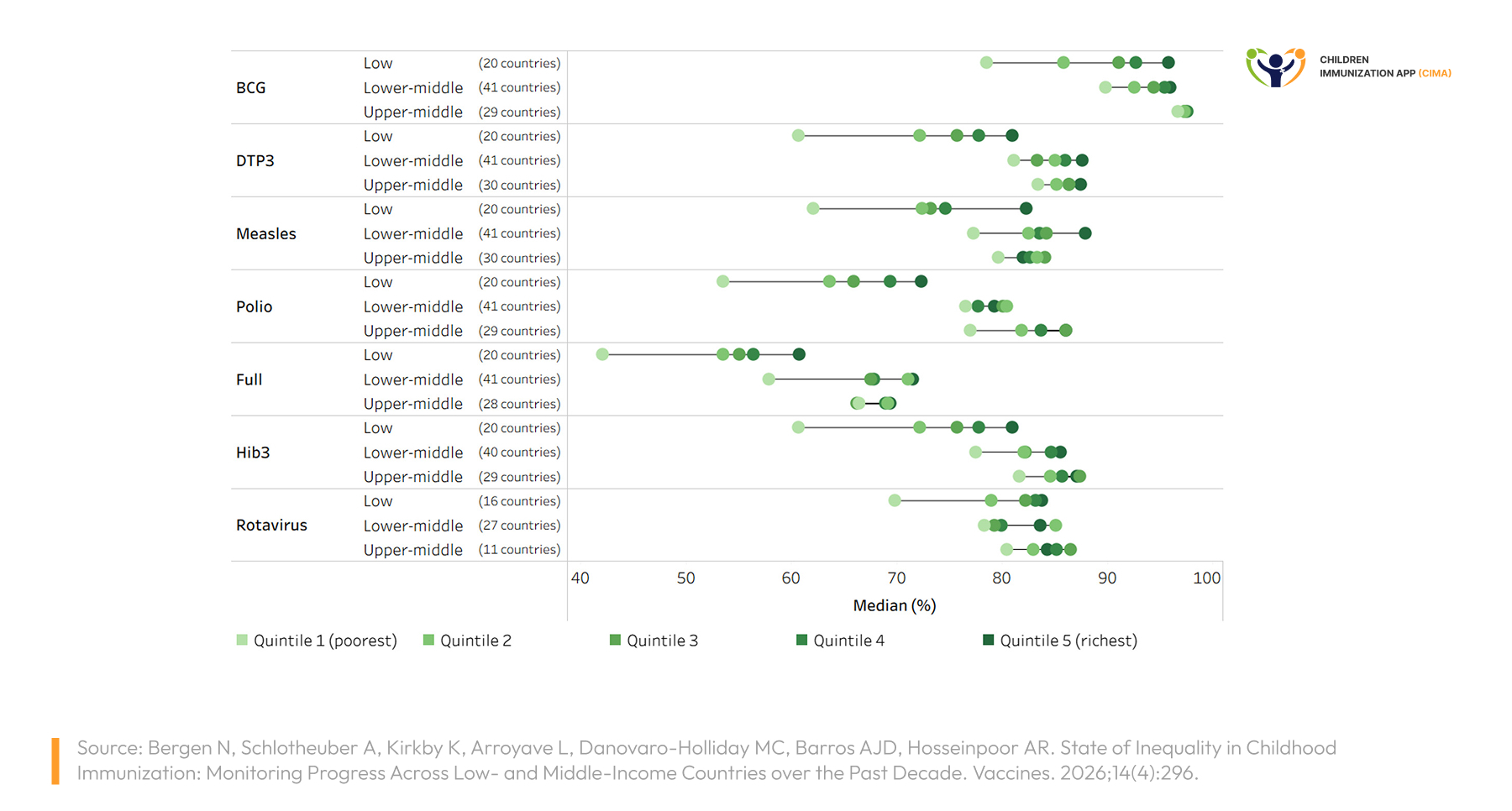
Median vaccine coverage and zero‑dose prevalence by wealth quintile, highlighting much lower coverage and higher zero‑dose burden among the poorest children, especially in low‑income countries.
A Glimmer of Progress — but Not Everywhere
Perhaps the study's most important message is about momentum. Overall, within-country inequalities barely moved over the past decade, with only modest reductions in a few specific cases, on the order of 2 to 3 percentage points over ten years, for example, in economic- and residence-related inequality in DTP3 coverage. A decade ago, these gaps appeared to be narrowing; that progress has now largely stalled. But once again, national averages hide encouraging exceptions. Among 17 low-income countries in the WHO African Region, the median education gap in DTP3 coverage narrowed meaningfully, from 16.0 down to 10.3 percentage points, over the decade. Countries, including Burundi, Chad, Liberia, Togo, and Uganda, saw inequality fall, with real coverage gains among the least-educated families. At the same time, Burkina Faso, The Gambia, and Rwanda maintained coverage above 85% across all subgroups. The lesson is decisive: where programs deliberately target the disadvantaged and prioritize immunization equity, the gap closes. Stagnation is not destiny. [4]
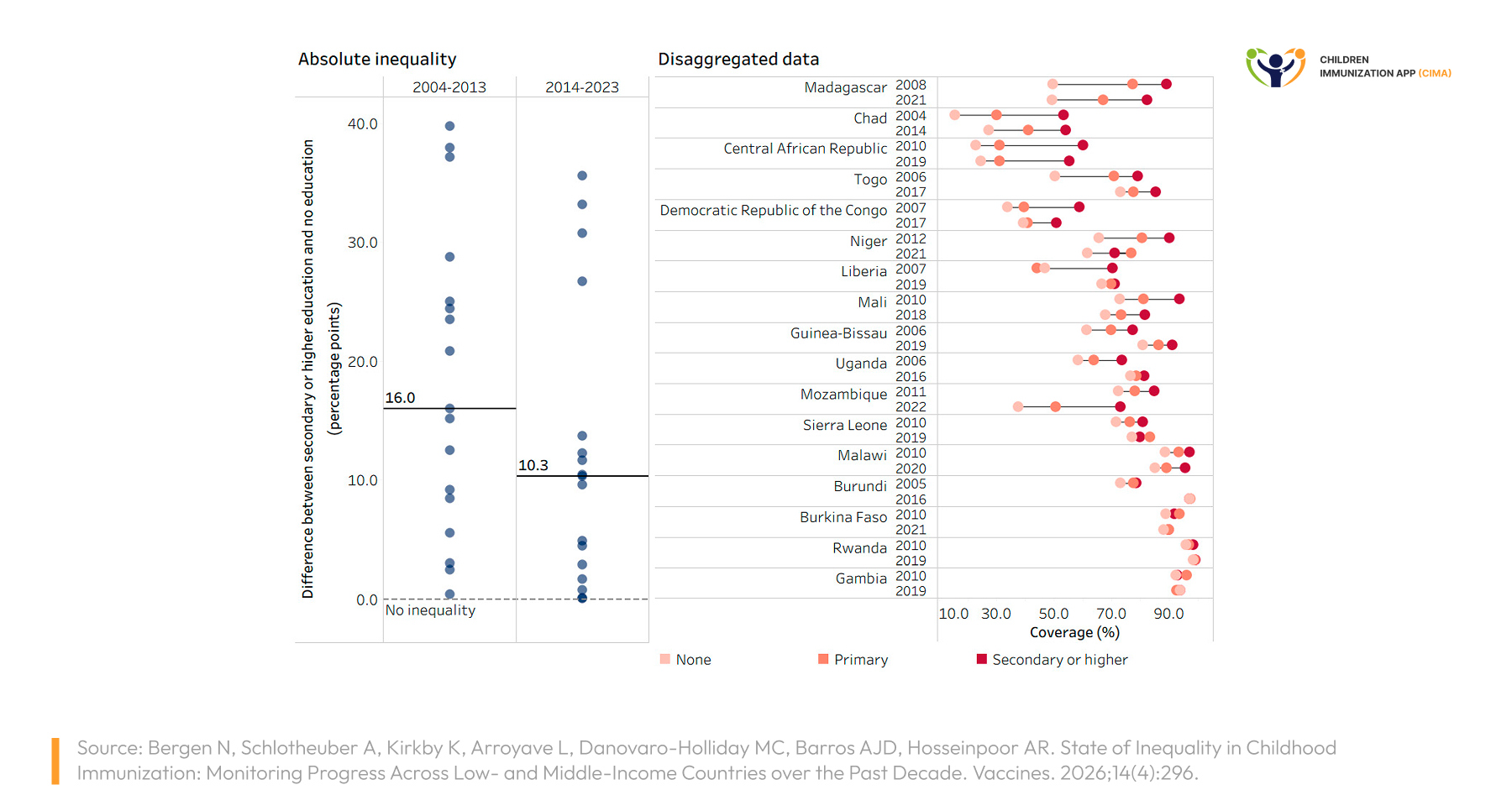
Shrinking the education gap in DTP3 coverage over a decade in 17 low-income African countries
What WHO Recommends — and a Blueprint You May Recognize
The study points toward clear solutions. In 2025, WHO and UNICEF called on governments and development partners to address immunization inequality through: strengthening immunization in conflict and fragile settings; embedding immunization within primary health care systems; countering vaccine misinformation and vaccine hesitancy; and investing in strong data and disease surveillance systems. [7-8]
Evidence supports the view that the most effective approaches are comprehensive. [9] Another study found that comprehensive multi-component interventions were most effective, including improving access, appointment reminders, education, and tailored health communications. [10] This is the precise blueprint CIMA Care built to deliver.
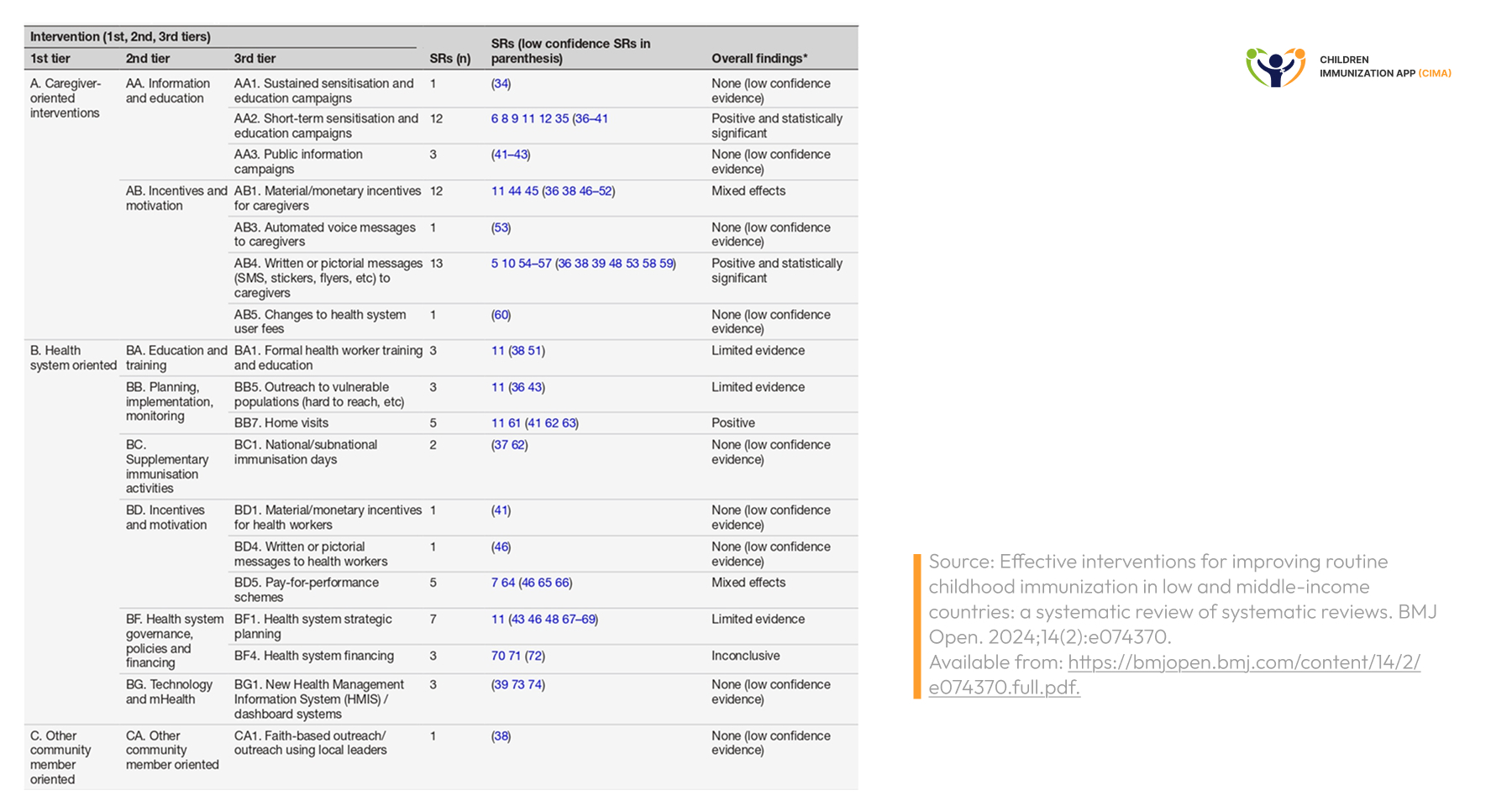
Evidence on effective interventions to improve routine childhood immunization, highlighting comprehensive, multicomponent approaches.
The Prize: What Equity Would Unlock
The authors then asked a powerful "what if": what would happen to national coverage and global vaccination coverage if every subgroup were vaccinated at the same rate as the most educated? The potential is enormous. In Angola, the Central African Republic, Chad, and Mozambique, national DTP3 coverage would rise by more than 20 percentage points; across 34 African countries, 10 would gain at least 10 points. For the zero-dose indicator, eliminating the education gap alone would at least halve the share of completely unvaccinated children in 14 countries. [4]
In other words, a large part of the world's remaining immunization gap is not a vaccine-supply problem, it is a vaccine equity problem. Doses exist. The challenge is reaching the least educated and poorest families with information, reminders, and trusted support.
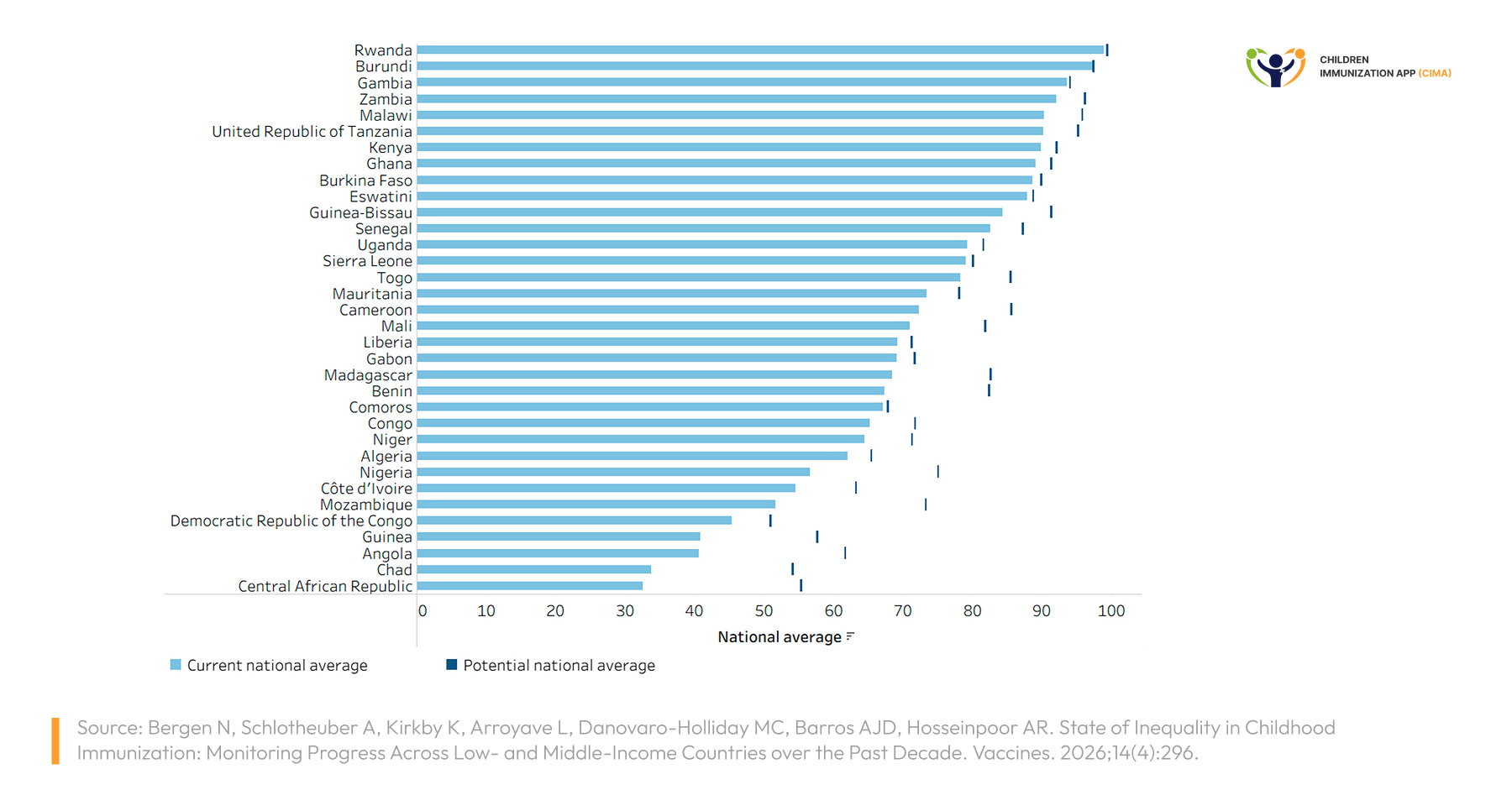
Potential improvement in national DTP3 coverage if maternal education inequality were eliminated across 34 African countries. With more than 20‑point increases in Angola, Central African Republic, Chad and Mozambique and at least 10 points in 10 countries.
From Evidence to Action: How CIMA Care Closes These Exact Gaps
WHO identified four solution pillars. [7] CIMA Care operationalizes every one of them:
- Tackling the education gap: Since a mother's knowledge is itself a determinant of her child's protection, CIMA Care's SMS system delivers WHO-, UNICEF-, and UNODC-validated health messages to parents in their own languages, building vaccine understanding precisely where formal education is lacking. [11]
- Reaching the poorest and the zero-dose child: According to Dr. Cornelius Chebo, EPI Coordinator for the Northwest Region of Cameroon, CIMA Care's automated reminder SMS systems showed a 99% success rate in defaulter reductions. Moreover, Cima Care's defaulter identification and geographic heat-mapping tools enable health workers to find and follow up with the exact children that national averages hide, the poorest, the missed, the unprotected. [12- 13]
- Strengthening fragile and conflict settings: With offline functionality and rapid deployment, CIMA Care delivered a 23% improvement in vaccination uptake in conflict-affected Bamenda, Cameroon, and a 19% improvement in Jordan's Zaatari refugee camp, proven results in precisely the fragile contexts WHO prioritizes. [14]
- Empowering the workforce:Through CIMA Care Health Academy, over 4,000 enrollments across 77+ countries have equipped healthcare professionals with CPD-certified training to deliver equitable, evidence-based immunization care. [15]
And because economic inequality drives the largest gaps, CIMA Care Health Academy applies equity pricing aligned with World Bank income classifications, extending discounts of up to 90% to professionals in low-income nations, ensuring knowledge reaches where the burden is heaviest. [16]
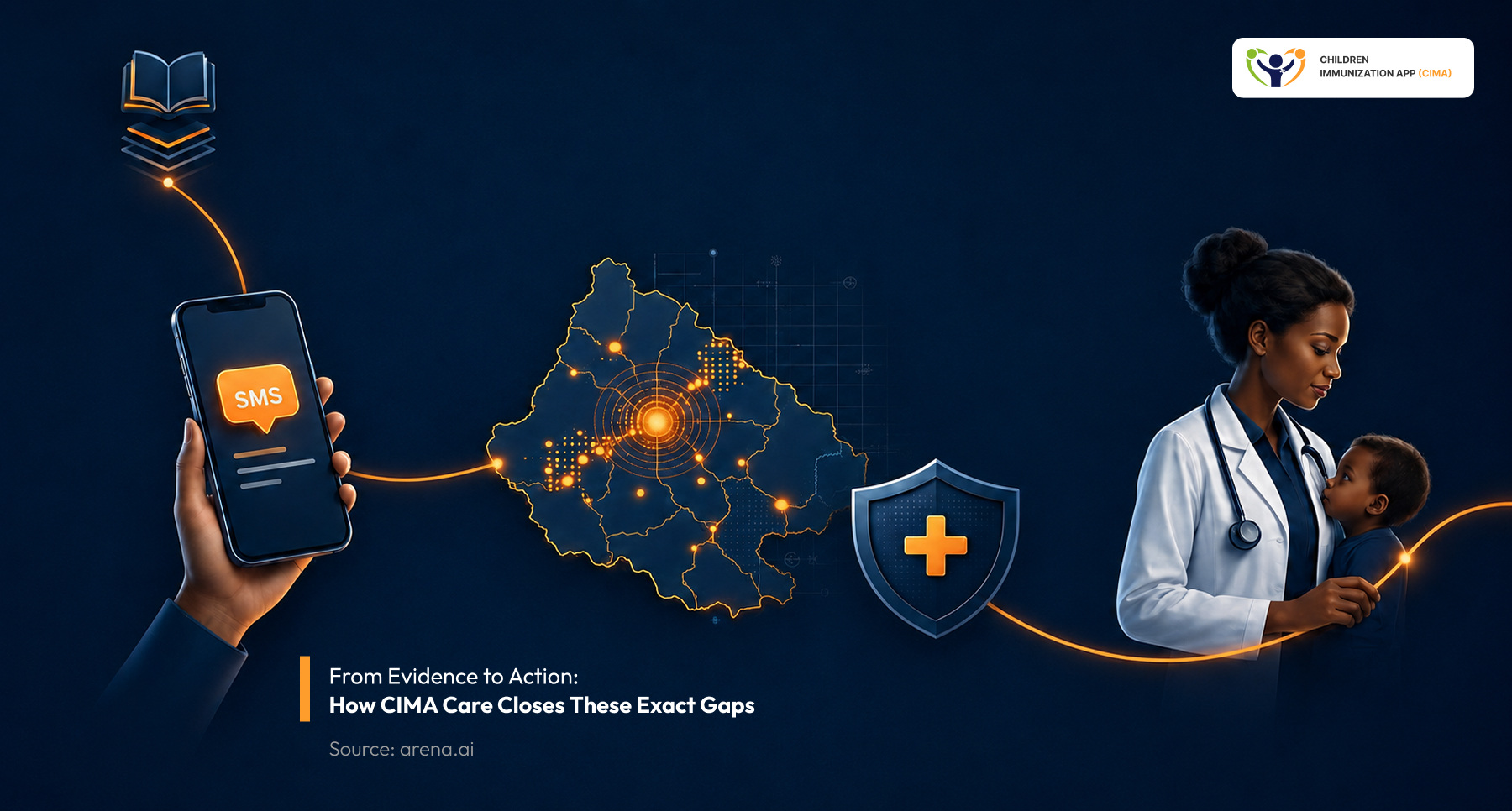
How CIMA Care turns evidence into action for equitable child immunization.
Conclusion: Making Every Child Visible
WHO's message is ultimately one of accountability: the inequalities we fail to see are the ones we fail to fix. [4]
Realizing the aspirations of the IA2030 goals and achieving universal childhood immunization will require renewed efforts to close remaining coverage gaps and advance health equity, including continued and intensified targeting of the poorest and least educated populations. This is the mission CIMA Care advances every day, turning data into action, and global evidence into local protection for the children that national statistics forget. The evidence is clear. The tools exist. Every child deserves to be counted and protected.
Image References
- 1. Gavi. Annual Progress Report 2018 [Internet]. Geneva: Gavi; 2018 [cited 2026 May 26]. Available from: https://www.gavi.org/progress-report
- 2. Bergen N, Schlotheuber A, Kirkby K, Arroyave L, Danovaro-Holliday MC, Barros AJD, et al. State of inequality in childhood immunization: monitoring progress across low- and middle-income countries over the past decade. Vaccines. 2026;14(4):296.
- 3. Effective interventions for improving routine childhood immunization in low and middle-income countries: a systematic review of systematic reviews. BMJ Open. 2024;14(2):e074370. Available from: https://bmjopen.bmj.com/content/14/2/e074370.full.pdf
Blog Resources
- 1- World Health Organization. Global immunization efforts have saved at least 154 million lives over the past 50 years [Internet]. World Health Organization. 2024. Available from: https://www.who.int/news/item/24-04-2024-global-immunization-efforts-have-saved-at-least-154-million-lives-over-the-past-50-years
- 2- Lindstrand A, Cherian T, Chang-Blanc D, Feikin D, O’Brien KL. The World of Immunization: Achievements, Challenges, and Strategic Vision for the Next Decade. The Journal of Infectious Diseases [Internet]. 2021 Sep 30;224(Supplement_4):S452–67. Available from: https://academic.oup.com/jid/article/224/Supplement_4/S452/63780833- Annual Progress Report 2018 [Internet]. www.gavi.org. Available from: https://www.gavi.org/progress-report4- Bergen N, Schlotheuber A, Kirkby K, Arroyave L, Danovaro-Holliday MC, Barros AJD, Hosseinpoor AR. State of Inequality in Childhood Immunization: Monitoring Progress Across Low- and Middle-Income Countries over the Past Decade. Vaccines. 2026;14(4):296. https://doi.org/10.3390/vaccines140402965- Apeagyei AE, Lidral-Porter B, Patel N, Solorio J, Golsum Tsakalos, Wang Y, et al. Financing health in sub-Saharan Africa 1990–2050: Donor dependence and expected domestic health spending. PLOS Global Public Health. 2024 Aug 28;4(8):e0003433–3.6- Global Digital Health Forum 2025 (GDHF 2025): professional commentary on health-financing disparities between sub-Saharan Africa and Europe. LinkedIn / GDHF 2025 discussion7- News Medical. News-Medical [Internet]. News-Medical. 2025 [cited 2026 Jun 28]. Available from: https://www.news-medical.net/news/20250715/WHO-and-UNICEF-urge-action-to-protect-children-through-vaccines.aspx8- Global childhood vaccination: over 14 million infants remain unvaccinated [Internet]. unicef.ch. 2025. Available from: https://www.unicef.ch/en/current/news/2025-07-15/global-childhood-vaccination-holds-steady-yet-over-14-million-infants9- Jain M, Duvendack M, Shisler S, Parsekar SS, Leon MDA. Effective interventions for improving routine childhood immunisation in low and middle-income countries: a systematic review of systematic reviews. BMJ Open [Internet]. 2024 Feb 1;14(2):e074370. Available from: https://bmjopen.bmj.com/content/14/2/e074370.abstract10- Machado AA, Edwards SA, Mueller M, Saini V. Effective interventions to increase routine childhood immunization coverage in low socioeconomic status communities in developed countries: A systematic review and critical appraisal of peer-reviewed literature. Vaccine. 2021 May;39(22):2938–64.11- When Caregivers Remember: Mothers’ Voices Reveal CIMA Care’s Heartfelt Impact at Bamenda Regional Hospital [Internet]. Cima.care. 2025. Available from: https://www.cima.care/insights/cima-care-mothers-voices-bamenda-hospital/12- From Forgotten to Protected: The Regional Coordinator’s Tes [Internet]. Cima.care. 2025. Available from: https://www.cima.care/insights/protected-cima-care-breakthrough/13- From Crisis to Hope: CIMA Care’s Live Television Breakthrough in Northwest Cameroon [Internet]. Cima.care. 2025. Available from: https://www.cima.care/insights/cima-care-live-tv-breakthrough-northwest-cameroon/14- Private Sector Innovation in Global Immunization: Evidence Points the Way Forward [Internet]. Cima.care. 2025 [cited 2026 Jun 28]. Available from: https://www.cima.care/insights/private-sector-impact-global-immunization/15-CIMA | Children Immunization App [Internet]. Cima.care. 2024. Available from: https://www.cima.care/health-academy16- CIMA Care. CIMA Care Business Brand Kit [Internet]. Available from: https://www.cima.care/CIMA-Barndkit-B2B.pdf .
Enjoyed this article?
Share it with your friends on LinkedIn: Same Borders, Unequal Chances: A Landmark WHO Study Reveals the Childhood Immunization Inequality a Decade Has Not Closed 
Follow us on LinkedIn for more updates and insights: Cima Care GmbH