
Empowering Health: Closing Gender Gaps in Vaccination |
décembre 04, 2024 . 4 Minutes read
Gender Equity in Immunization: Strategies for Closing the Gap (Part 2)
Study strategies to close the gender gaps in vaccination. Learn how healthcare providers can support equitable vaccine access for all genders worldwide.
Strategies for Closing the Gender Gap in Immunization(Part 1)
Empower Women in Decision-Making and Improve Maternal Education
Research shows that when parents have shared authority over family decisions and financial resources, their children are more likely to be fully vaccinated.
Actionable Steps:
Implement neighborhood programs that elevate women's employment, decision-making power, and health-related knowledge, making them more likely to pursue full immunization for their children.
Cooperate with local leaders, community health committees, and community health workers to question gender norms, promote community awareness, encourage shared decision-making between parents, and entrust women to participate actively in healthcare decisions, including immunization.
Invest in vocational training, job placement services, and entrepreneurship support to increase women's workforce participation. [1 & 4]
- Incorporate vaccination information into educational materials for women in the community. [4]
Empowering women through education to enhance decision-making and improve immunization rates.

Overcoming gender-related barriers to enhance healthcare leadership.
Strategies for Closing the Gender Gap in Immunization(Part 2)
Address Gender-Related Barriers in Healthcare delivery
Gender-related barriers operate at individual, interpersonal, community, and broader socio-structural levels. [1]
Actionable Steps:
- Consider transformations in organizational strategies, awareness creation, mentoring and networking, leadership training, support tools, and resources as a framework for change toward equality in healthcare leadership. As discussed in a study in Tanzania. [2]
- The WHO policy action paper focuses on building legal foundations for workplace equality, challenging social norms and stereotypes, improving workplace systems and culture, and empowering women in the health workforce to lead.
- Starting in 2021, the WHO policy targets national authorities, intersectoral policymakers, organizational leaders, media, male allies, and women in health and social care to drive systemic change. [3]
Strategies for Closing the Gender Gap in Immunization(Part 3)
Strengthen Healthcare Access and Integrate Immunization with Other Health Services
Accessible healthcare significantly affects population health. Mobile clinics, primarily serving women and children, are expected to enhance health outcomes by improving access to care.
Actionable Steps:
Improve and facilitate women's access to immunization services to make it more manageable for caregivers, primarily women, to vaccinate their children and significantly boost vaccine doses for both children and women of childbearing age. [4]
Help to collect gender-related data about access to services and quality of care.
- Integrate and co-locate services such as immunization and maternal health check-ups and expand community outreach to minimize gender-related barriers. [5]

Improving healthcare access for women to boost immunization rates.
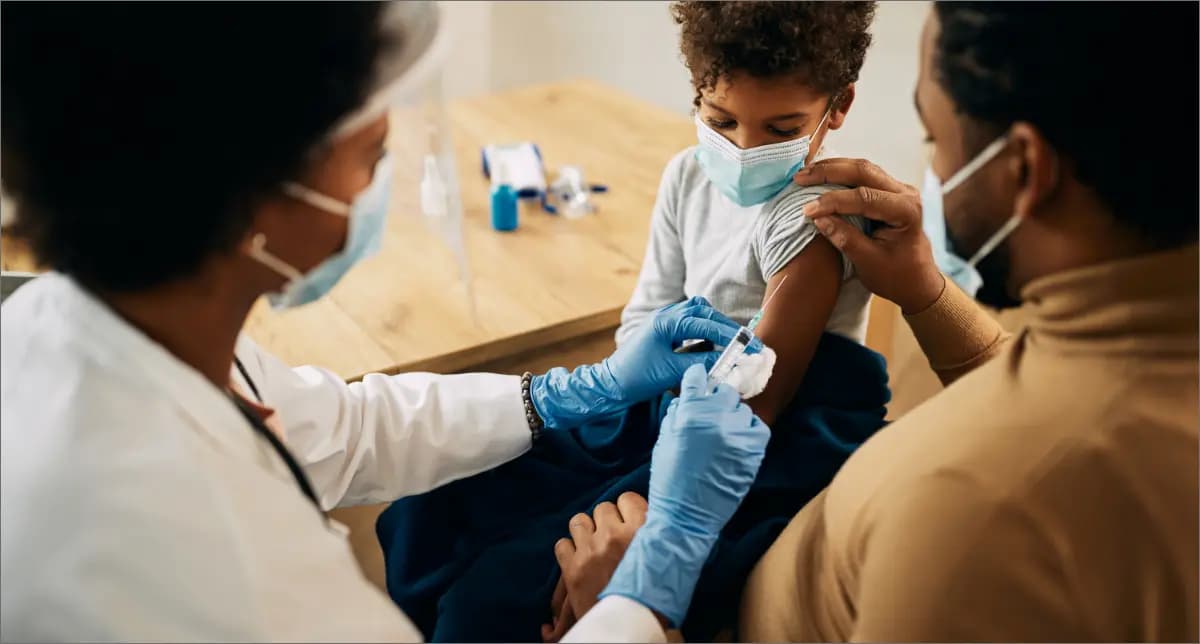
Engaging men in immunization efforts to promote gender equality and family health.
Strategies for Closing the Gender Gap in Immunization(Part 4)
Engaging Men in Immunity Efforts
Men play a considerable role as clients, partners, and change agents for immunization. A supportive family structure is important for children's overall well-being. However, it's essential to ensure that this involvement does not silence women or reinforce male-dominated norms.
Actionable Steps:
Improve men's and boys' understanding of routine immunization (RI) and how they can support their family's well-being, increase recognition of the importance of male participation in RI, and reduce the power imbalance between mothers and fathers. Such projects are currently conducted in Mozambique.
Conduct capacity building for health workers and community dialogues to discuss practical actions that men and boys can take to help increase child immunization. [4]
Engage male role models to promote gender equality.
- Incorporate elements like equal parenting, shared decision-making, and domestic responsibilities into all health promotion messages. [6]
Strategies for Closing the Gender Gap in Immunization(Part 5)
Implement Inter-sectoral Collaboration
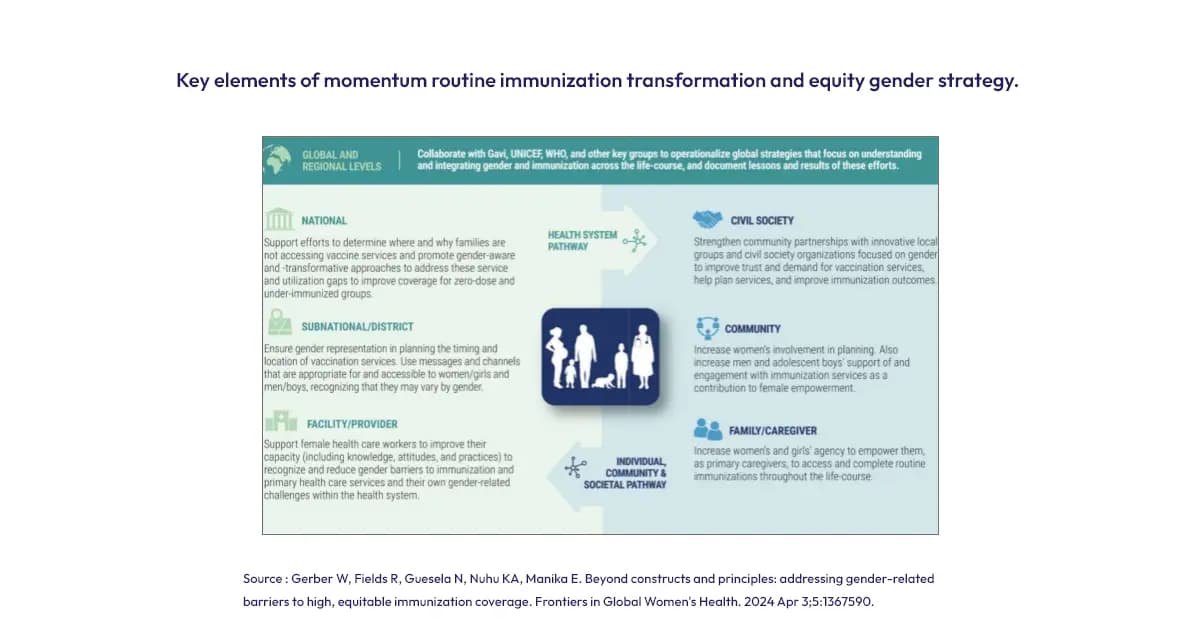
Addressing gender inequality in immunization requires collaboration across various sectors. It is crucial to have concurrent work across the health system and civil society pathways at multiple levels, from households and health centers to national programs.
Actionable Steps:
- Foster collaborations between the health, education, and social services sectors to address the root causes of gender inequality.
- Prioritize Cooperation at global, regional, and country levels as vital action to developing synergies, sharing tools and experiences, and making gender integration for immunization more practical for all stakeholders.
- Improve women's access to vaccination centers in remote areas via collaboration with transportation services. [4 & 7]
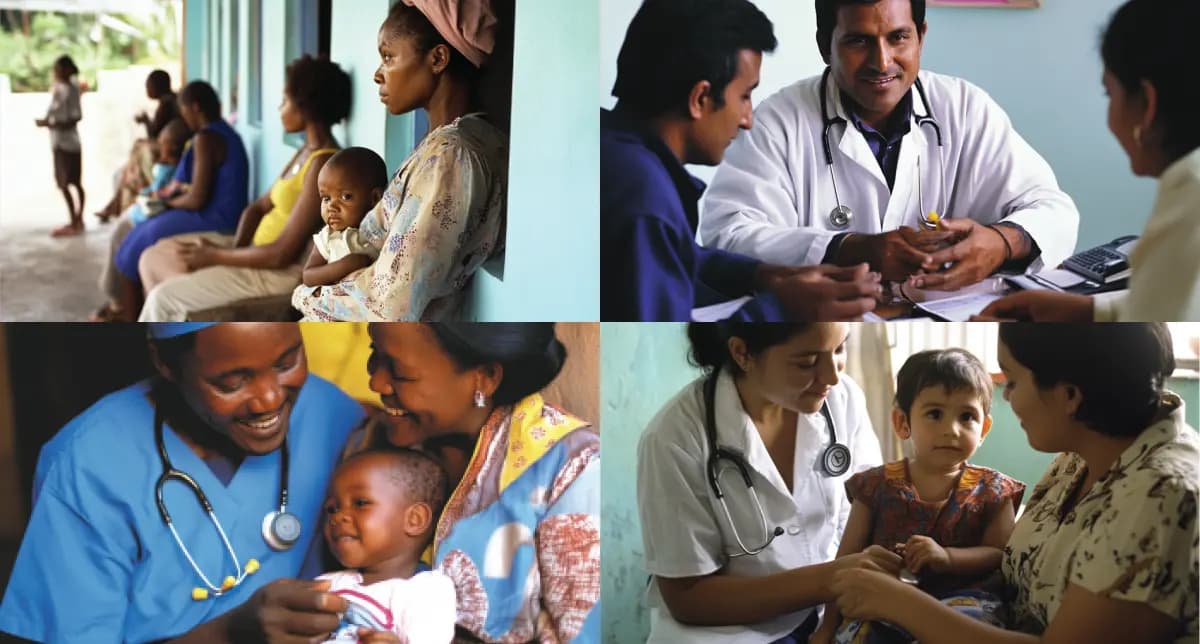
Collaboration across sectors to address gender inequality in immunization access.
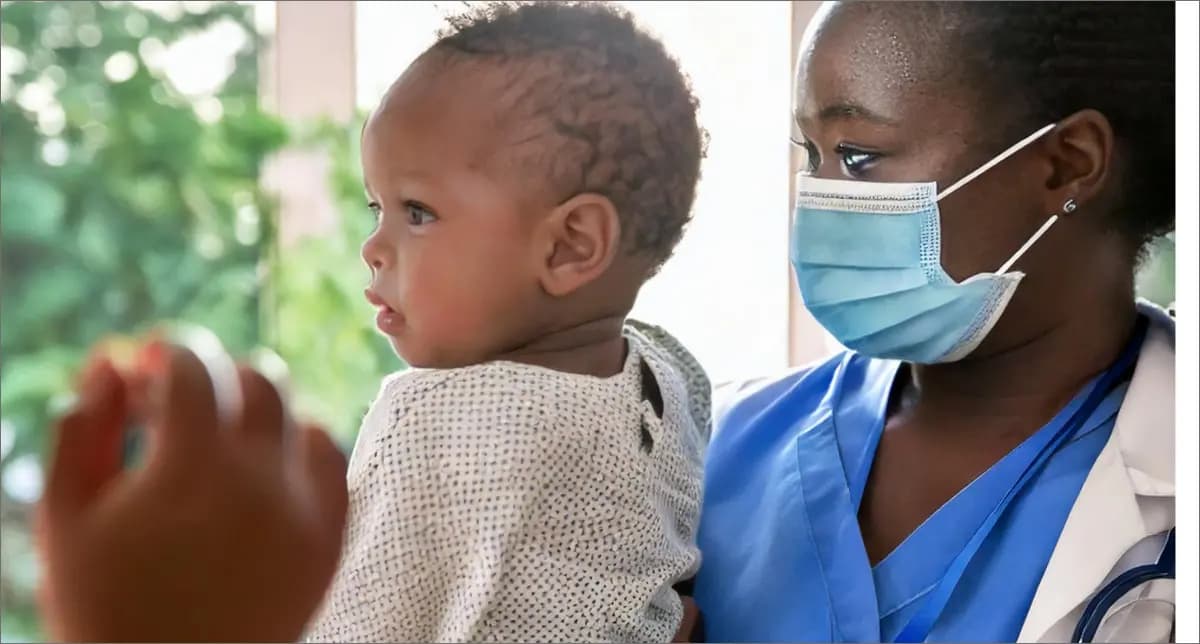
Advocating for gender-responsive policies to bridge immunization gaps.
Strategies for Closing the Gender Gap in Immunization(Part 6)
Promote Gender-Responsive Policies
Advocating for policies that promote gender equity in healthcare can have lasting effects on immunization rates. Governments and health organizations must prioritize the individual needs of women and girls in vaccination attempts. [4 & 7]
Actionable Steps:
- To address gender gaps, increase transparency on how budgets are administered and paid, allowing people to hold their governments responsible.
- Initiate actions on gender-responsive budgeting to address gender equality and the recorded underinvestment in essential services for women and girls—such attempts are made in many countries like Austria, Morocco, Rwanda, and Colombia.
- Introduce laws requiring gender-responsive budgeting and clear guidelines and tools for performance. [8]
- Support policies that encourage paid parental leave and flexible work engagements for caregivers. [9]
Closing the gender gap in immunization is a complex challenge that requires a multifaceted approach. By implementing evidence-based strategies, we can work towards a future where gender is no longer a barrier to accessing life-saving vaccines. As healthcare providers, policymakers, and community leaders, we all have a role in promoting gender equity in immunization.
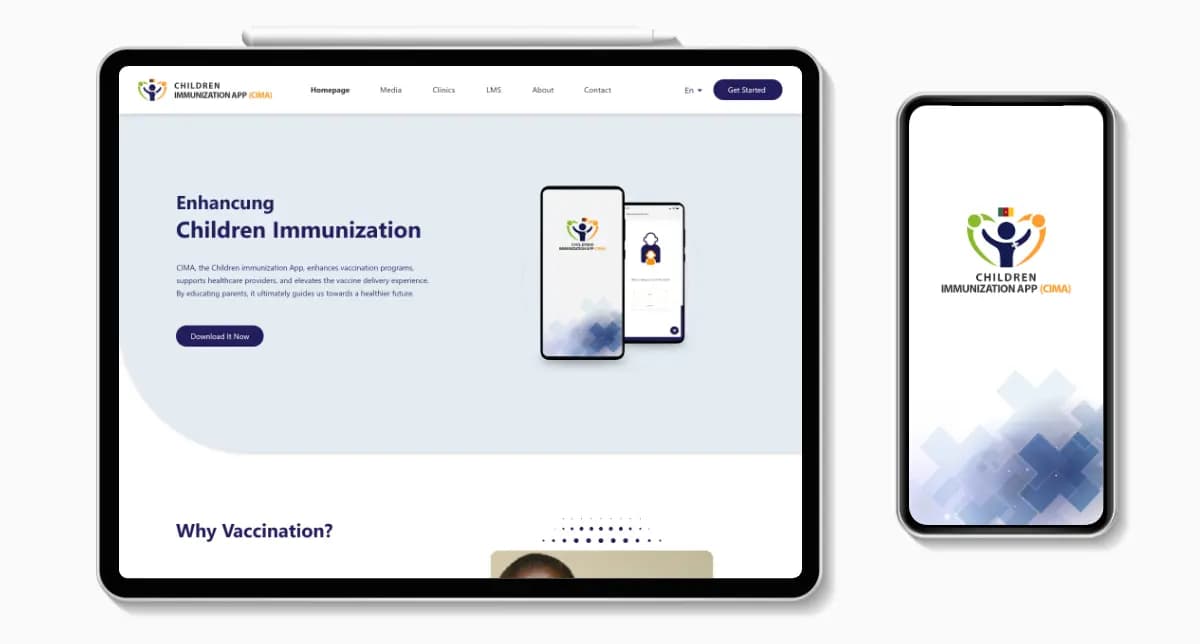
CIMA Care helps narrow the immunization gender gap by empowering healthcare providers and families.
CIMA Care's Holistic Approach
At CIMA Care, we prioritize advancing gender equity in immunization through our innovative digital solutions and comprehensive education initiatives. Our CIMA app and Health Academy are designed to empower all healthcare providers parents, policymakers, and institutions with the tools and knowledge needed to overcome barriers to vaccination. Join us in our mission to create a world where every child, regardless of gender, has equal access to life-saving immunizations. Together, we can close the gender gap and build a healthier future for all. Learn more about how CIMA Care is helping in immunization efforts: www.cima.care
Image References
- 1- Adobe Stock. Businesswoman stands to address meeting around board table [Internet]. [cited 2025 Aug 19]. Available from: https://stock.adobe.com/fi/images/businesswoman-stands-to-address-meeting-around-board-table/148428328
- 2- Freepik. Small black boy receiving vaccine due to COVID-19 pandemic [Internet]. [cited 2025 Aug 19]. Available from: https://www.freepik.com/free-photo/small-black-boy-receiving-vaccine-due-covid19-pandemic_26766397.htm
Blog Resources
- 1- Amoah A, Issaka J, Ayebeng C, Okyere J. Influence of women empowerment on childhood (12–23 months) immunization coverage: Recent evidence from 17 sub-Saharan African countries. Tropical Medicine and Health. 2023 Nov 14;51(1):63.
- 2- Mucheru D, Mollel H, Gilmore B, Kesale A, McAuliffe E. Advancing Gender Equality in Healthcare Leadership: Protocol to Co-Design and Evaluate a Leadership and Mentoring Intervention in Tanzania. Annals of Global Health. 2024;90(1).
- 3- Closing the leadership gap: gender equity and leadership in the global health and care workforce [Internet]. www.who.int. Available from: Closing the leadership gap: gender equity and leadership in the global health and care workforce
- 4- Gerber W, Fields R, Guesela N, Nuhu KA, Manika E. Beyond constructs and principles: addressing gender-related barriers to high, equitable immunization coverage. Frontiers in Global Women's Health. 2024 Apr 3;5:1367590.
- 5- Bliss KE, Carbaugh A. Gender-Responsive Programming to Improve Immunization Services [Internet]. CSIS | Center for Strategic and International Studies. 2022 [cited 2024 Oct 6]. Available from: Gender-Responsive Programming to Improve Immunization Services | CSIS
- 6- Biko Mwalagho. Beyond the Vaccine: Addressing Gender Barriers in Immunization Efforts - CanWaCH [Internet]. CanWaCH. 2023 [cited 2024 Oct 6]. Available from: Beyond the Vaccine: Addressing Gender Barriers in Immunization Efforts - CanWaCH
- 7- Feletto M, Sharkey A, Rowley E, Gurley N, Sinha A, Gupta A, et al. A gender lens to advance equity in immunization [Internet]. 2018 [cited 2024 Oct 6]. Available from: https://www.gavi.org/sites/default/files/document/programmatic-policies/ERG_A-gender-lens-to-advance-equity-in-immunization.pdf
- 8- UN WOMEN. What is gender-responsive budgeting? [Internet]. UN Women – Headquarters. 2023. Available from: What is gender-responsive budgeting? | UN Women – Headquarters
- 9- 1.UNICEF. Family-Friendly Policies A Policy Brief Redesigning the Workplace of the Future [Internet]. 2019. Available from: https://www.unicef.org/sites/default/files/2019-07/UNICEF-policy-brief-family-friendly-policies-2019.pdf
Enjoyed this article?
Share it with your friends on LinkedIn: Gender Equity in Immunization: Strategies for Closing the Gap (Part 2) 
Follow us on LinkedIn for more updates and insights: Cima Care GmbH