
90% Coverage, 60-70% Connected: Bridging the Digital Health Divide |
June 17, 2025 . 5 Minutes read
Digital Health Infrastructure: Connecting Misconceptions, Reality, and Untapped Potential in Global Healthcare
While the world focuses on the latest health applications and telemedicine platforms, a more fundamental transformation has quietly revolutionized global healthcare delivery. Expanding digital infrastructure, mobile connectivity, and internet access has created unprecedented health intervention opportunities, particularly in previously considered unreachable regions. Yet misconceptions about this digital revolution prevent us from fully leveraging its potential to advance public health goals.
The CIMA Health Academy recognizes that understanding the true extent of digital health infrastructure is crucial for designing effective interventions. By revealing the actual scope of connectivity and infrastructure development, we enable healthcare professionals to create programs that harness existing capabilities while addressing genuine gaps in access.
Digital Revolution in Healthcare Access
• The digital transformation of healthcare has quietly revolutionized access to health services and information. Approximately 90% of people worldwide now live within the range of a 3G or higher-quality mobile network, although only about 60% are actually connected. This infrastructure provides unprecedented potential for digital health interventions, including vaccination scheduling and reminders, tracking defaulters, and health education programs.
• Studies also show that mobile phone subscriptions have reached approximately 78% globally, creating new channels for health communication and service delivery. However, 66% of the survey participants from the U.K. overestimate this figure, half of them assuming near-universal coverage. Understanding the true extent of mobile connectivity is crucial for designing effective digital health interventions that reach target populations without excluding those still lacking access.
• Additionally, internet usage expanded to approximately 70% of the global population in 2024, up from just 16% in 2005. This dramatic increase in connectivity, though still leaving 30% unconnected, has created new opportunities for health education, telemedicine, and digital vaccination tracking systems that can strengthen healthcare delivery worldwide.
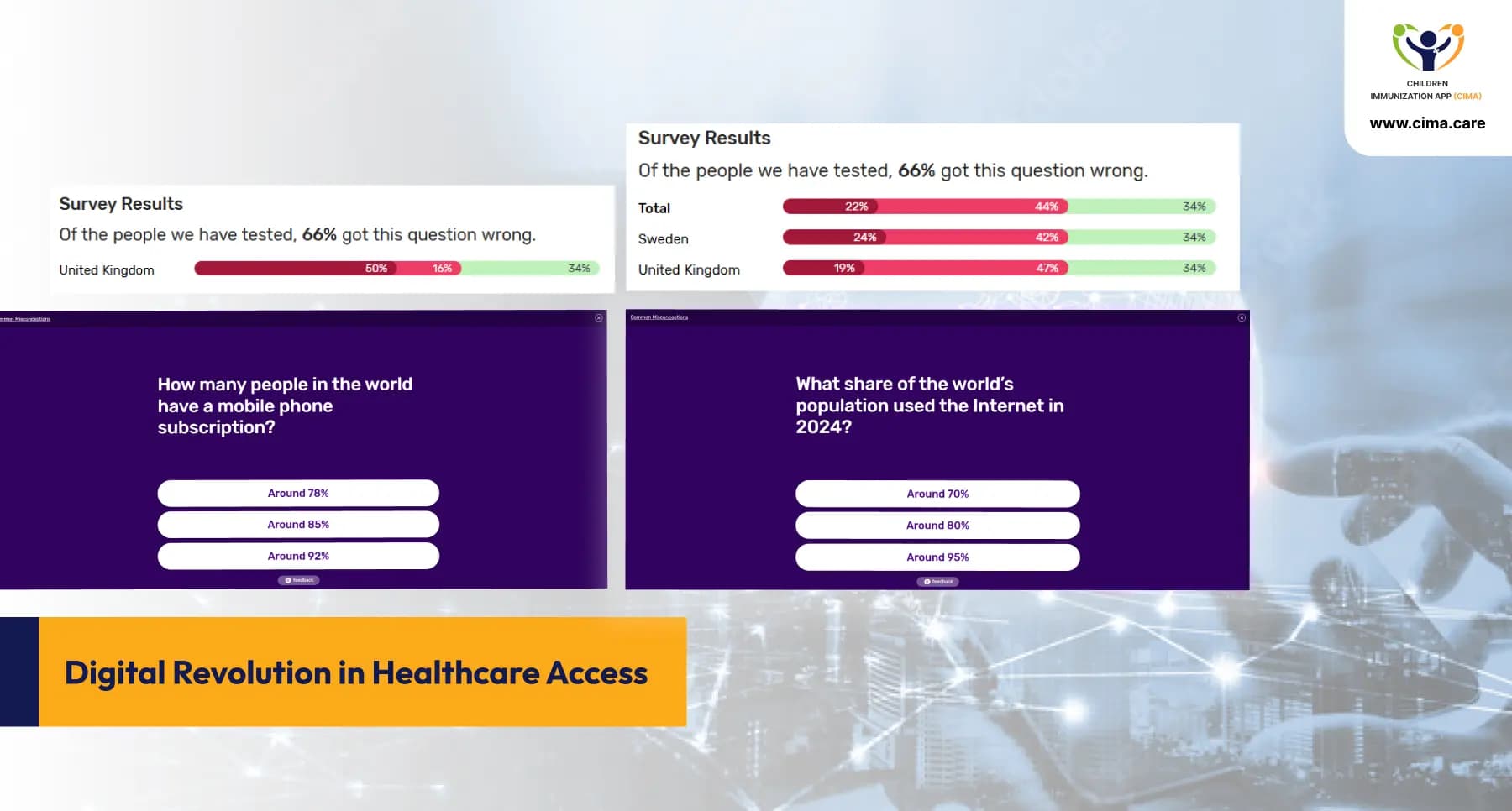
Global connectivity metrics reveal a surprising reach: approximately 90% within mobile range, 78% with phone subscriptions, and 70% online.
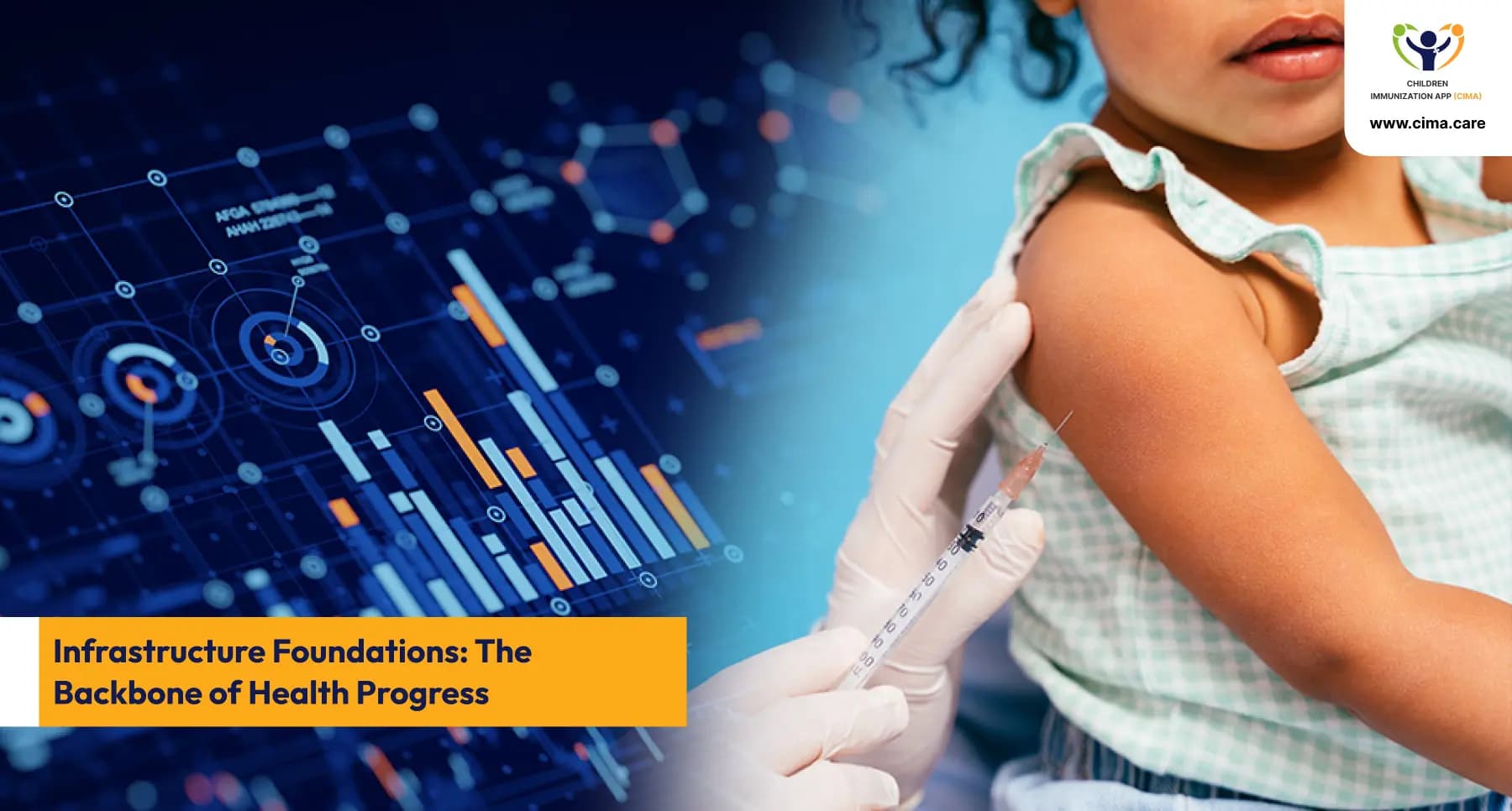
Globally, about 80% of births occur in health facilities, and yet only 55% of schools have adequate handwashing access.
Infrastructure Foundations: The Backbone of Health Progress
- Healthcare infrastructure development often goes unnoticed but forms the foundation of vaccination success. Globally, around 80% of babies are now born in health facilities, compared to just 50% in 2007. This shift toward facility-based births, unknown to 84% of survey respondents, ensures safer deliveries and immediate access to essential newborn vaccinations.
- School-based health infrastructure remains challenging, with only about 55% of schools worldwide having soap and water for handwashing. This limitation, while significant, represents an important area for continued investment to support disease prevention and create environments conducive to child health and vaccination programs.
Targeted Successes: Regional and Population-Specific Achievements
• India's vaccination program exemplifies successful scaling in a complex, populous nation. In 2021, approximately 90% of Indian children are now vaccinated against at least one disease, a remarkable achievement given the country's size and diversity. Yet 79% of the Gapminder survey participants underestimate this coverage, failing to recognize India's transformation in healthcare delivery.
• Similarly, Sub-Saharan Africa has made substantial progress in malaria prevention with another intervention. About 50% of children under five sleep under bed nets. While 80% of respondents underestimate this coverage, the distribution of over 2 billion insecticide-treated bed nets since 2004 represents one of the most effective ways to stop mosquitoes from spreading malaria, complementing vaccination efforts against other diseases.
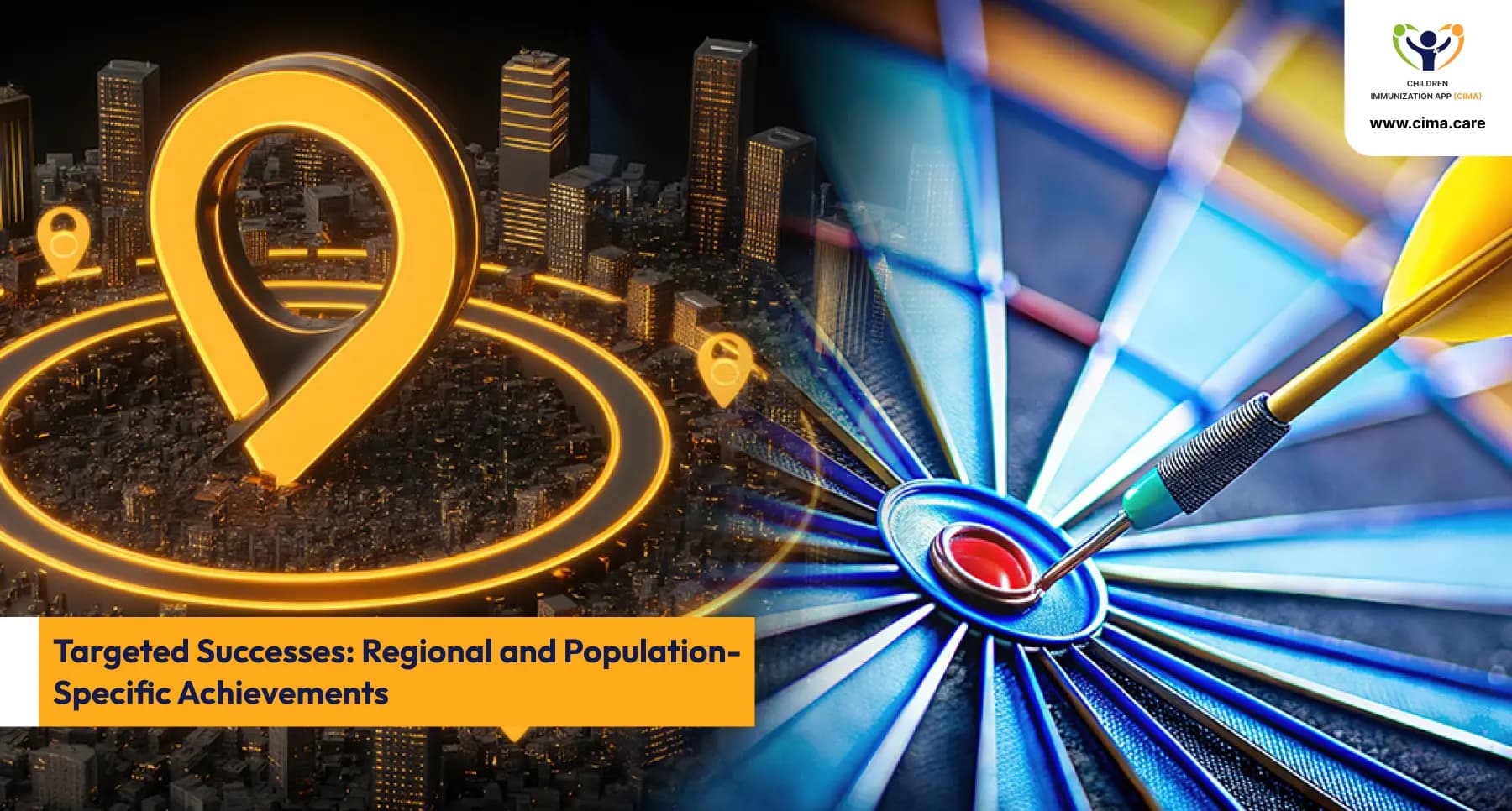
India: 90% of children vaccinated for at least one disease; Africa: 50% use bed nets against malaria.
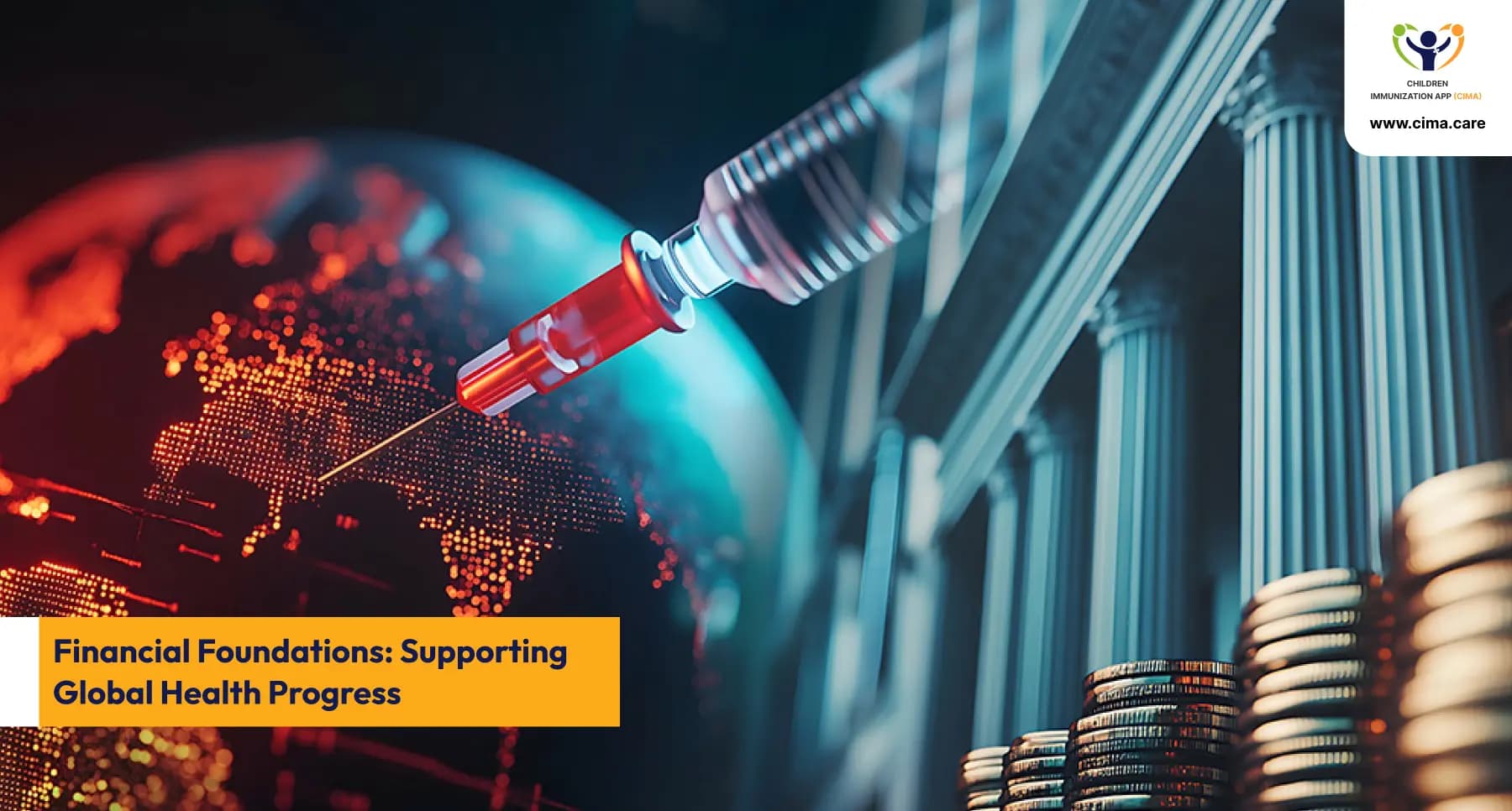
Nearly 95% of global aid to developing countries comes from governments and not charities. 78% of people underestimate governmental aid.
Financial Foundations: Supporting Global Health Progress
In the economic aspect, financial aid to developing countries plays a crucial but often misunderstood role in health development. Only about 5% of aid comes from charities and philanthropy, with governmental aid from other countries providing the vast majority of support. This reality, unknown to 78% of respondents, highlights the importance of sustained governmental commitment to global health initiatives.
Digital Health Integration: The Foundation for Future Progress
- Integrating digital infrastructure with healthcare offers powerful opportunities to strengthen vaccination programs. Despite gaps in connectivity, widespread mobile access enables targeted interventions, such as reminders, education platforms, and real-time monitoring with offline capabilities, to help close vaccination coverage gaps.
- The existence of robust digital infrastructure in unexpected regions disproves assumptions about technological limitations in healthcare delivery. When combined with increasing internet penetration and mobile phone usage, these technologies enable sophisticated vaccination tracking systems, supply chain management, and community health worker support networks.
- Educational platforms delivered through digital channels can address the widespread misconceptions about vaccination success, creating informed healthcare workers and communities. The potential for scale and reach through digital education surpasses traditional training methods, enabling rapid dissemination of evidence-based practices.
Digital infrastructure enables vaccination reminders, real-time tracking, and widespread education delivery.
Recognizing healthcare achievements drives progress; misconceptions undermine support for proven solutions.
Breaking the Perception Barrier: Why Recognition Matters
- The systematic underestimation of vaccination and healthcare achievements creates multiple challenges for continued progress. When people believe little has been accomplished, they may question the value of continued investment in proven interventions. Conversely, recognizing success motivates addressing remaining challenges and scaling effective solutions.
- Healthcare professionals empowered with accurate information about global health achievements become more effective advocates for vaccination programs. Understanding what has been accomplished and how it is accomplished enables the design of interventions that build on proven successes rather than reinventing approaches that have already demonstrated effectiveness.
Implications for Healthcare Practice
For healthcare professionals, these revelations about vaccination success and digital health infrastructure carry profound implications:
1. Communication strategies must acknowledge and build upon existing successes while addressing specific concerns, rather than assuming widespread resistance or lack of infrastructure.
2. Program design should leverage existing digital infrastructure and high baseline vaccination coverage to target specific gaps rather than assuming a universal need for basic interventions.
3. Resource allocation can be optimized by understanding true coverage levels and infrastructure availability, focusing intensive efforts on the genuinely underserved populations.
4. Advocacy efforts gain credibility when grounded in accurate data about achievements and remaining challenges, moving beyond crisis narratives to evidence-based calls for continued investment.
Global vaccination insights transform practice: data-driven strategies enable targeted healthcare delivery.
Digital tools meet compassionate care: 90% mobile network reach enables targeted, equity focused interventions.
Conclusion: Bridging Digital Divides for Health Equity
The digital health infrastructure revolution reveals unprecedented opportunities for advancing global health goals. With 90% of the population within reach of mobile networks and growing internet connectivity, the foundation for comprehensive digital health interventions already exists in most regions. [1]
CIMA Care's Digital Health Blueprint: Converting Infrastructure into Healthcare Breakthroughs
- The CIMA Health Academy's educational approach illuminates these capabilities, enabling healthcare professionals to design interventions that leverage existing infrastructure while addressing genuine connectivity gaps.
- Understanding the true extent of digital health resources transforms how we approach healthcare delivery, moving from assumptions of scarcity to recognition of untapped potential.
- Building on this digital foundation, we find that mobile technology, internet connectivity, and healthcare innovation work together to create endless opportunities constrained only by our vision, willingness to act, and readiness to adapt beyond traditional practices.
- The infrastructure is largely in place; what remains is to ensure its optimal utilization for achieving universal health coverage and continuing the remarkable progress in global health outcomes.
Ready to harness digital health innovation for better patient outcomes? Explore CIMA Care's cutting-edge digital health education programs at www.cima.care.
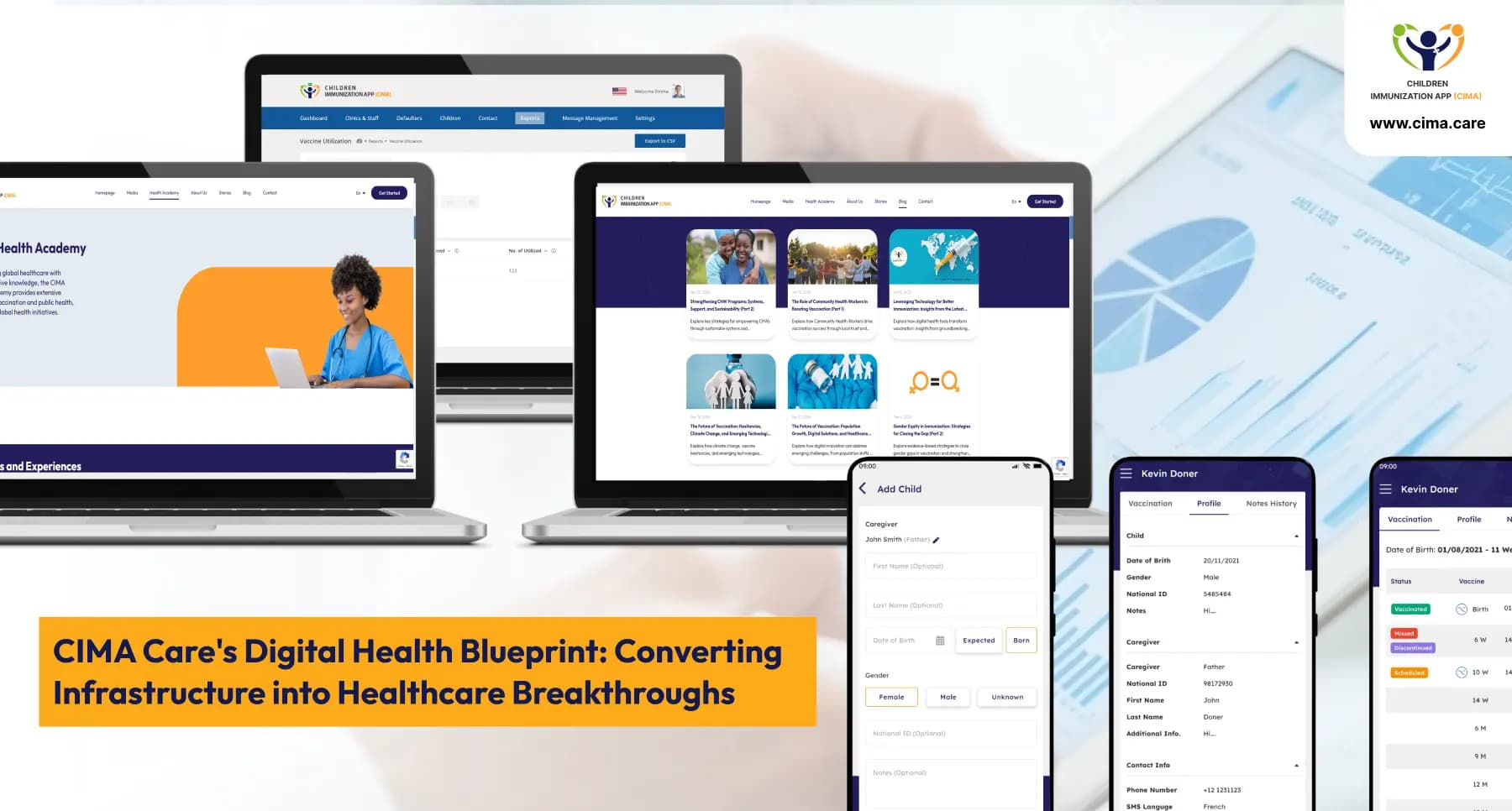
CIMA's multi-platform digital ecosystem: connecting healthcare professionals and transforming vaccination
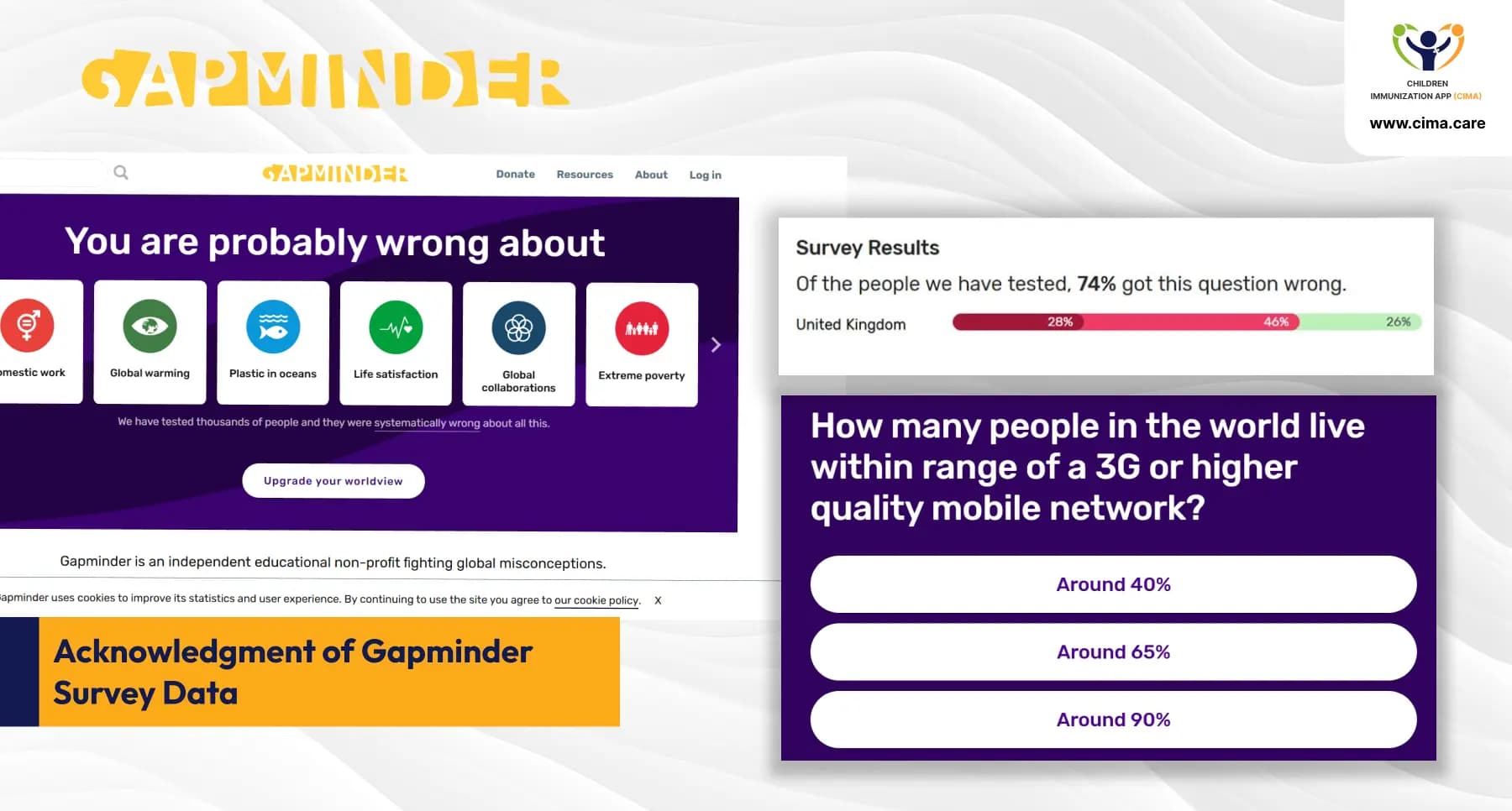
Revealing the Perception Gap: Gapminder shows how global health is widely misunderstood.
Acknowledgment of Gapminder Survey Data
The survey data and public perception statistics referenced throughout this article are drawn from the Gapminder Foundation's global survey datasets. Gapminder is an independent Swedish foundation renowned for its commitment to promoting a fact-based worldview through accessible, high-quality data on global development, health, and social progress. Their rigorous survey methodology and transparent data practices are internationally recognized and widely adopted by educators, researchers, and policymakers.
We gratefully acknowledge Gapminder's contribution to this article and extend our appreciation for their permission to use these valuable survey results. Their ongoing efforts to combat global misconceptions through initiatives like the Misconception Study aligns perfectly with CIMA Care's mission to illuminate the true state of digital health infrastructure worldwide. By highlighting the gap between perception and reality, we can better design healthcare interventions that build on actual progress rather than assumed limitations.
For more information about Gapminder's work, methodology, and educational resources, please visit gapminder.org.
Image References
- 1- Adobe Stock. Businessman touching healthcare delivery systems, patient-centered care models, medical technology innovations, preventative health services, data management solutions, clinical research advancements [Internet]. Available from: https://stock.adobe.com/nl/images/businessman-touching-healthcare-delivery-systems-patient-centered-care-models-medical-technology-innovations-preventative-health-services-data-management-solutions-clinical-research-advancements/1225428816
- 2- Adobe Stock. A medical professional holding a tablet with global healthcare connections showing the growth of digital medical systems [Internet]. Available from: https://stock.adobe.com/nl/images/a-medical-professional-holding-a-tablet-with-global-healthcare-connections-showing-the-growth-of-digital-medical-systems/1036323410
- 3- Adobe Stock. People getting vaccine for COVID-19 virus, vaccination against coronavirus. Father and little baby daughter getting vaccinated [Internet]. Available from: https://stock.adobe.com/nl/images/peple-gettig-vaccine-for-covid-19-virus-vaccination-against-coronavirus-father-and-litthe-baby-daughter-getting-vaccinated-from-coronavirus/542013140
- 4- Adobe Stock. Financial data document graph chart report statistic, marketing research development planning, management strategy analysis, accounting financial business technology hologram concept [Internet]. Available from: https://stock.adobe.com/nl/images/financial-data-document-graph-chart-report-statistic-marketing-research-development-planning-management-strategy-analysis-accounting-financial-business-technology-hologram-concept-3d-rendering/482832614
- 5- Adobe Stock. Visually striking dartboard, bold colors attract specific customers [Internet]. Available from: https://stock.adobe.com/nl/images/visually-striking-dartboard-bold-colors-attract-specific-customers/1232663216
- 6- Adobe Stock. Urban landscape with a bright yellow pin indicating a specific location, symbolizing success and achievement in city life [Internet]. Available from: https://stock.adobe.com/nl/images/urban-landscape-with-a-bright-yellow-pin-indicating-a-specific-location-symbolizing-success-and-achievement-in-city-life/1406411340
- 7- Adobe Stock. A syringe injects a glowing substance into a digital globe symbolizing global health and vaccination efforts against diseases [Internet]. Available from: https://stock.adobe.com/nl/images/a-syringe-injects-a-glowing-substance-into-a-digital-globe-symbolizing-global-health-and-vaccination-efforts-against-diseases/1201064936
- 8- Adobe Stock. Financial district metropolis, stacks of coins before a classic building [Internet]. Available from: https://stock.adobe.com/nl/images/financial-district-metropolis-stacks-of-coins-before-a-classic-building/1142977650
- 9- Adobe Stock. Big data concept, digital neural network, business woman hand touching introduction of artificial intelligence, cyberspace of future science and innovation of technology [Internet]. Available from: https://stock.adobe.com/nl/images/big-data-concept-digital-neural-network-business-woman-hand-touching-introduction-of-artificial-intelligence-cyberspace-of-future-science-and-innovation-of-technology/461887541
- 10- Adobe Stock. Development and growth concept, businessman plan growth and increase of positive indicators in his business [Internet]. Available from: https://stock.adobe.com/nl/images/development-and-growth-concept-businessman-plan-growth-and-increase-of-positive-indicators-in-his-business/1145619592
- 11- Adobe Stock. Doctor hands holding a vaccine bottle and syringe, beginning of worldwide mass vaccination for coronavirus (COVID-19), influenza, or flu, world immunization concept [Internet]. Available from: https://stock.adobe.com/nl/images/doctor-hands-holding-a-vaccine-bottle-and-syringe-beginning-of-worldwide-mass-vaccination-for-coronavirus-covid-19-influenza-or-flu-world-immunization-concept-selective-focus/410673389
- 12- Adobe Stock. Fragile light bulb shatters on dark background releasing sparks and glowing embers [Internet]. Available from: https://stock.adobe.com/nl/images/fragile-light-bulb-shatters-on-dark-background-releasing-sparks-and-glowing-embers-broken-light/1387671942
- 13- Adobe Stock. Vaccine or flu shot in injection needle, doctor working with patient’s arm, physician or nurse giving vaccination against influenza or HPV [Internet]. Available from: https://stock.adobe.com/nl/images/vaccine-or-flu-shot-in-injection-needle-doctor-working-with-patient-s-arm-physician-or-nurse-giving-vaccination-and-immunity-to-virus-influenza-or-hpv-with-syringe-appointment-with-medical-expert/232435172
- 14- Adobe Stock. Policy makers discussing global economic policy for sustainability, surrounded by graphs showing climate change trends [Internet]. Available from: https://stock.adobe.com/nl/images/policy-makers-discussing-global-economic-policy-for-sustainability-surrounded-by-graphs-showing-climate-change-trends/806116310
- 15- Adobe Stock. Healthcare business, medical business data growth chart, doctor working on network with professional service, electronic medical record, business investment [Internet]. Available from: https://stock.adobe.com/nl/images/healthcare-business-medical-business-data-growth-chart-doctor-working-on-network-with-professional-service-electronic-medical-record-business-investment-medical-technology-and-health-service/988382872
- 16- Adobe Stock. Hands holding red heart in hospital for World Health Day [Internet]. Available from: https://stock.adobe.com/nl/images/hands-holding-red-heart-in-hospital-for-world-health-day/1220890893
Enjoyed this article?
Share it with your friends on LinkedIn: Digital Health Infrastructure: Connecting Misconceptions, Reality, and Untapped Potential in Global Healthcare 
Follow us on LinkedIn for more updates and insights: Cima Care GmbH